Division Worksheets for Ages 3-8
23 filtered results
-
From - To
Explore our engaging Division Worksheets designed for children aged 3-8. With colorful graphics and fun activities, these worksheets transform learning division into an enjoyable experience. Our materials cover basic concepts, ensuring a strong mathematical foundation for young learners. Perfect for guiding kids through simple division, our exercises promote problem-solving skills and enhance comprehension. Tailored to suit early learners, our resources are ideal for use in classrooms or at home. Help your child develop confidence and proficiency in division with our expertly crafted worksheets. Visit Kids Academy to start their mathematical journey today!
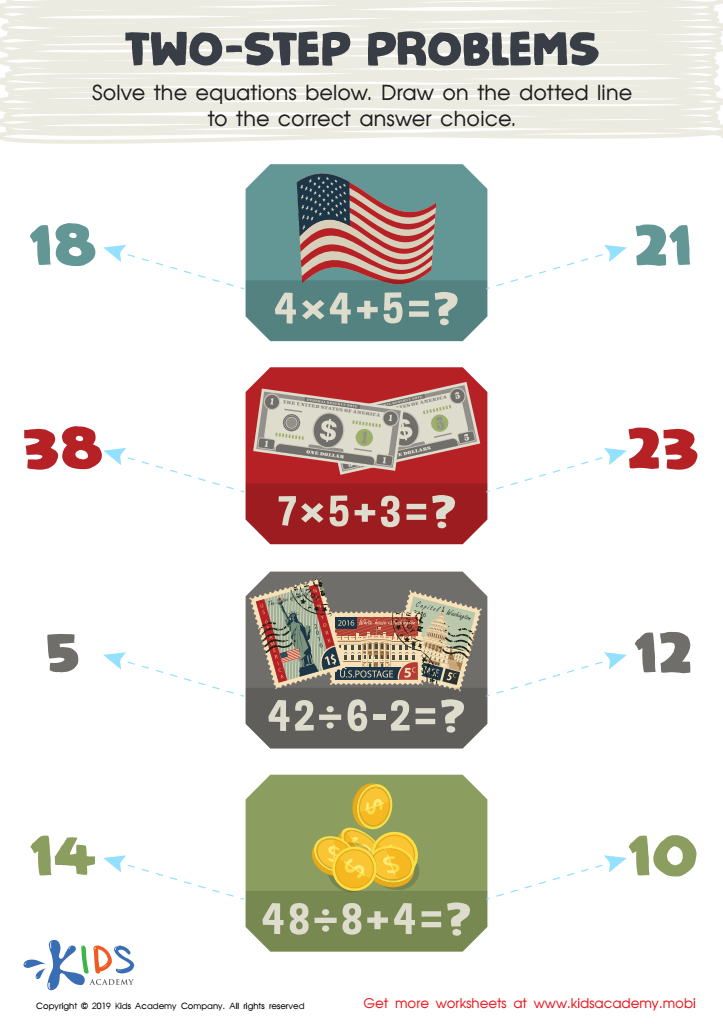
Two-Step Problems Worksheet
 Assign to My Students
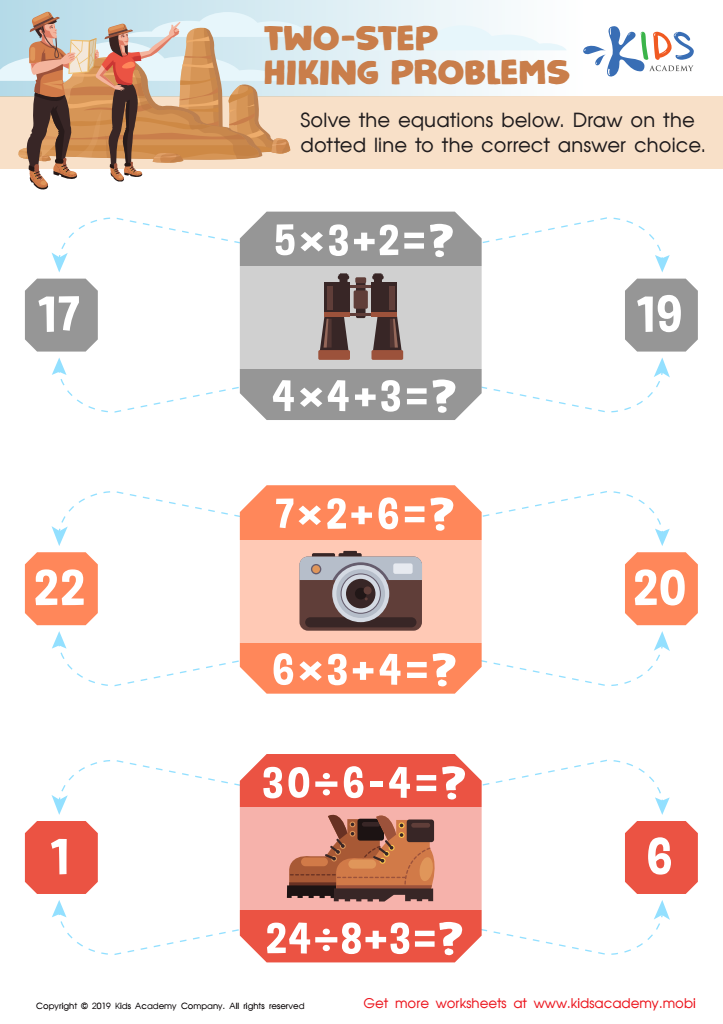
Two-Step Hiking Problems Worksheet
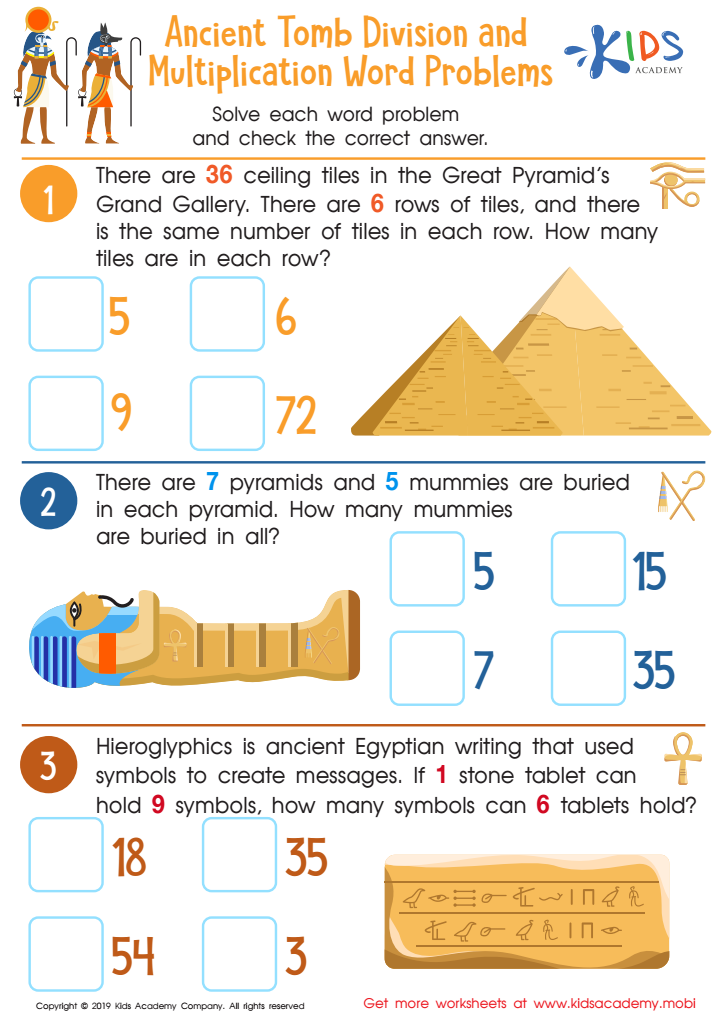
Ancient Tomb Division and Multiplication Word Problems Worksheet
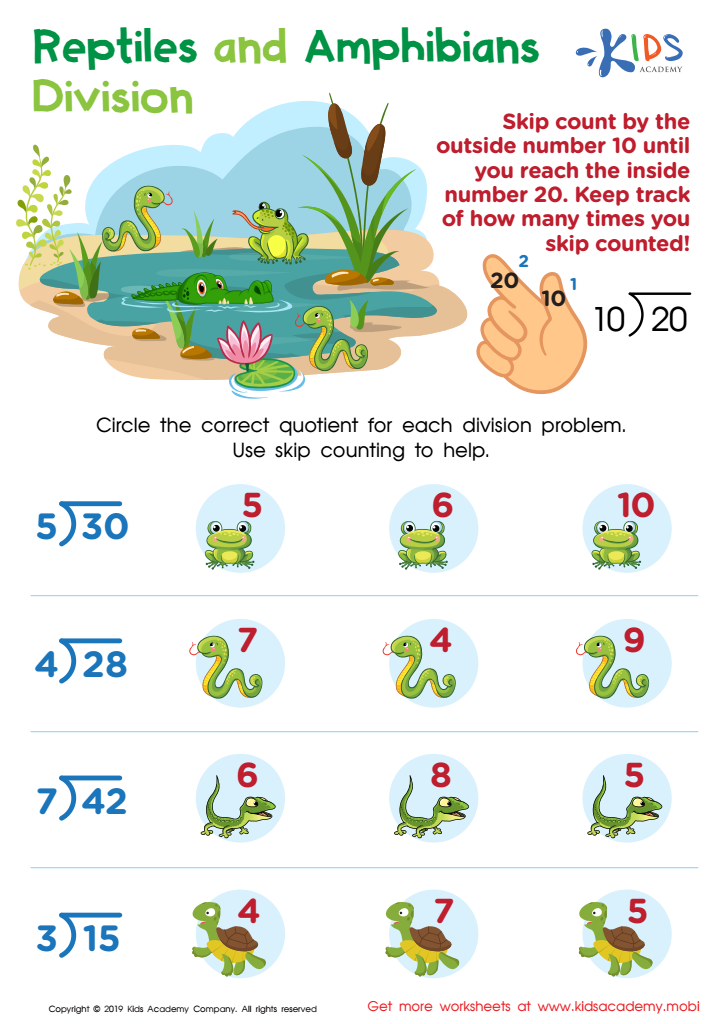
Reptile and Amphibians Division Worksheet
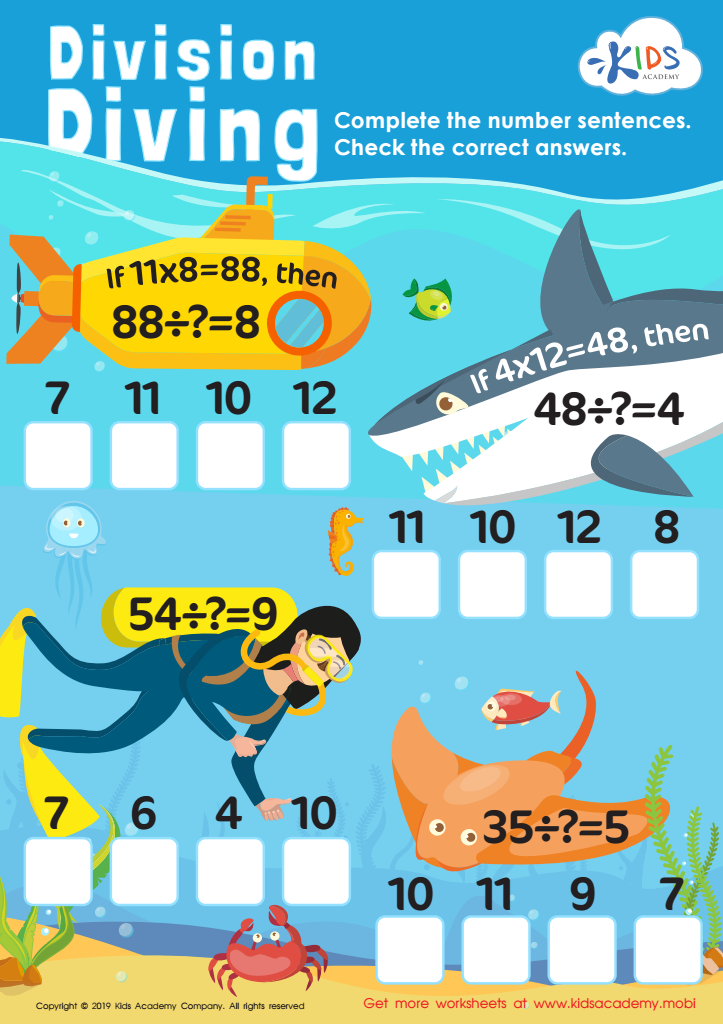
Division Diving Worksheet
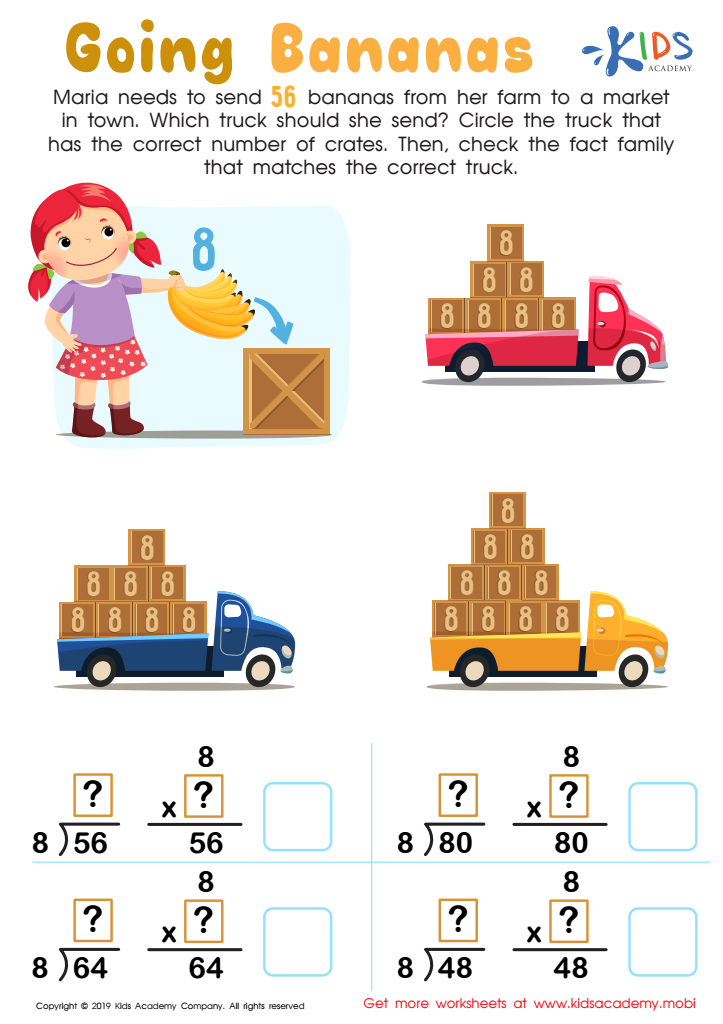
Going Bananas Worksheet
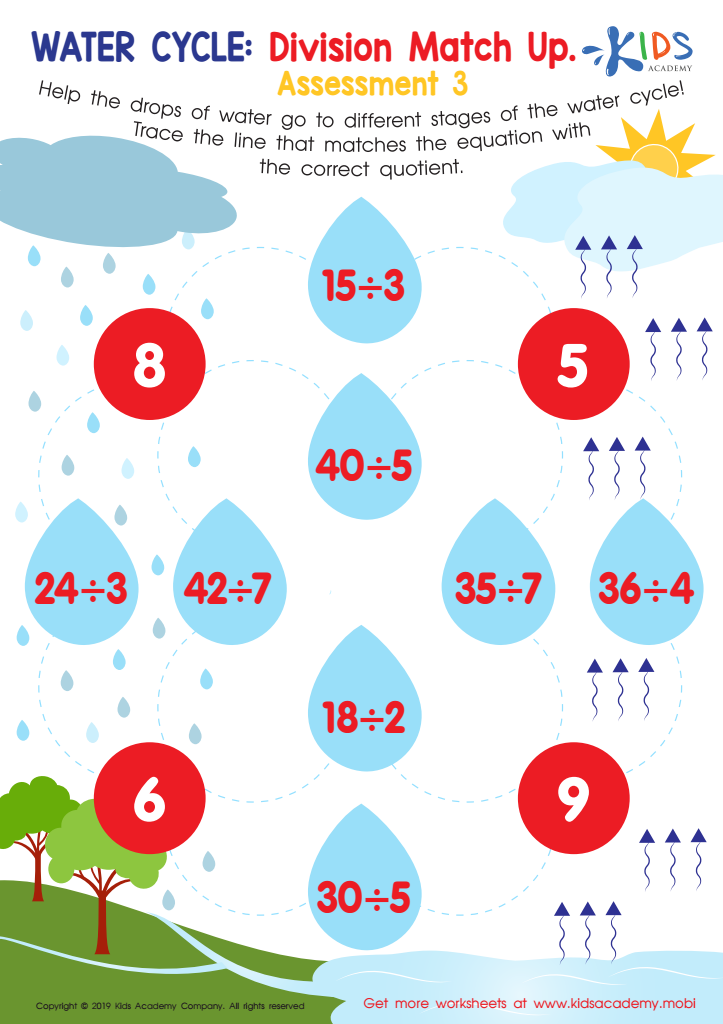
Water Cycle Division Match Up Assessment 3 Worksheet
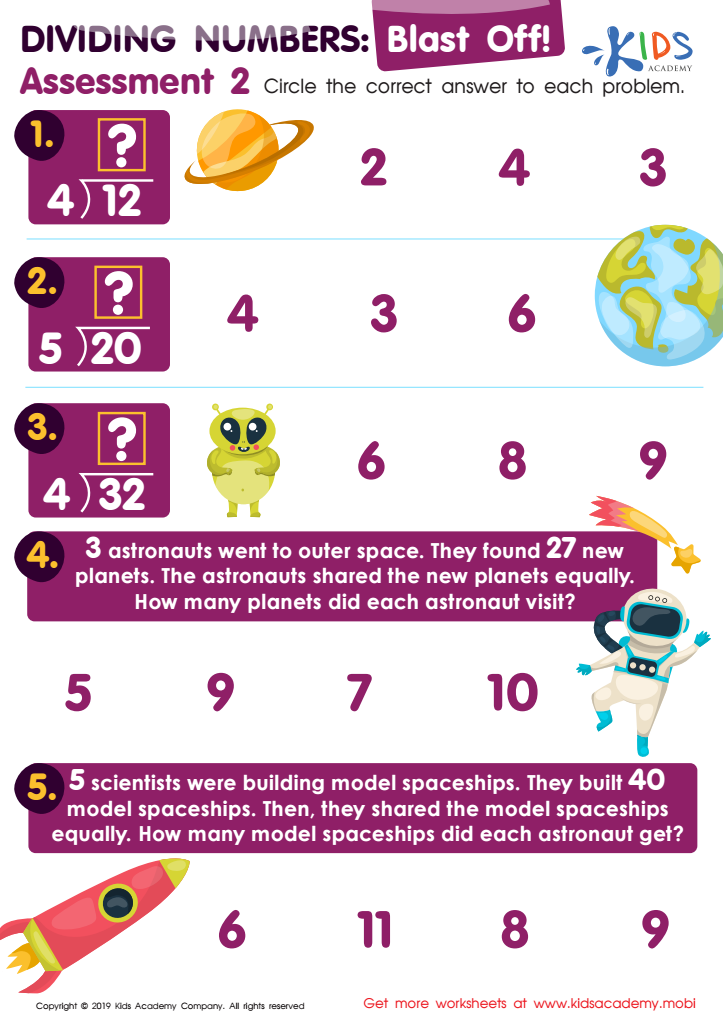
Dividing Numbers Assessment 2 Worksheet
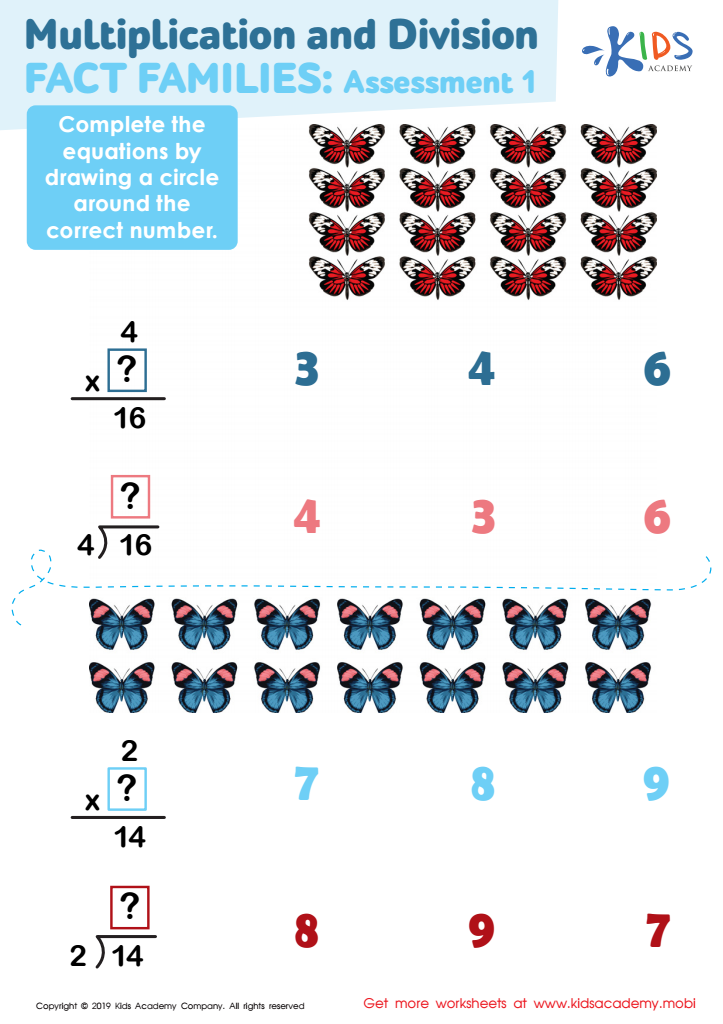
Multiplication and Division Fact Families Assessment 1 Worksheet
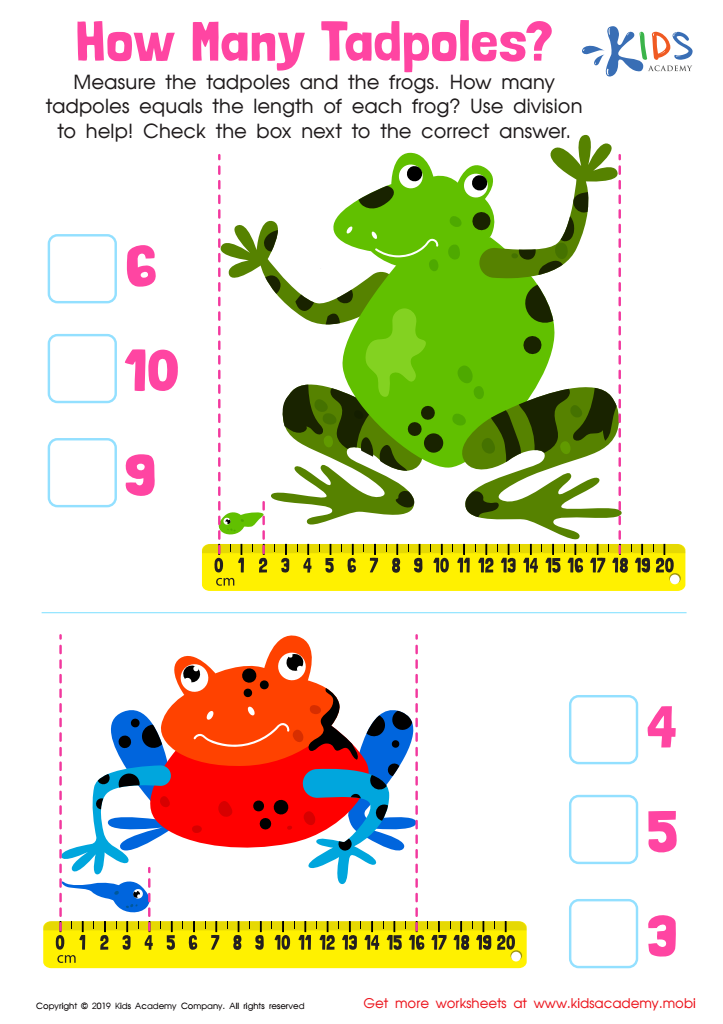
How Many Tadpoles Worksheet
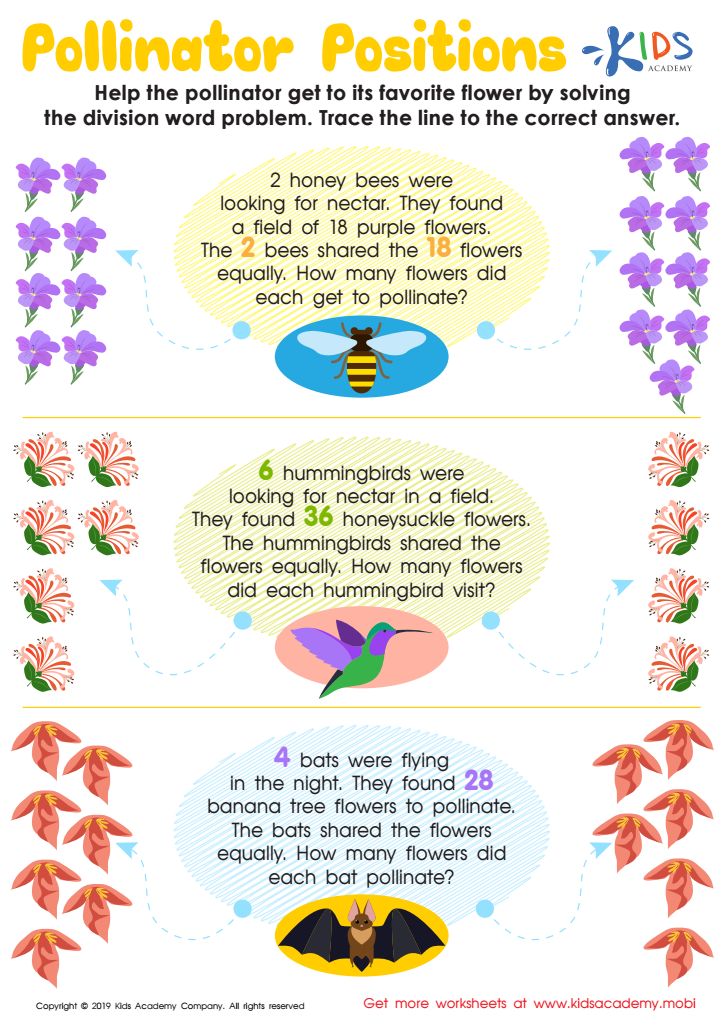
Pollinator Positions Worksheet
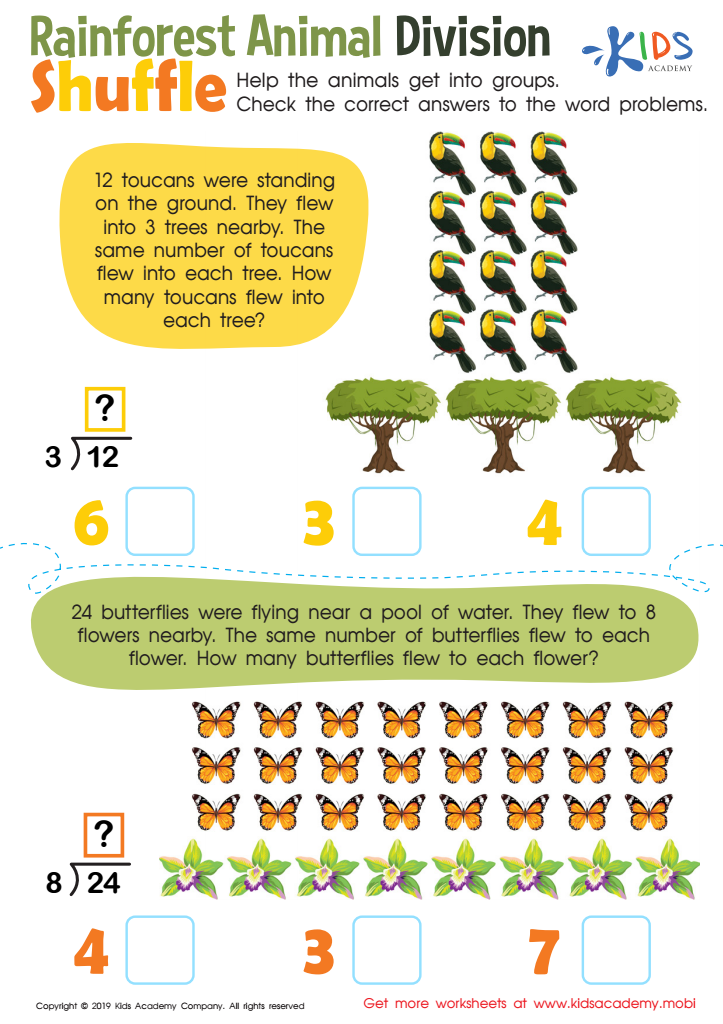
Rainforest Animal Division Worksheet
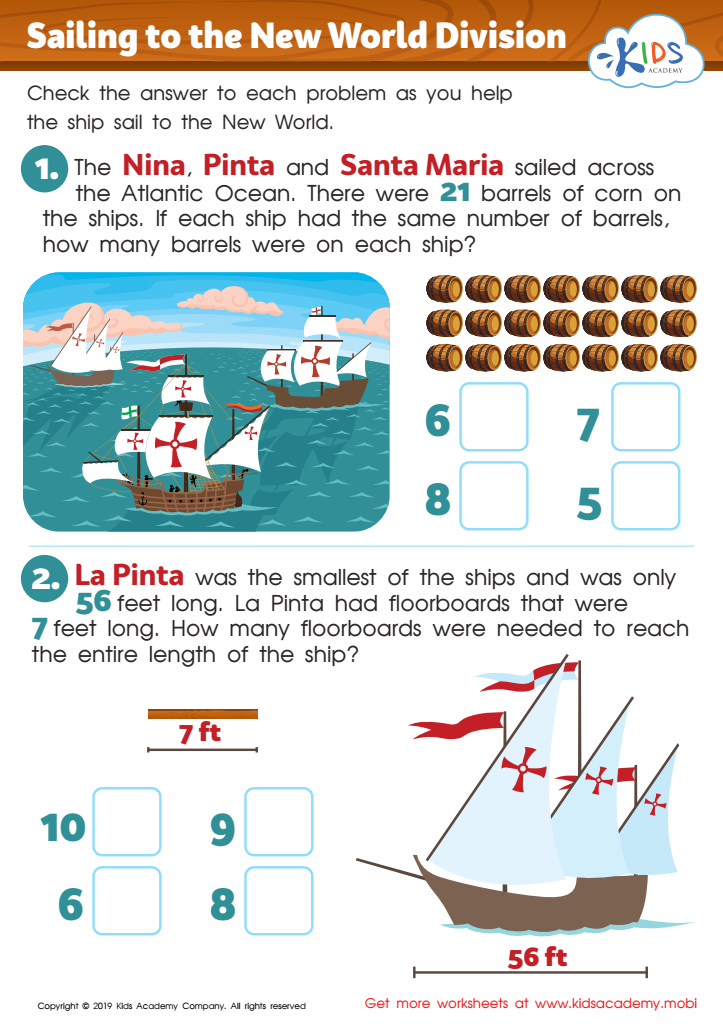
Sailing to the New World Division Worksheet
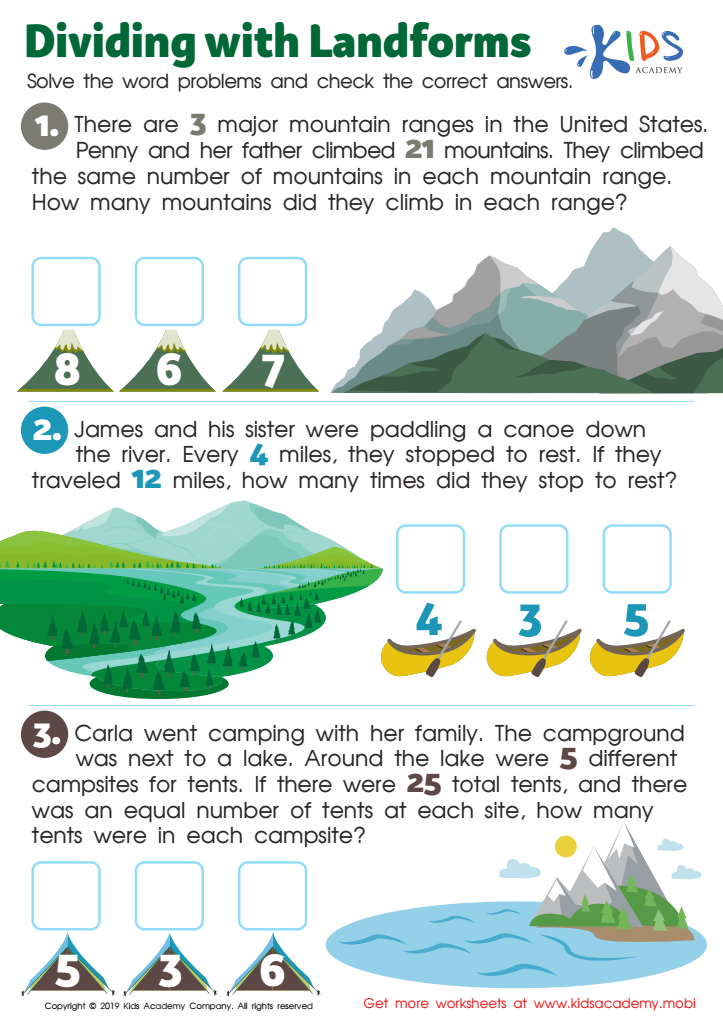
Dividing with Landforms
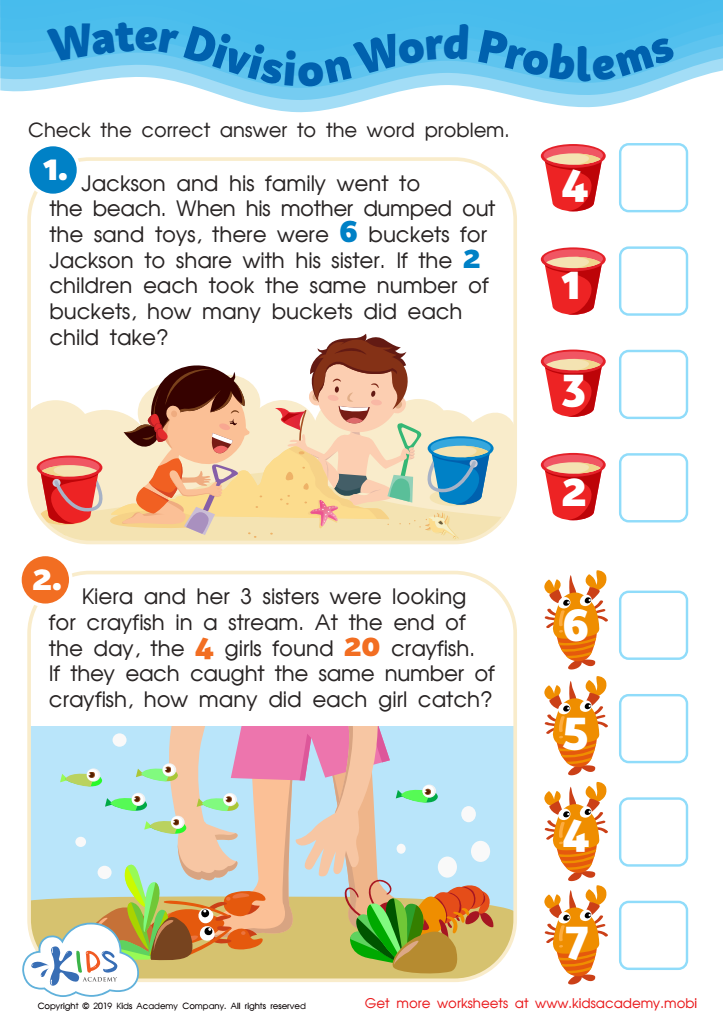
Water Division Word Problems Worksheet
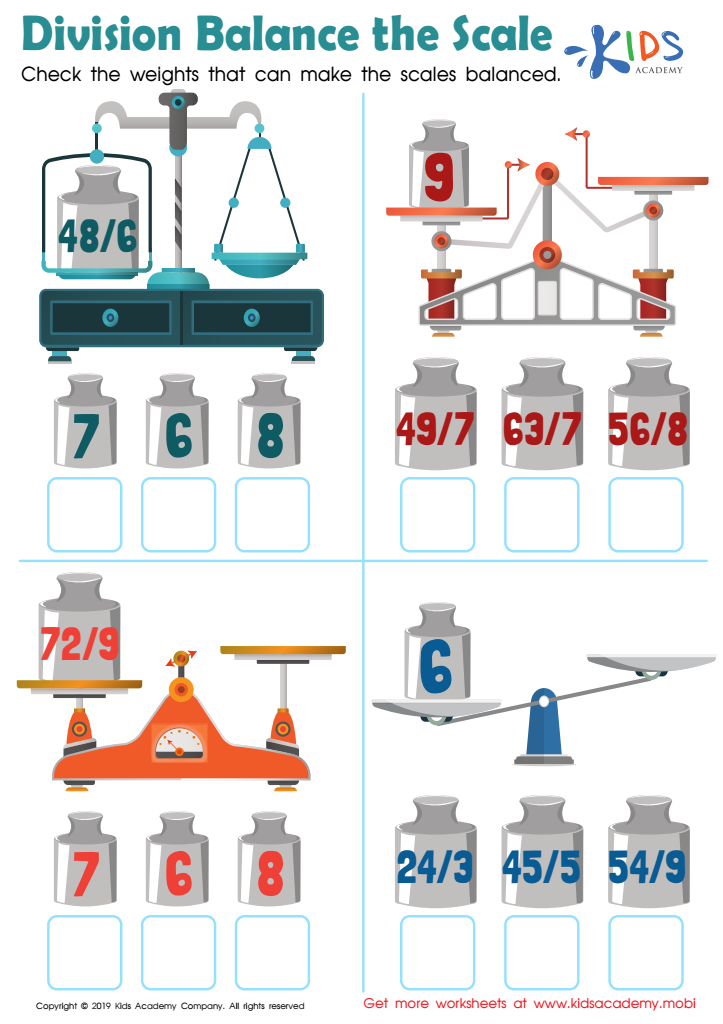
Division Balance the Scale Worksheet
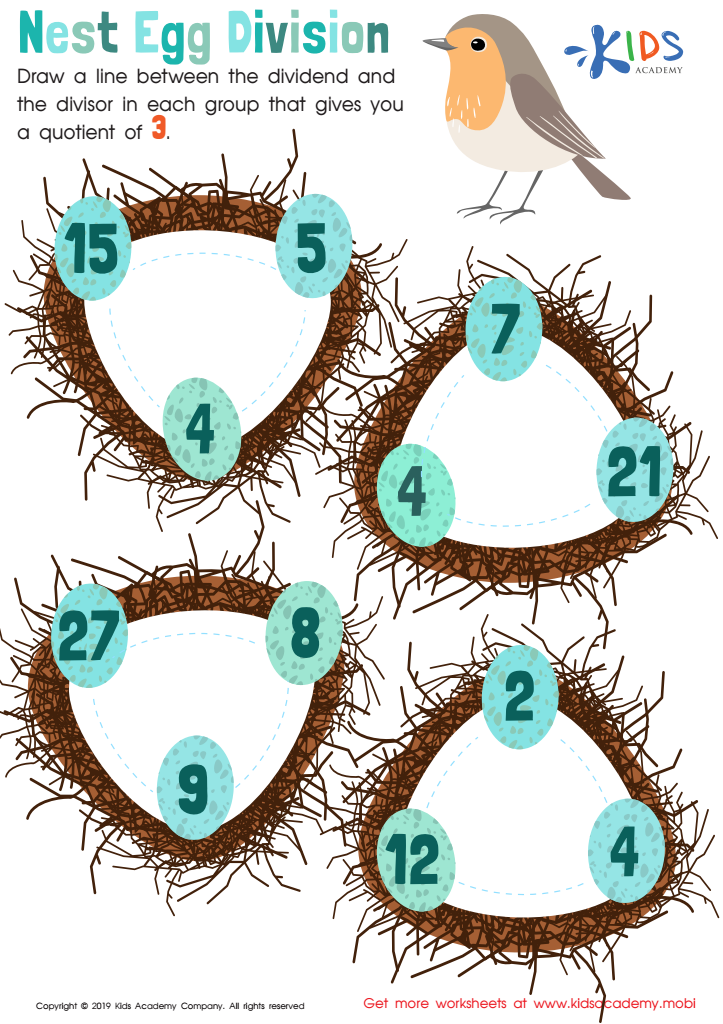
Nest Egg Division Worksheet
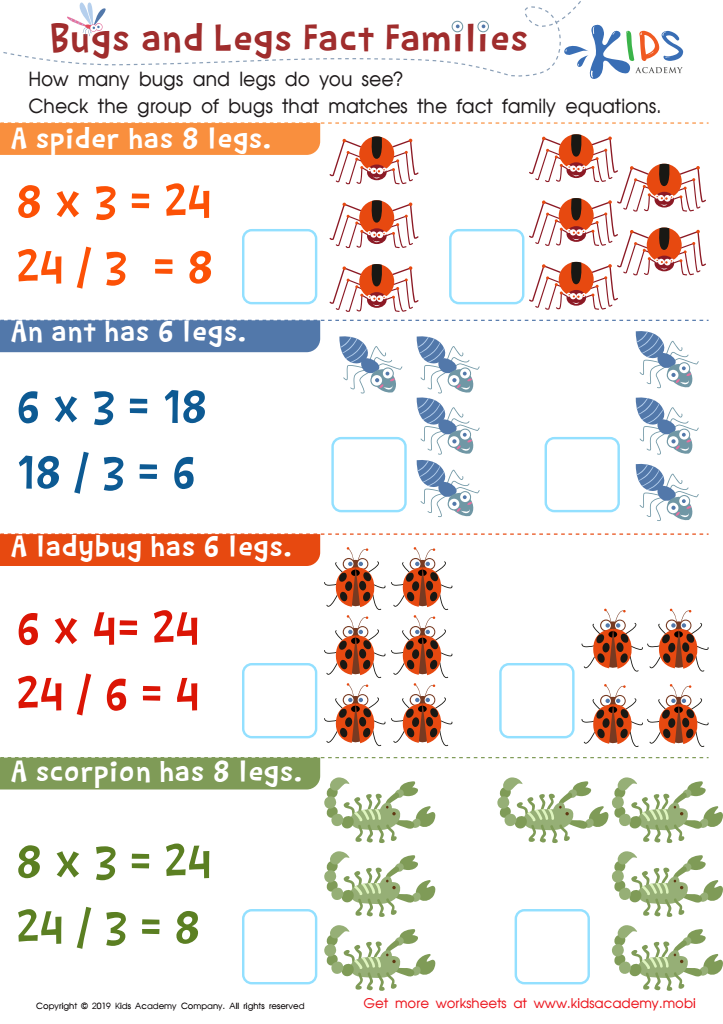
Bugs and Legs Fact Families Worksheet
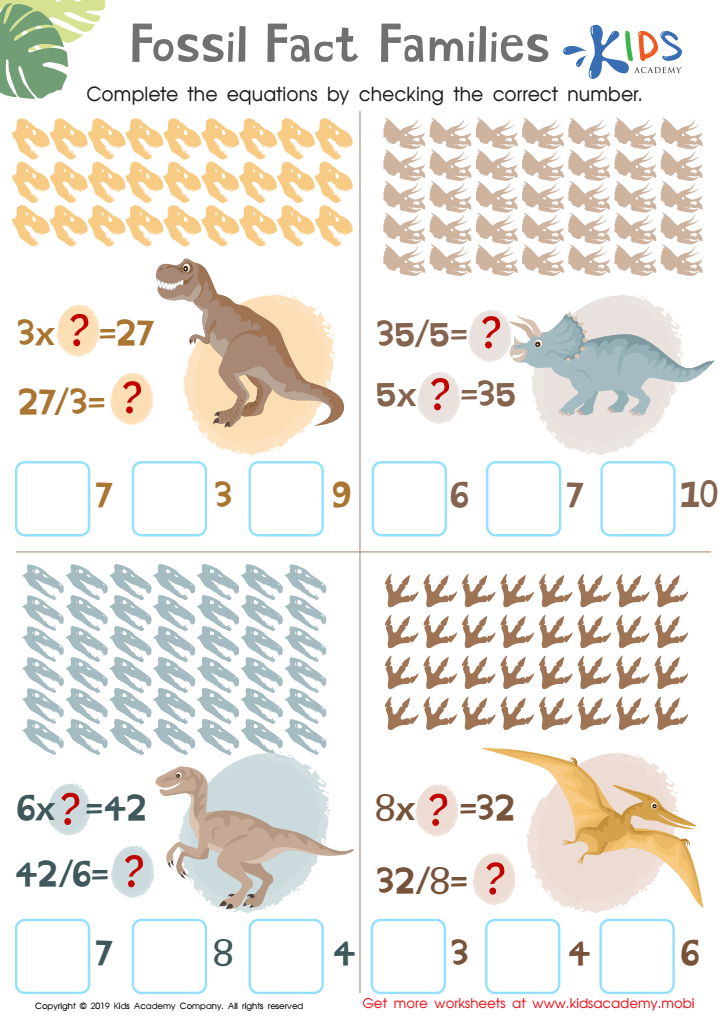
Fossil Fact Families Worksheet
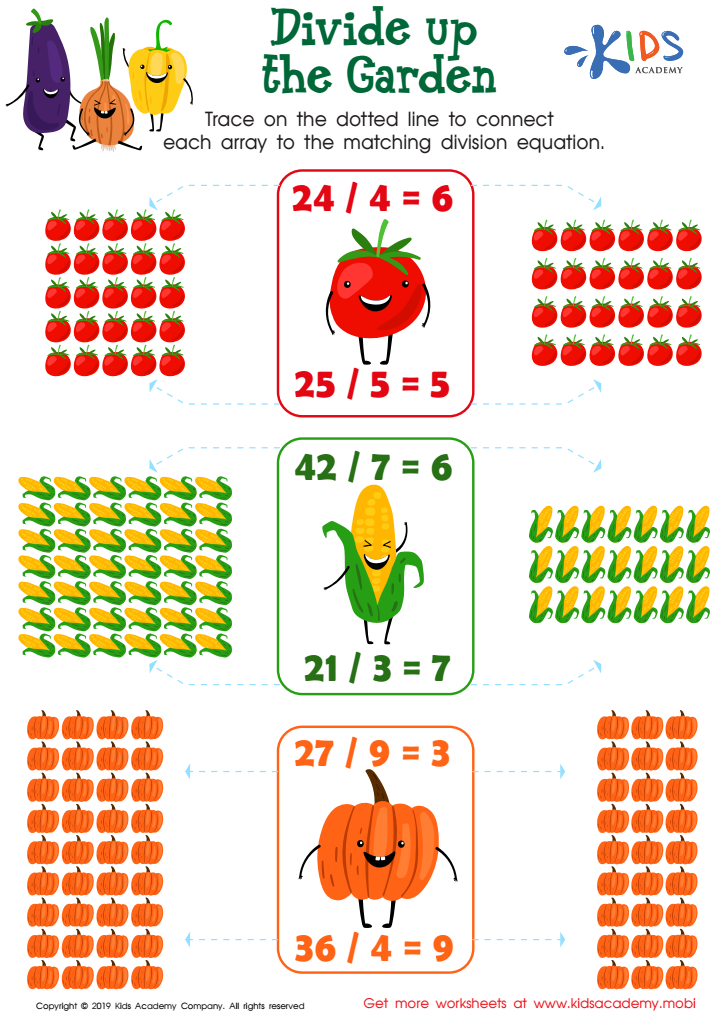
Divide up the Garden Worksheet
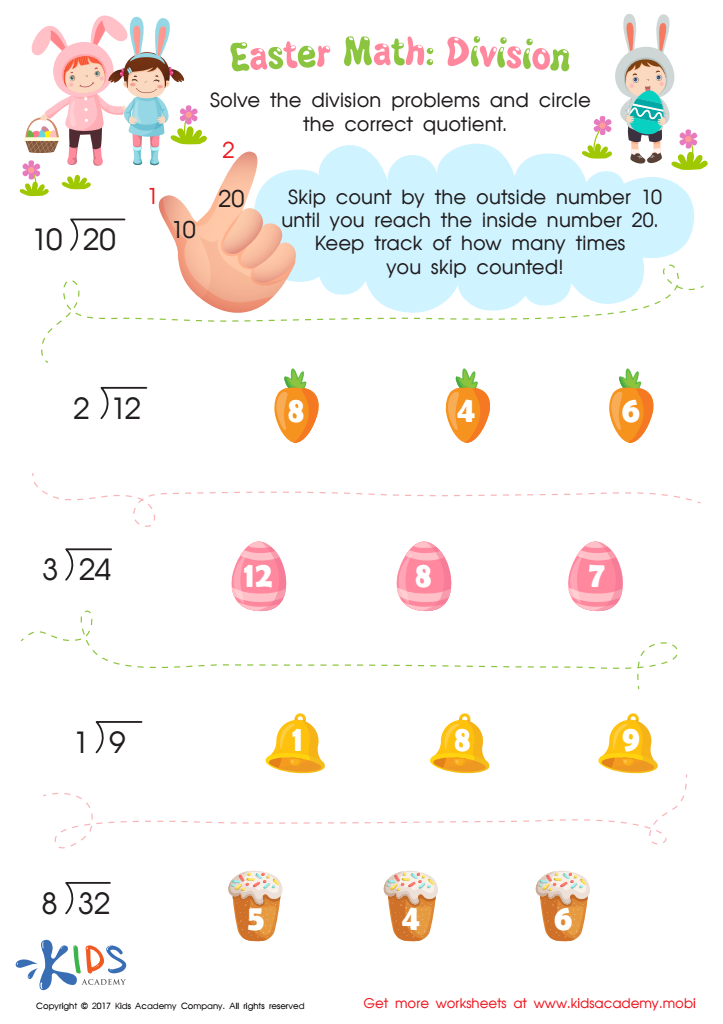
Division Worksheet
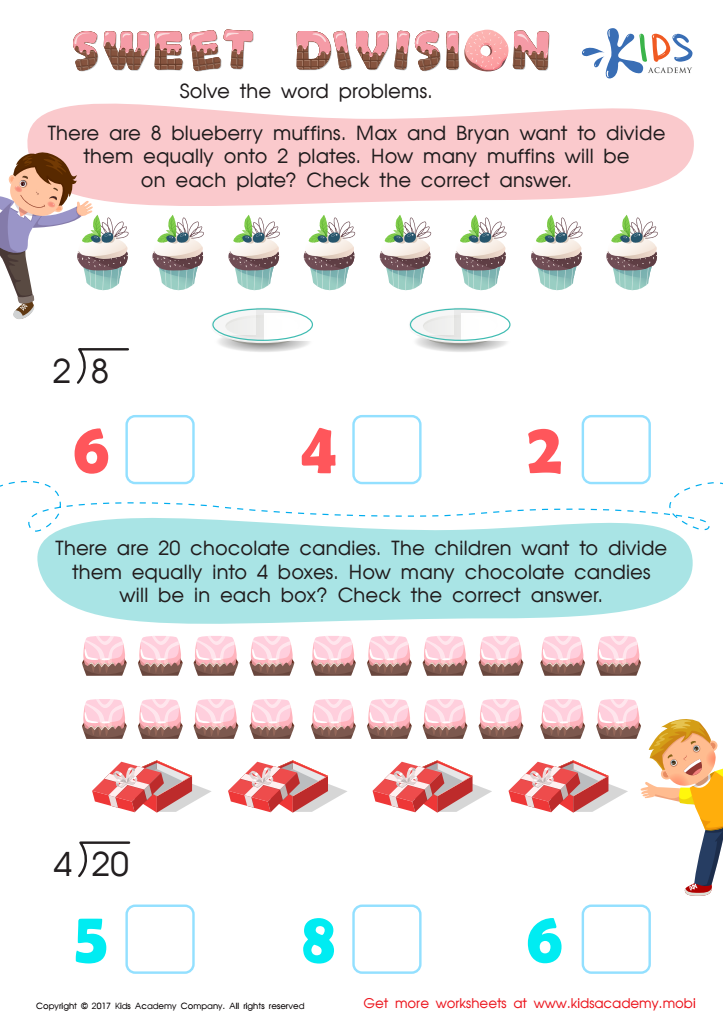
Division Word Problems Worksheet
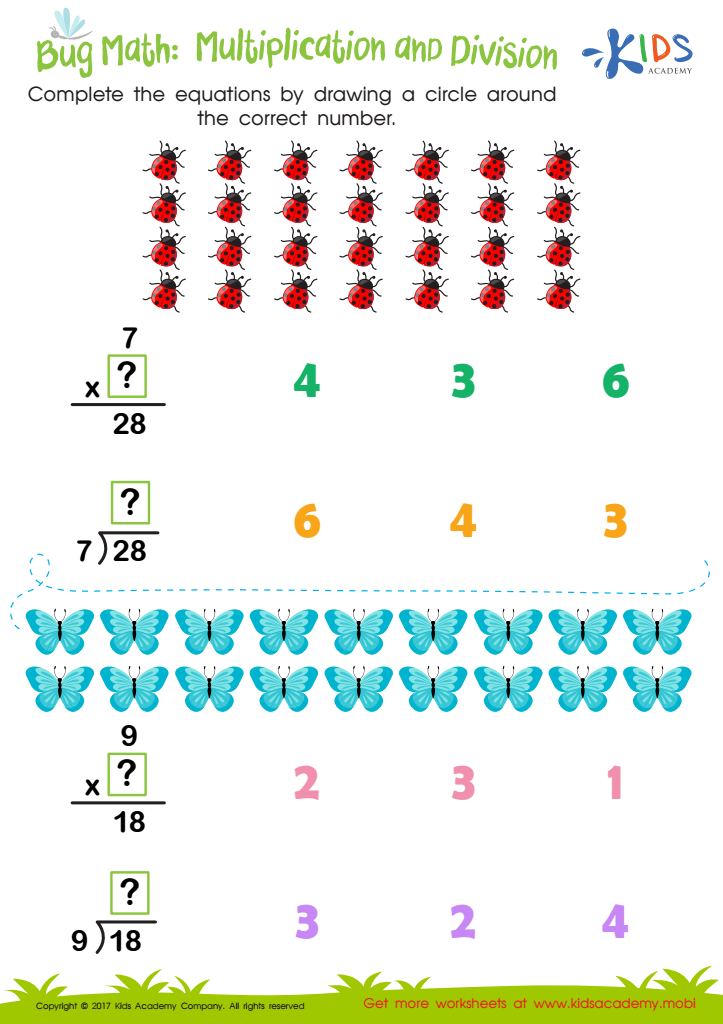
Multiplication and Division Worksheet








Introducing division to children aged 3-8 can have a significant impact on their mathematical development and overall cognitive growth. At this young age, children are exceptionally receptive to learning new concepts, and laying a strong mathematical foundation can be highly beneficial.
Firstly, understanding division cultivates critical thinking and problem-solving skills. By practicing how to divide objects into equal parts or groups, children enhance their ability to think logically and make sense of the world around them. These skills are transferable to many other life situations and academic subjects.
Secondly, learning division at an early age builds numerical fluency. For children, becoming comfortable with basic division will ease their transition to more advanced mathematical concepts later on. This helps reduce anxiety and resistance to math as they progress through their education.
Thirdly, understanding division fosters fairness and sharing. Young children often encounter situations where they need to share items equally among peers or family members. Grasping the concept of division makes it easier for them to understand and practice equitable behavior, which is vital for their social development.
Lastly, teaching division can be fun and interactive. Using visual aids, games, and everyday examples ensures that learning this concept is engaging, making children eager to explore more mathematical concepts.
In summary, instilling an early understanding of division supports mental development, academic confidence, social skills, and a positive attitude toward learning.








