Filters

2847 filtered results

Clear all filters
Favorites
With answer key
Interactive

2847 filtered results

Difficulty Level

Grade


Check out this FREE Trial Lesson for age 3-9!

Describe Connection Between Two Events/ Pieces of Information in a Text

Favorites
With answer key
Interactive
  • 3-9
  • Interactive
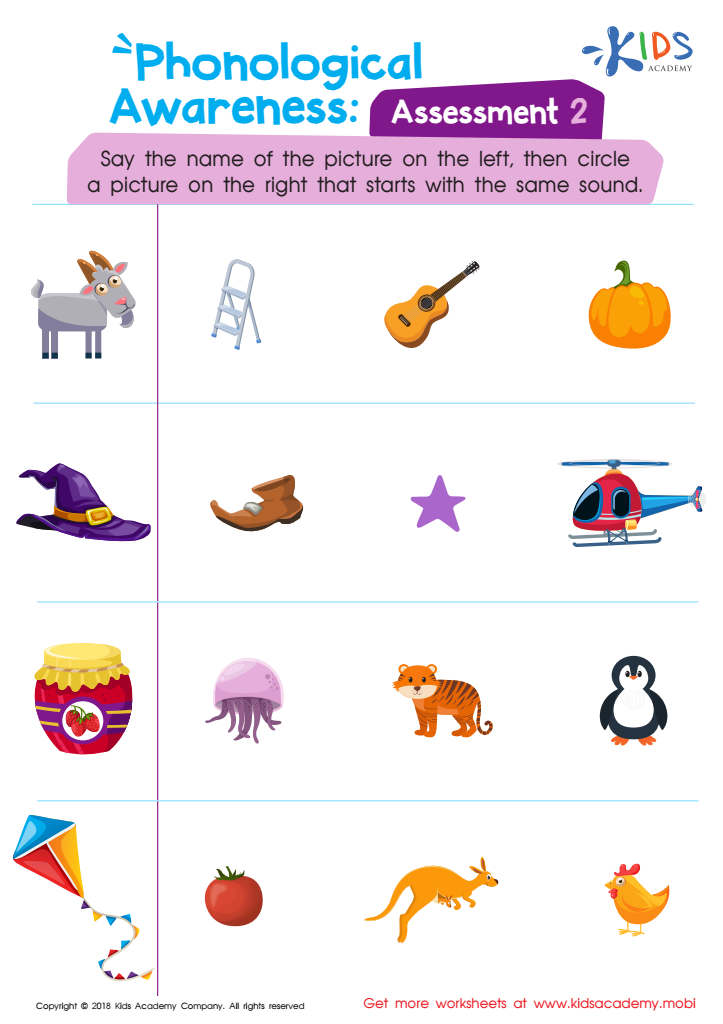
Phonological Awareness: Assessment 2 Worksheet

Phonological Awareness: Assessment 2 Worksheet

Test your child’s phonological awareness and reading readiness with this charming worksheet! Perfect for K-1, it assesses if they can name a picture aloud, listening for the starting sound and matching it to another word. Watch as they think deeply and listen to the sounds as they name each picture. Determine if your child is ready to sound out words or needs more phonics practice.
Phonological Awareness: Assessment 2 Worksheet
Worksheet
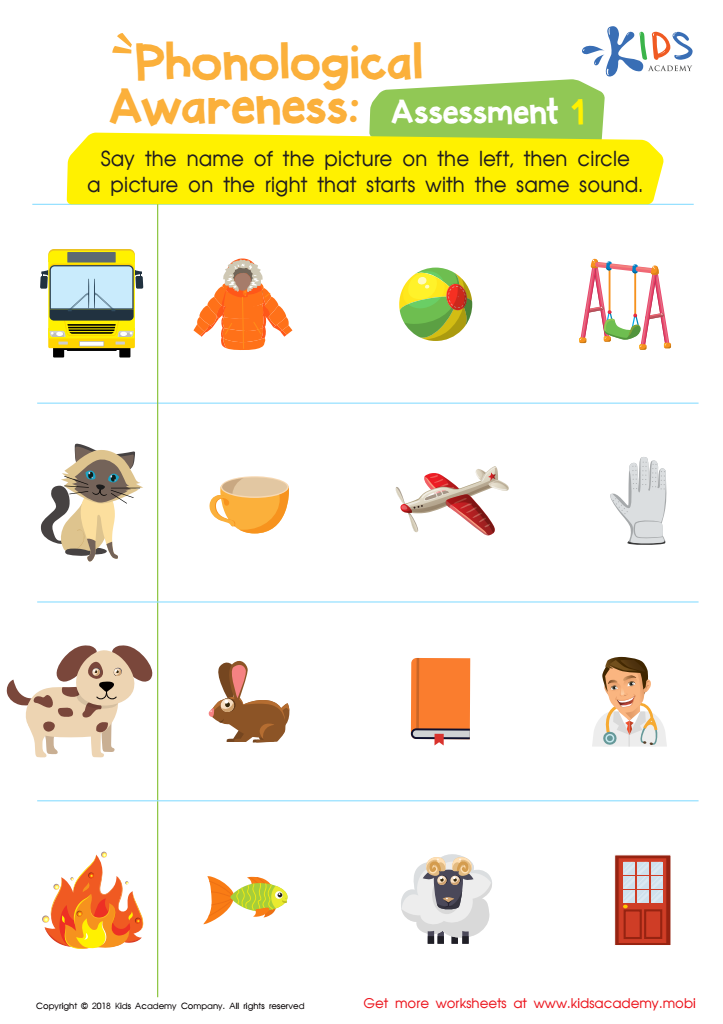
Phonological Awareness: Assessment 1 Worksheet

Phonological Awareness: Assessment 1 Worksheet

This worksheet helps kids build key phonics skills for pre-reading. They say each picture name aloud, focusing on the starting sound. Then, they match the sound with an image in the same row. Use as a checkpoint for kindergarten or grade 1 phonics readiness.
Phonological Awareness: Assessment 1 Worksheet
Worksheet
Finding the Details and Connections: Assessment 2 Worksheet

Finding the Details and Connections: Assessment 2 Worksheet

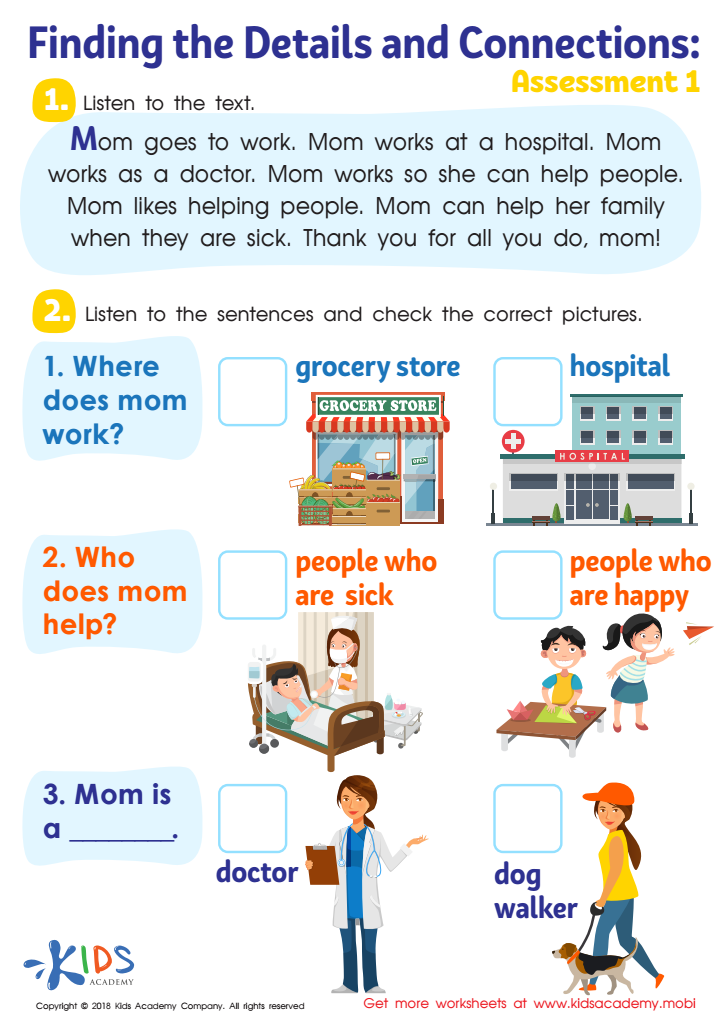
Does your child love animals? If you have pets, they'll relate to the text in this worksheet. Read it aloud to them and help them answer the simple questions by circling yes or no. The story is about a dog and cat living on a farm. Let your child read it aloud to you if they can.
Finding the Details and Connections: Assessment 2 Worksheet
Worksheet
Finding the Details and Connections: Assessment 1 Worksheet

Finding the Details and Connections: Assessment 1 Worksheet

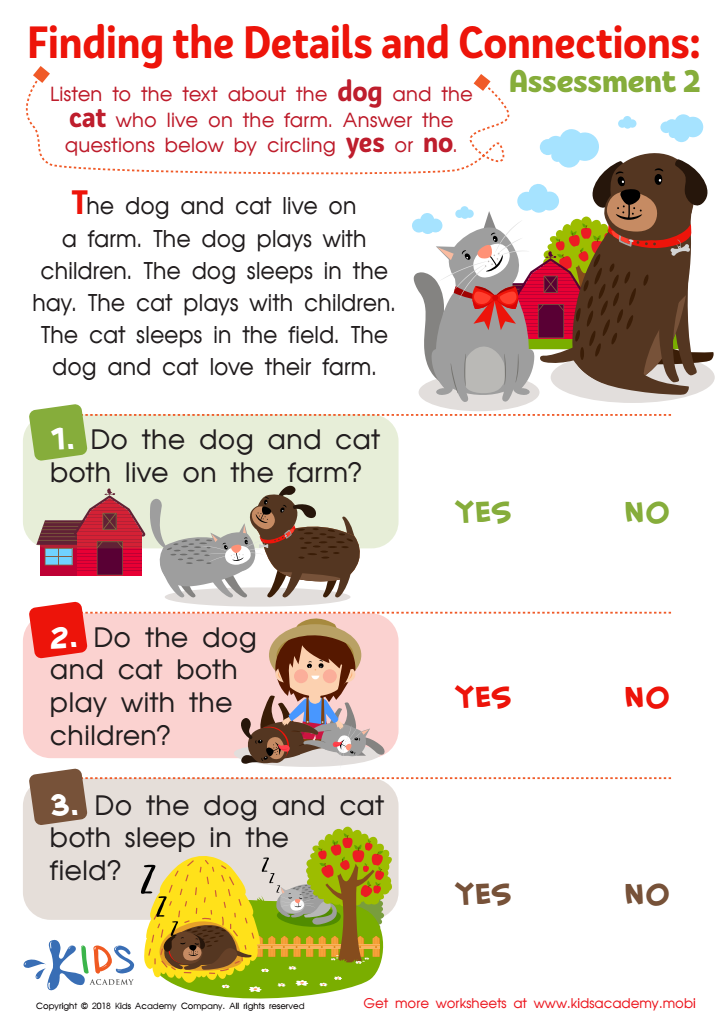
Ask your students what their parents do for a job. Do they know what profession their mom is in and where she works? Professionals have places they go to do their job. In this task, Mom goes to a hospital and is a doctor. Read the text and help them check the right pictures.
Finding the Details and Connections: Assessment 1 Worksheet
Worksheet
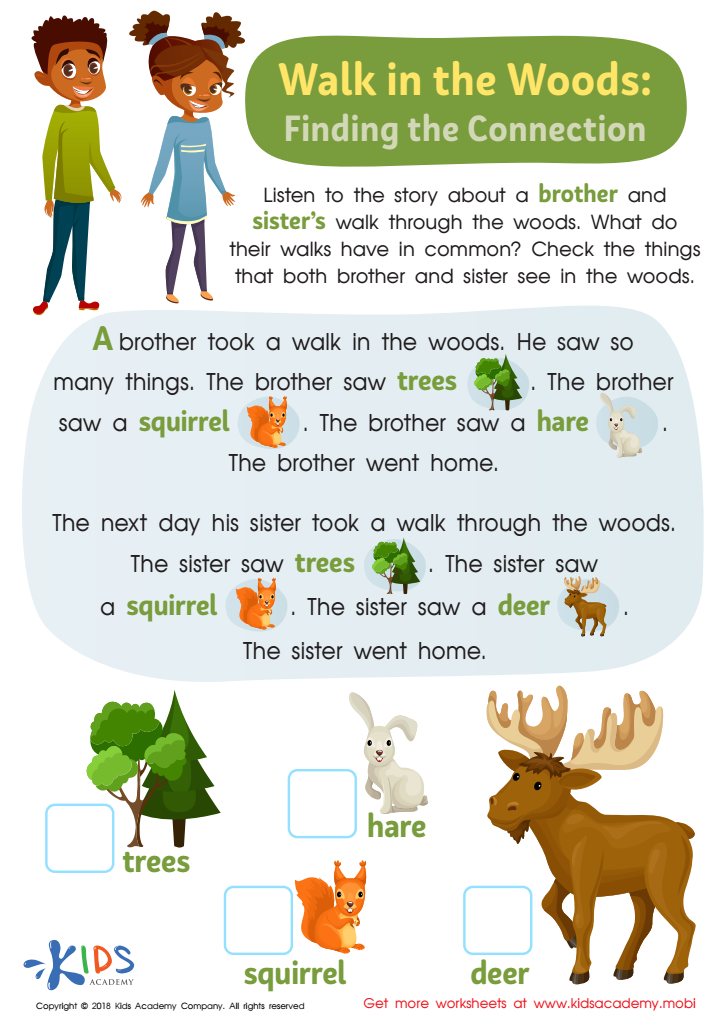
Walk In the Woods: Finding Connections Worksheet

Walk In the Woods: Finding Connections Worksheet

Brother and sister took a walk in the woods to connect with nature and get some exercise. As they went, they noted different things like birds and plants, which they share in this story. Read it to your little ones, and help them check off the items the two saw. It's a great way to learn about nature and enjoy the outdoors.
Walk In the Woods: Finding Connections Worksheet
Worksheet
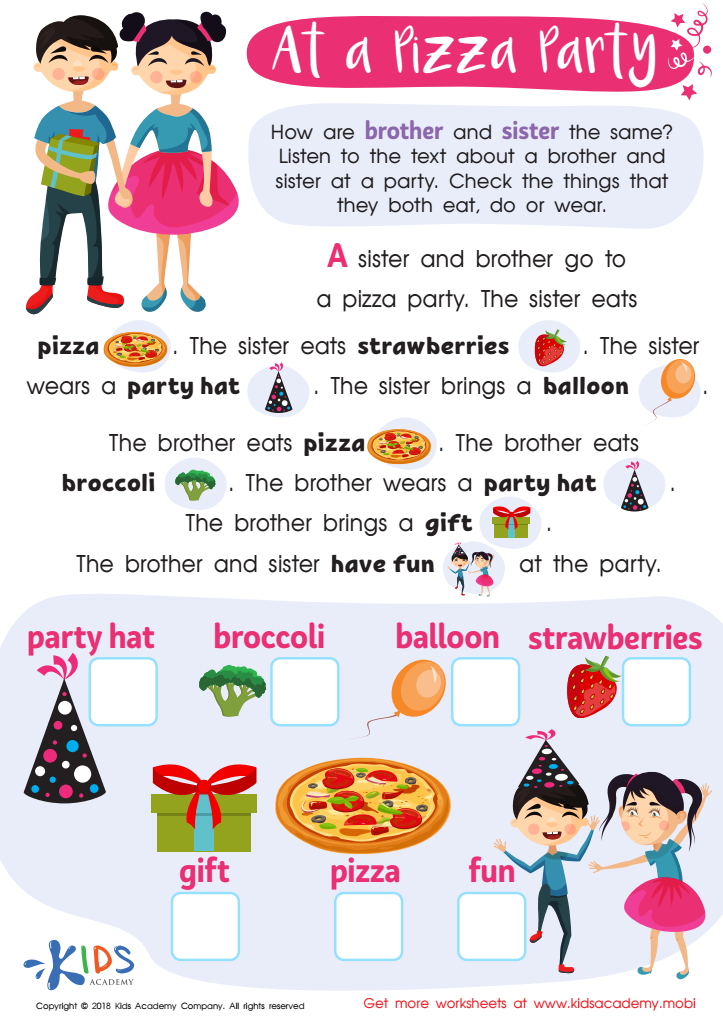
At a Pizza Party Worksheet

At a Pizza Party Worksheet

Parties are the best! Eating, playing, singing, dancing and gift-exchange - what's your child's fave part? In this worksheet, a brother and sister are eager to enjoy their party. Read the text to them and help them check what they do, eat, and wear. 80 words.
At a Pizza Party Worksheet
Worksheet
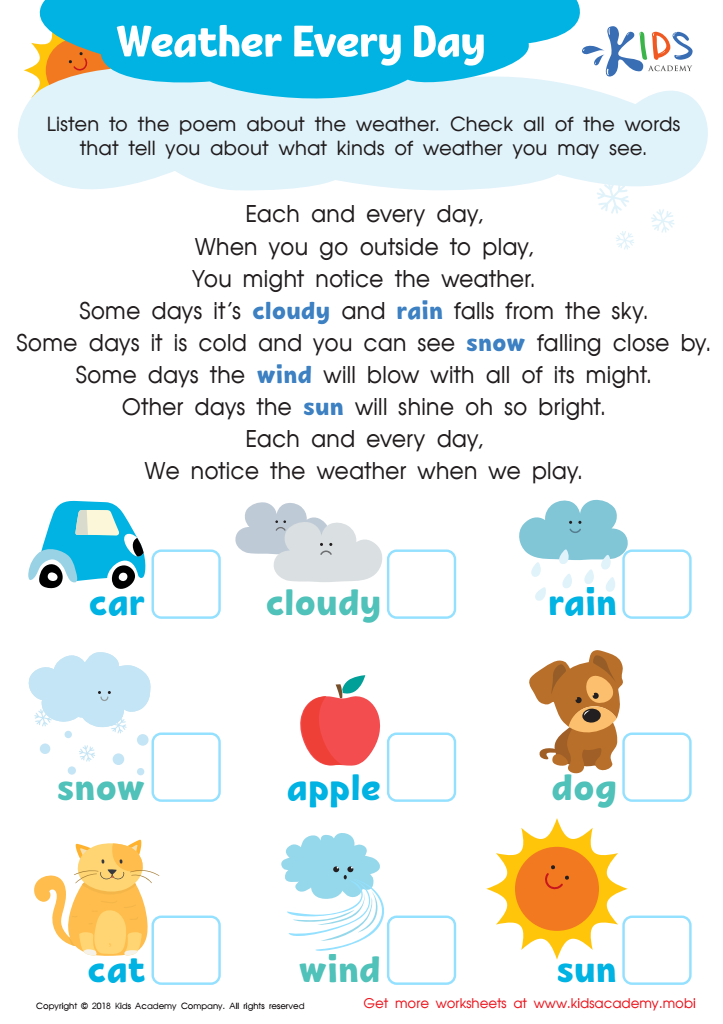
Weather Every Day Worksheet

Weather Every Day Worksheet

Ask your child to look out the window and tell you what the weather's like. Is it raining, stormy, cloudy, snowing or sunny? Help them observe all the different types of weather and then check the words at the bottom of the worksheet. What's their favorite type of weather? Read them this poem about the weather and see what they think!
Weather Every Day Worksheet
Worksheet
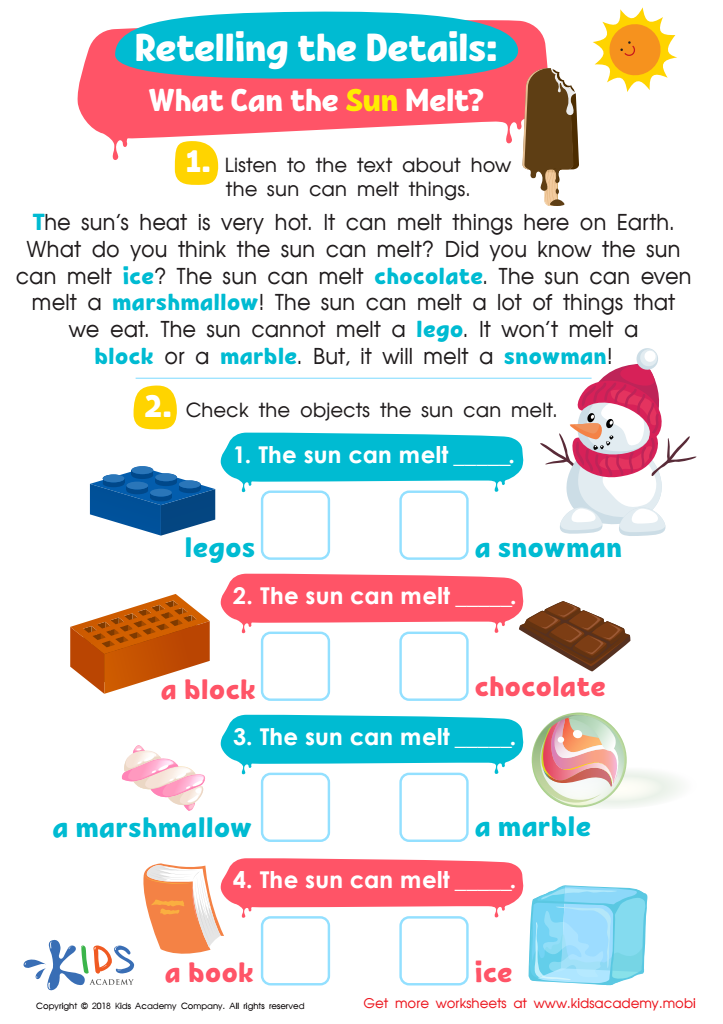
Retelling the Details: What Can the Sun Melt? Worksheet

Retelling the Details: What Can the Sun Melt? Worksheet

The sun is that hot yellow ball in the sky. Its intense heat can make us sweat and even melt things! Ask your kids what things the sun can melt. Read this short informative text and have them highlight the objects. Then, read the questions out loud and help them find the right answers.
Retelling the Details: What Can the Sun Melt? Worksheet
Worksheet
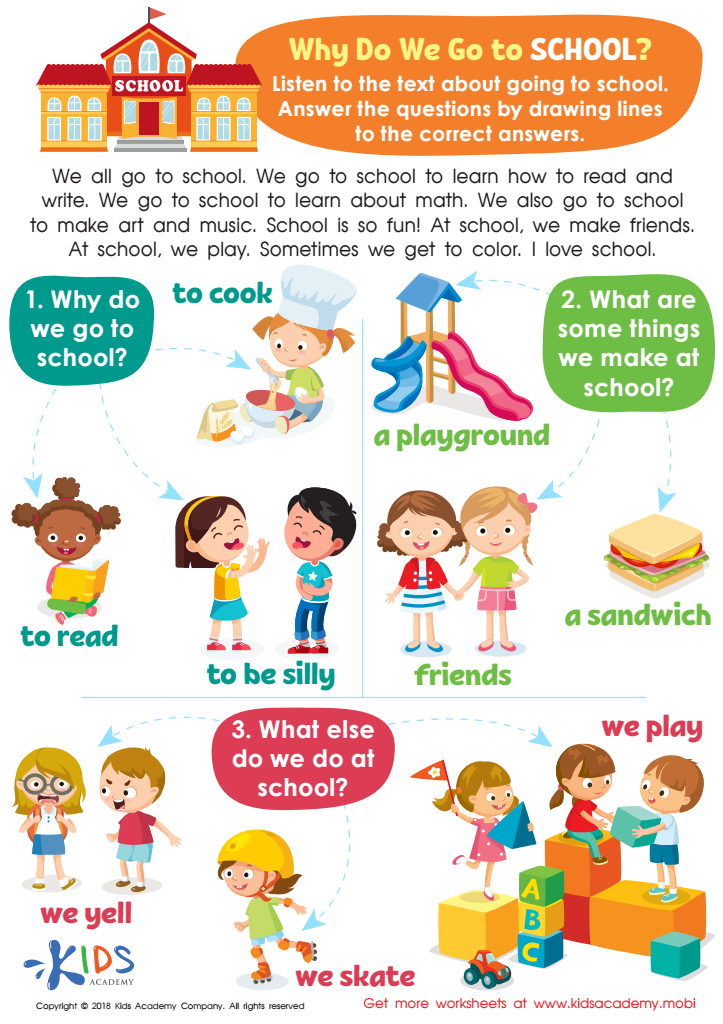
Why Do We Go To School? Worksheet

Why Do We Go To School? Worksheet

Ask your kids why they go to school and what they learn. Explain that some schools specialise in certain subjects like music or art. Show them the pictures and help them answer the questions by drawing lines to the correct answers. School is important and helps us learn, even though it may not feel enjoyable at times.
Why Do We Go To School? Worksheet
Worksheet
Details About Our Sun Worksheet

Details About Our Sun Worksheet

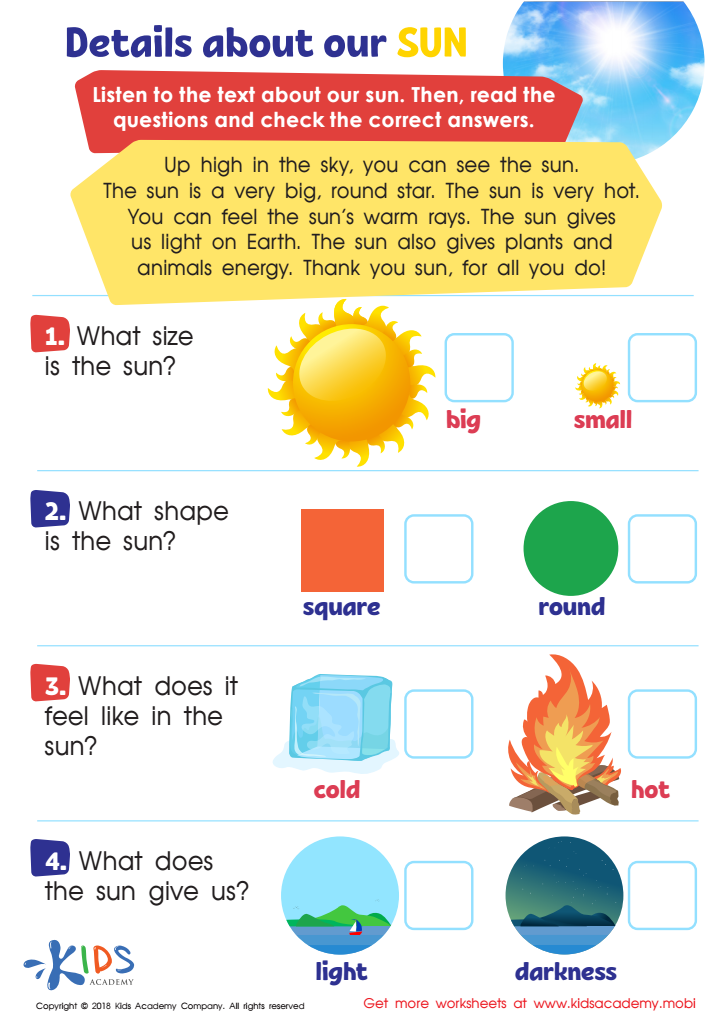
Teach your kindergartners about the sun with this worksheet. Read the informative text to them, then ask the questions and help them mark the right answers. Discover what your student knows about this big glowing ball of fire in the sky.
Details About Our Sun Worksheet
Worksheet
White Tracing Color Words Worksheet

White Tracing Color Words Worksheet

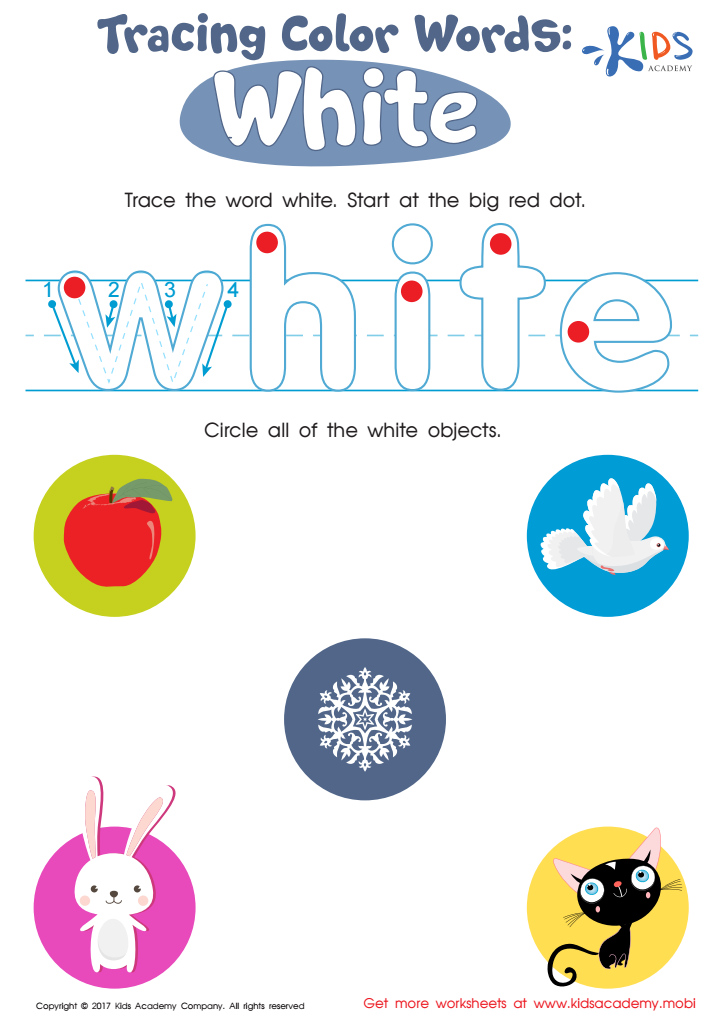
This fun worksheet helps children learn color words quickly. They trace the letters and circle pictures of the color. This helps them practice reading and identifying objects, and they can do it without needing to read phonetically. Download it now and watch your child's skill grow!
White Tracing Color Words Worksheet
Worksheet
Ecosystems: Assessment 2 Worksheet

Ecosystems: Assessment 2 Worksheet

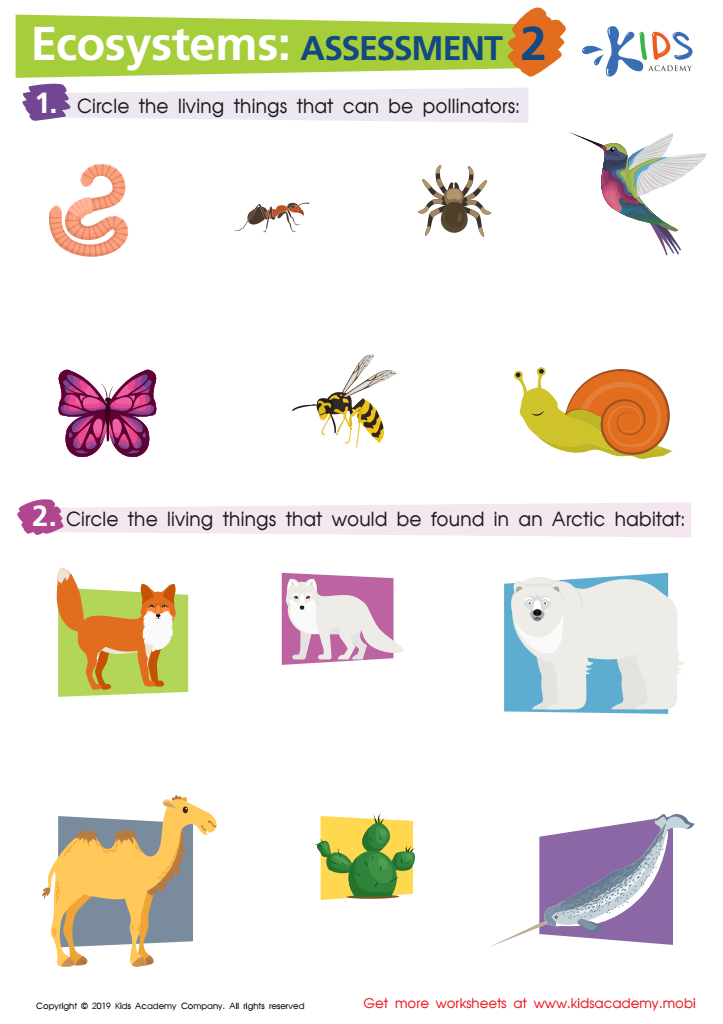
Pollinators are living or non-living things that help pollen spread. Test your child's knowledge of the ecosystem with this worksheet. Point out animals in the picture, then ask the simple questions. Help your child circle the right answers.
Ecosystems: Assessment 2 Worksheet
Worksheet
Ecosystems: Assessment 1 Worksheet

Ecosystems: Assessment 1 Worksheet

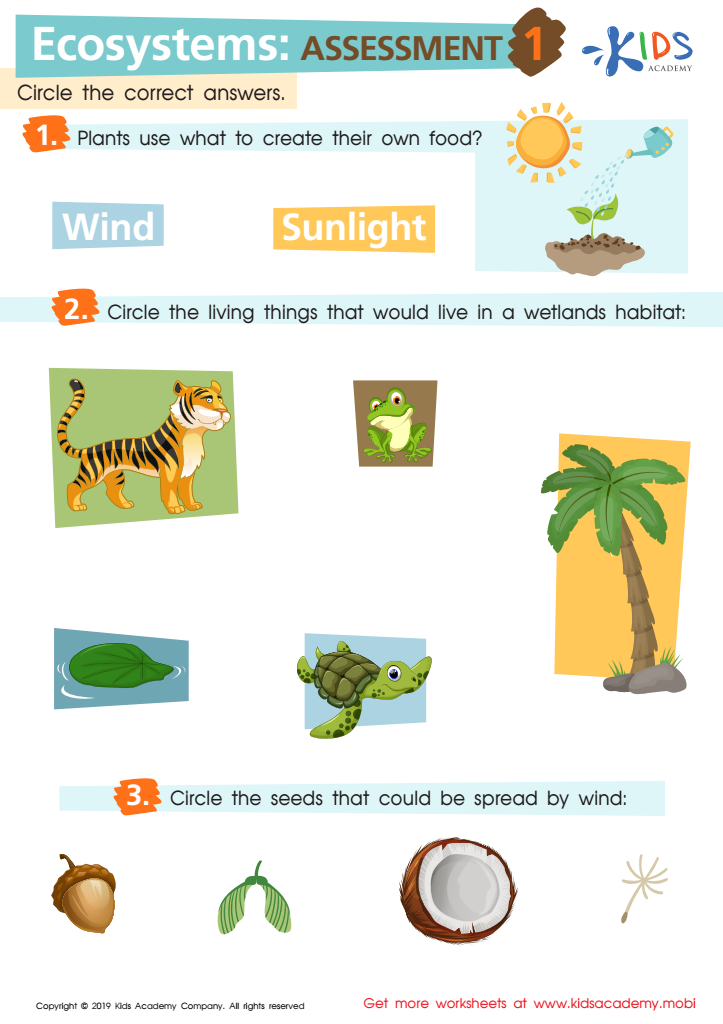
Before starting the worksheet, remind your child of the basics of the ecosystem, e.g. plants need light and winds carry small seeds. Encourage them to identify the images in the colorful printout. Ask them the questions and help them circle the correct answers.
Ecosystems: Assessment 1 Worksheet
Worksheet
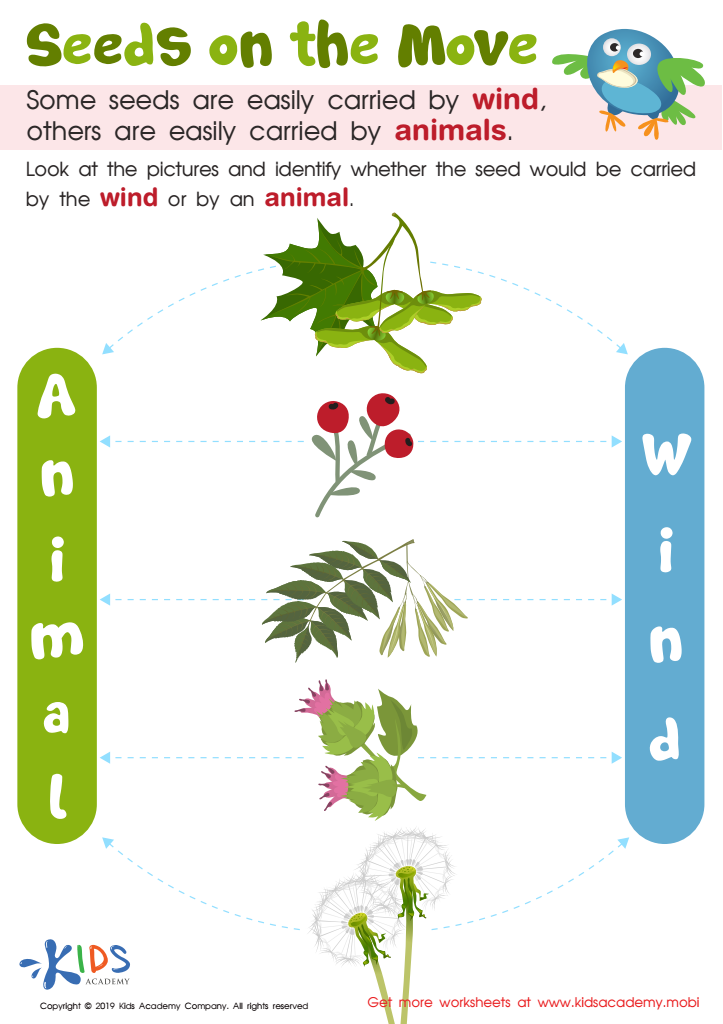
Seeds on the Move Worksheet

Seeds on the Move Worksheet

Help students understand the concept of spreading seeds with this fun traceable worksheet. Discuss the pictures, and see if they can identify whether the seed is carried by the wind or an animal. Explain how seeds can travel from place to place without human help, and how this helps them grow in new locations.
Seeds on the Move Worksheet
Worksheet
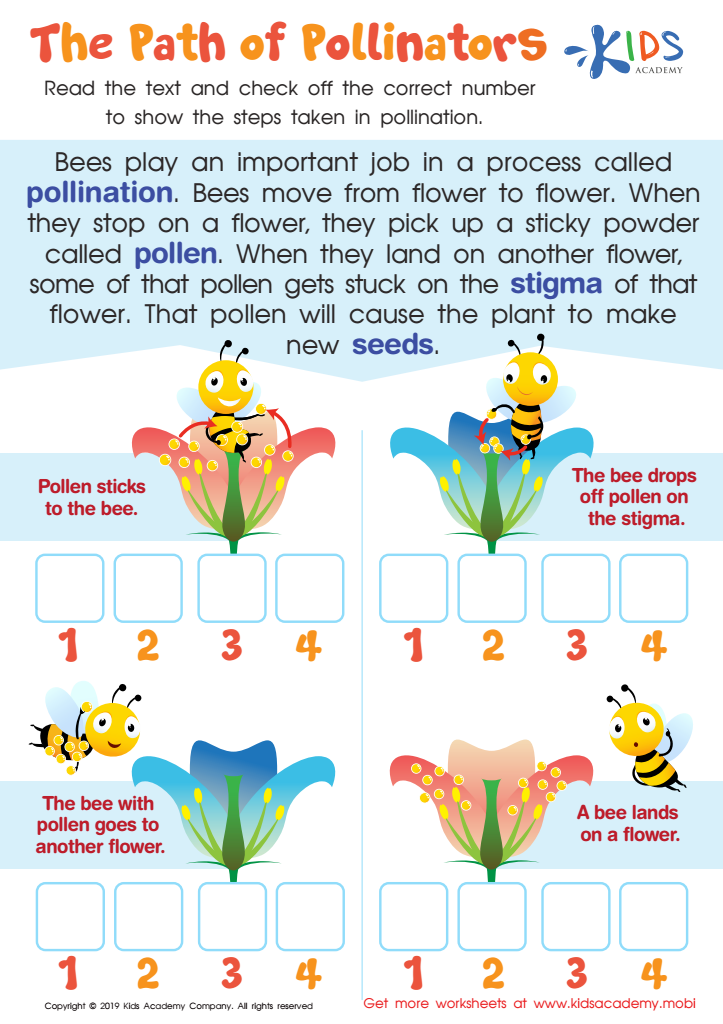
The Path of Pollinators Worksheet

The Path of Pollinators Worksheet

Bees play a vital role in pollination: they transfer pollen between flowers, allowing them to produce new seeds. Without bees, we'd have less flowers and vegetation. Explain the process to your students and have them check off the right number to show the steps in pollination.
The Path of Pollinators Worksheet
Worksheet
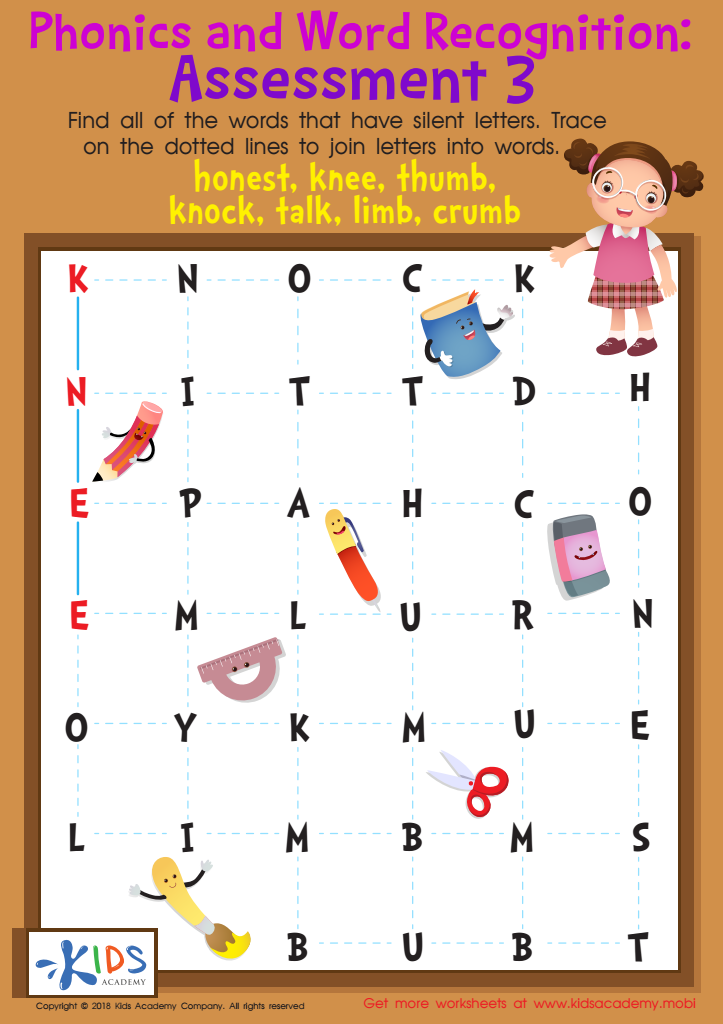
Phonics and Word Recognition: Assessment 3 Worksheet

Phonics and Word Recognition: Assessment 3 Worksheet

Silent letters can be tricky for kids learning to read and write. Show them how they work with words like 'knee' and 'dumb'. Then, challenge them to come up with their own. Give them a worksheet with silent letters and trace the lines to join the letters into words.
Phonics and Word Recognition: Assessment 3 Worksheet
Worksheet
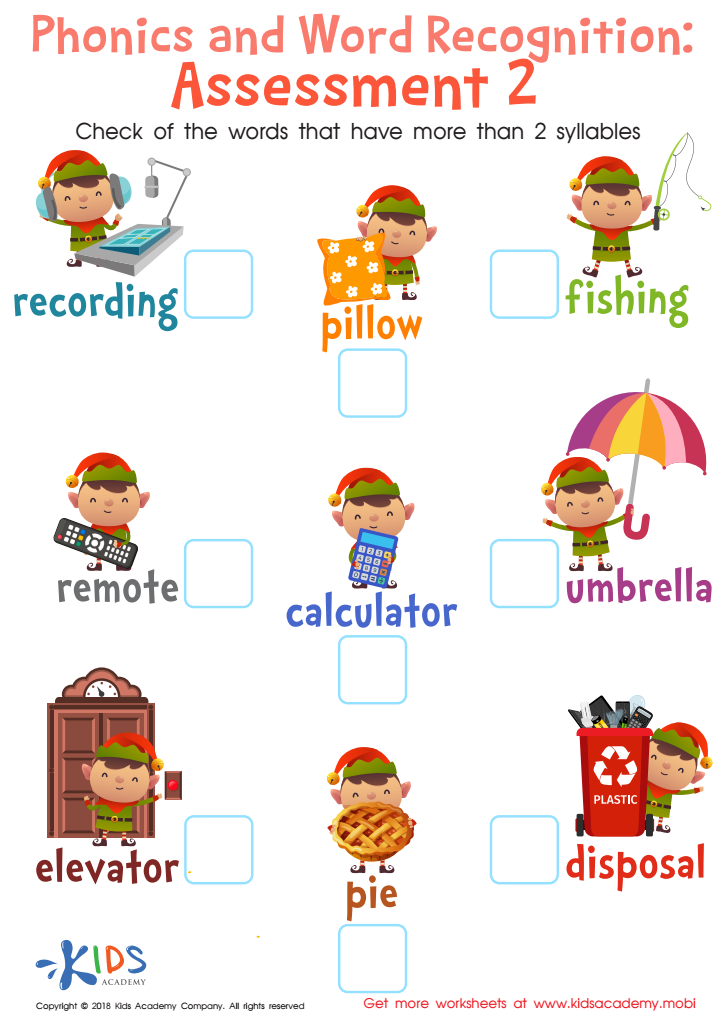
Phonics and Word Recognition: Assessment 2 Worksheet

Phonics and Word Recognition: Assessment 2 Worksheet

Help your kids learn proper pronunciation by counting syllables. Most words they'll encounter have 1-3 syllables, making them simple to say. Have them repeat the words in your worksheet after you. Focus on longer words with more than two syllables.
Phonics and Word Recognition: Assessment 2 Worksheet
Worksheet
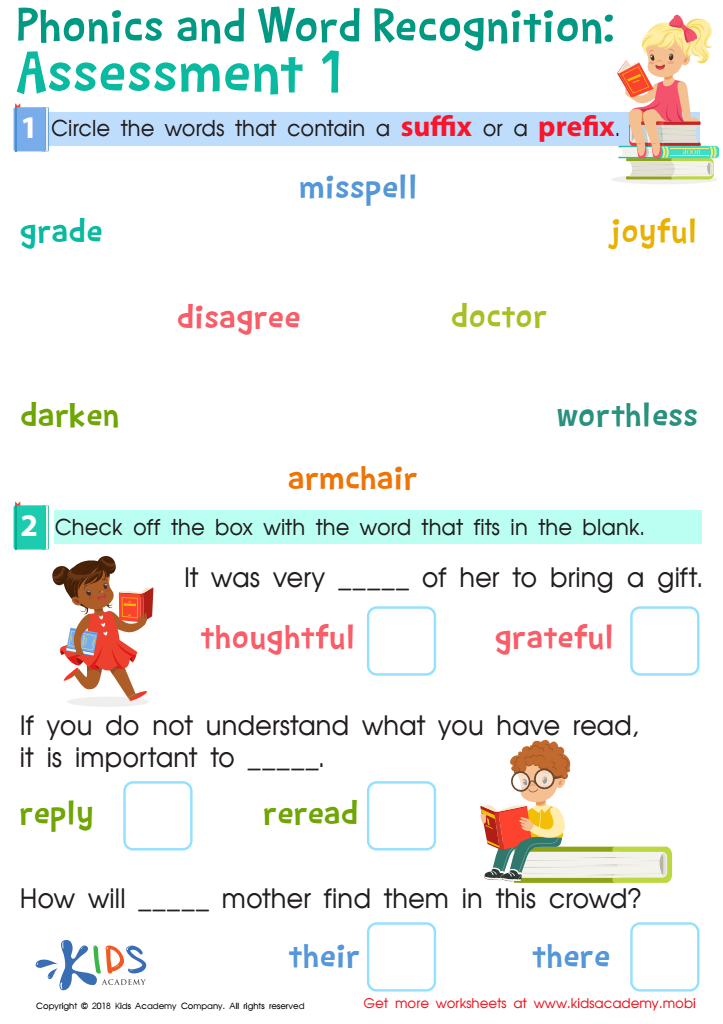
Phonics and Word Recognition: Assessment 1 Worksheet

Phonics and Word Recognition: Assessment 1 Worksheet

Explain prefixes (words added to start of another word to give it a new meaning) and suffixes (added to end of word to change its meaning) to your kids with examples like 'unhappy' (prefix) and 'forgetful' (suffix). Now, help your child complete this worksheet, including circling words and checking boxes.
Phonics and Word Recognition: Assessment 1 Worksheet
Worksheet
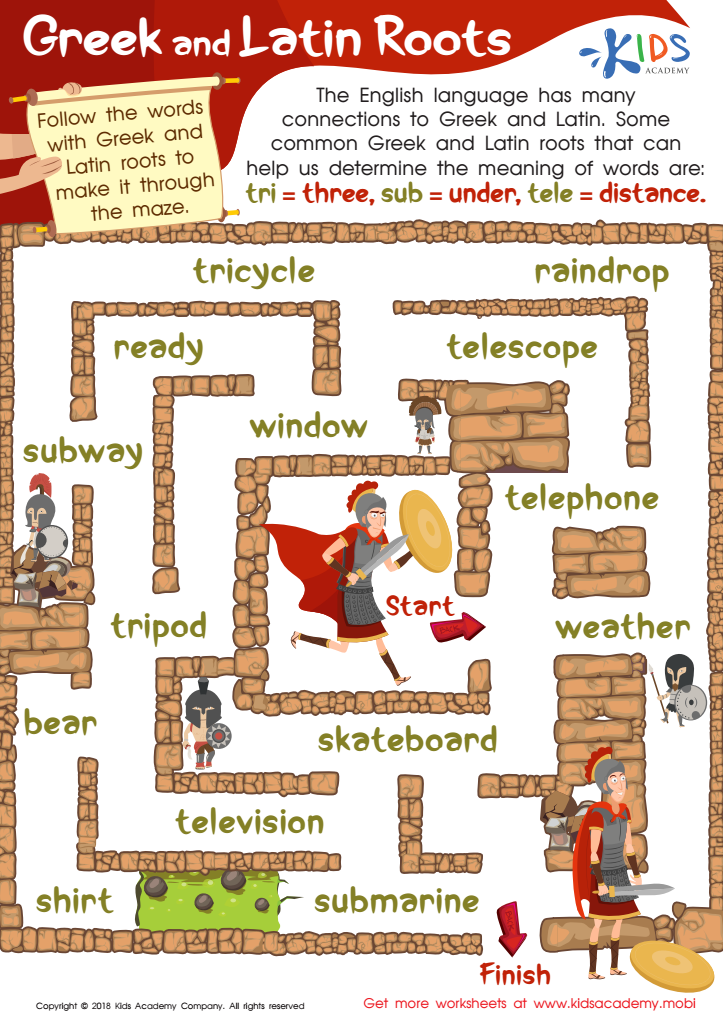
Greek and Latin Roots Worksheet

Greek and Latin Roots Worksheet

English borrows lots of words from other languages, and it has many ties to Greek and Latin. For example, 'tri', 'sub' and 'tele' (all from Greek and Latin) mean 'three', 'under' and 'distance' respectively. Help your child understand the meanings of words by having them work through a maze with words from these languages.
Greek and Latin Roots Worksheet
Worksheet
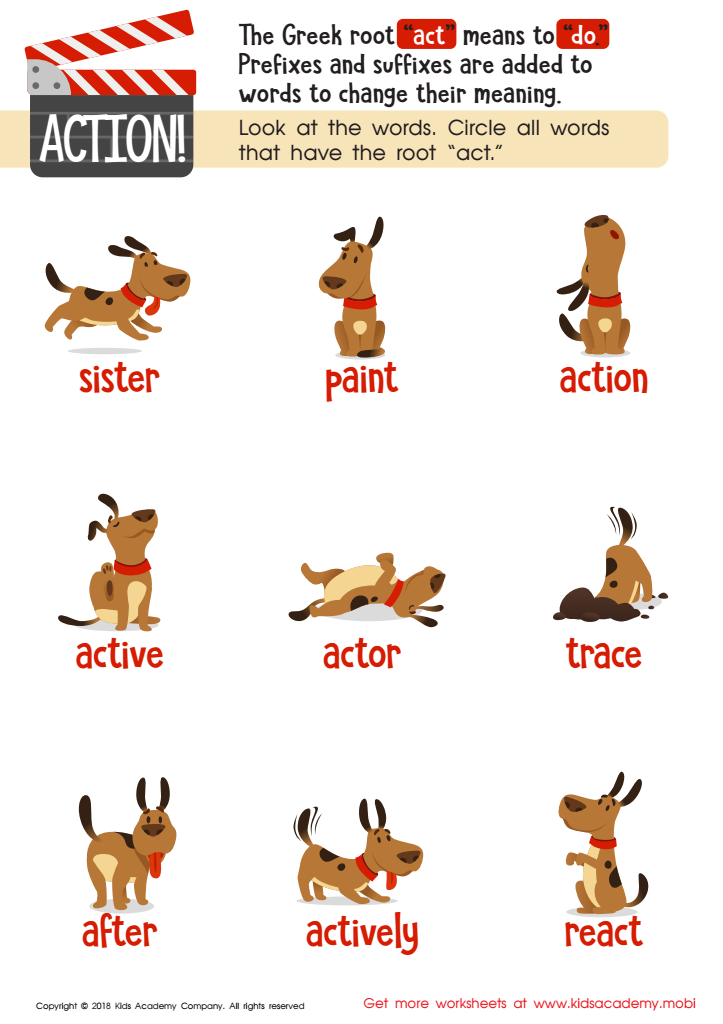
Action! Worksheet
Action! Worksheet

Action! Worksheet

Most English words are borrowed, and prefixes and suffixes are added to change the meaning. A popular prefix is 'act', from the Greek root meaning 'to do'. With your kids, look at the words in this worksheet and circle those with the root 'act'.
Action! Worksheet
Worksheet
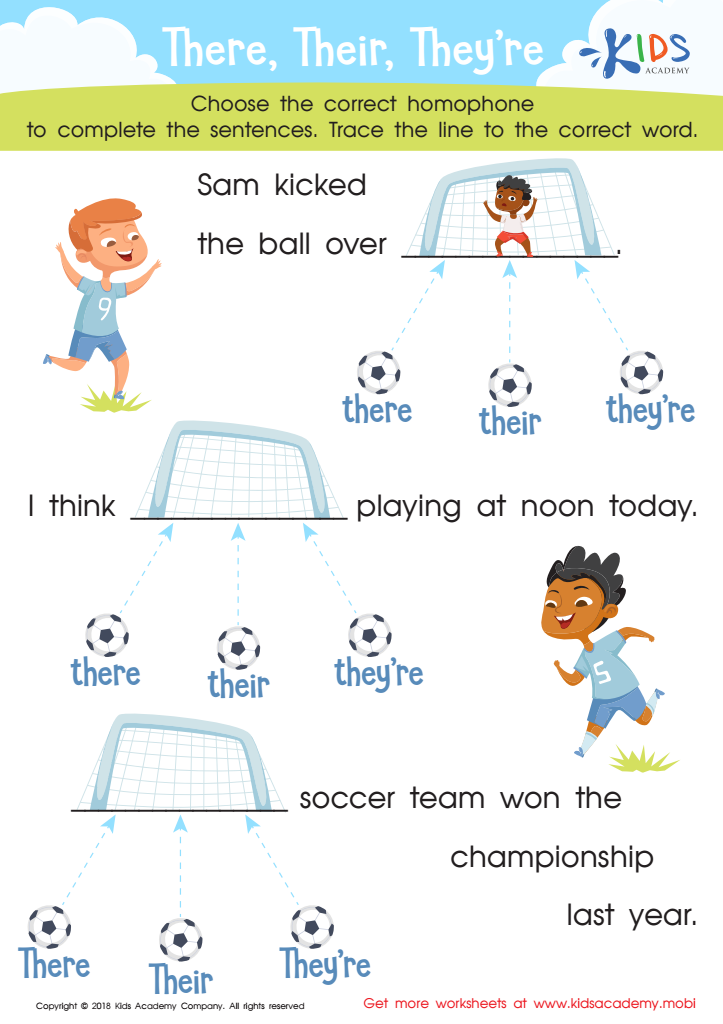
There, Their, They're Worksheet

There, Their, They're Worksheet

Explain to your kids the difference between 'there', 'their' and 'they're'. These three words are homophones - spelt similarly but with different meanings. Help them choose the correct homophones when completing sentences, and trace the line to the right word.
There, Their, They're Worksheet
Worksheet
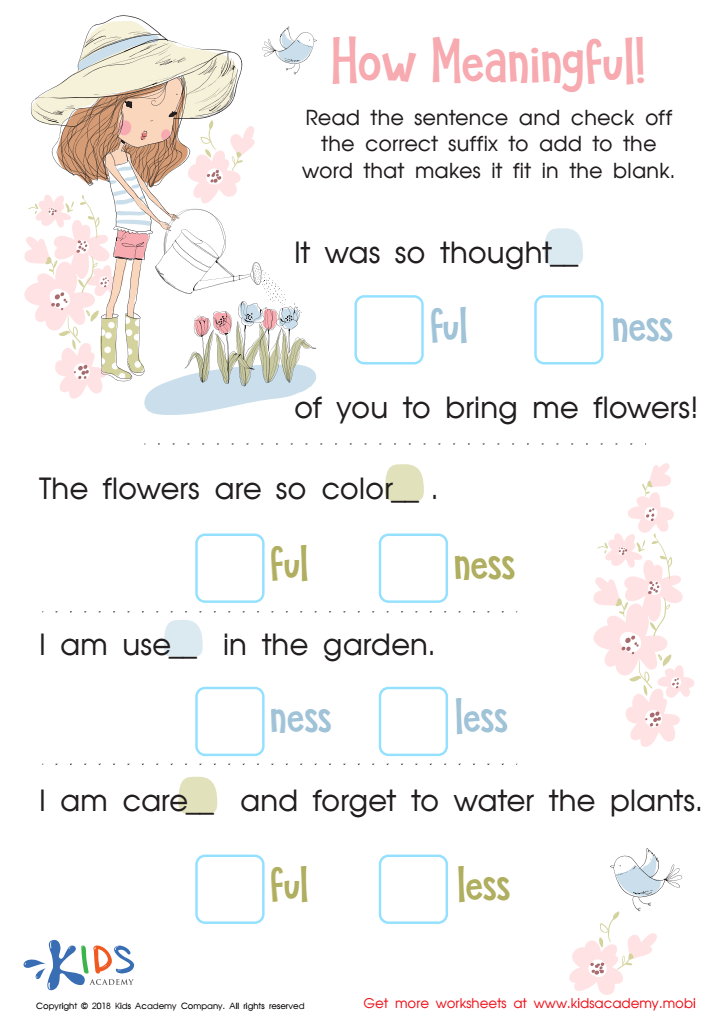
How Meaningful! Worksheet

How Meaningful! Worksheet

'Meaningful' is used to describe something that carries importance to someone else. For example, calling friends on their birthdays. The suffix -ful can also be added to other words to create new meanings; try this with your kids and help them check the correct suffix to complete the sentence.
How Meaningful! Worksheet
Worksheet
Find The Missing Word Worksheet

Find The Missing Word Worksheet

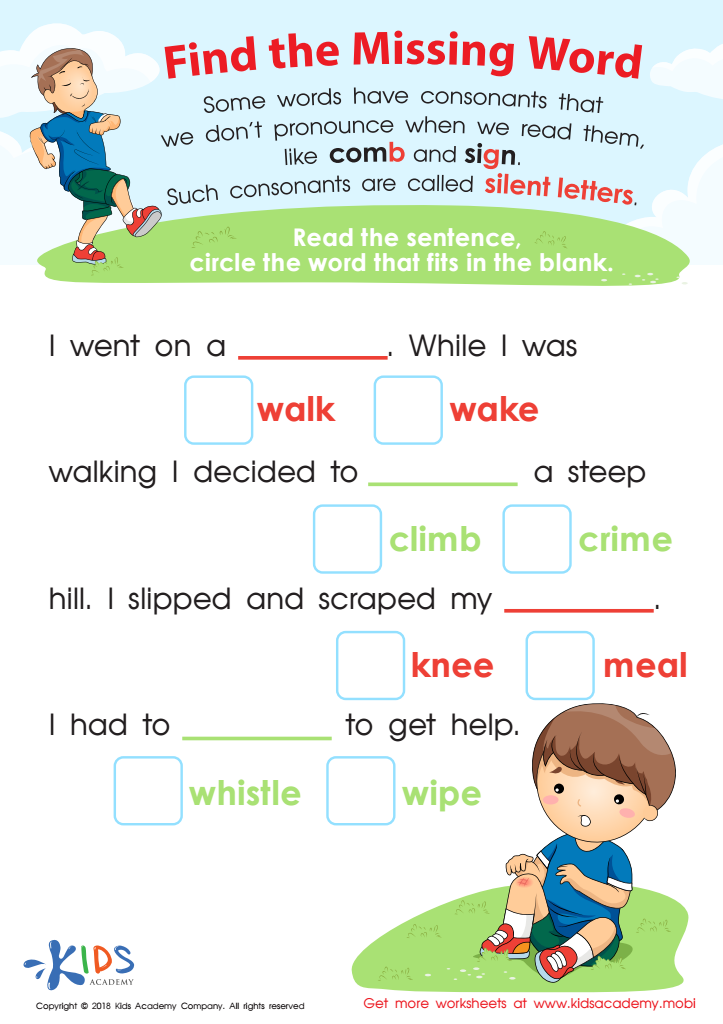
Master silent letters like "b" and "k" with this illustrated worksheet! Read the sentences and fill in the blanks with the correct word, checking the box. Read all the way to the bottom and review words containing silent letters. A great way to help your little learner tackle a tough topic!
Find The Missing Word Worksheet
Worksheet
Silent Letter Maze Worksheet


Silent Letter Maze Worksheet

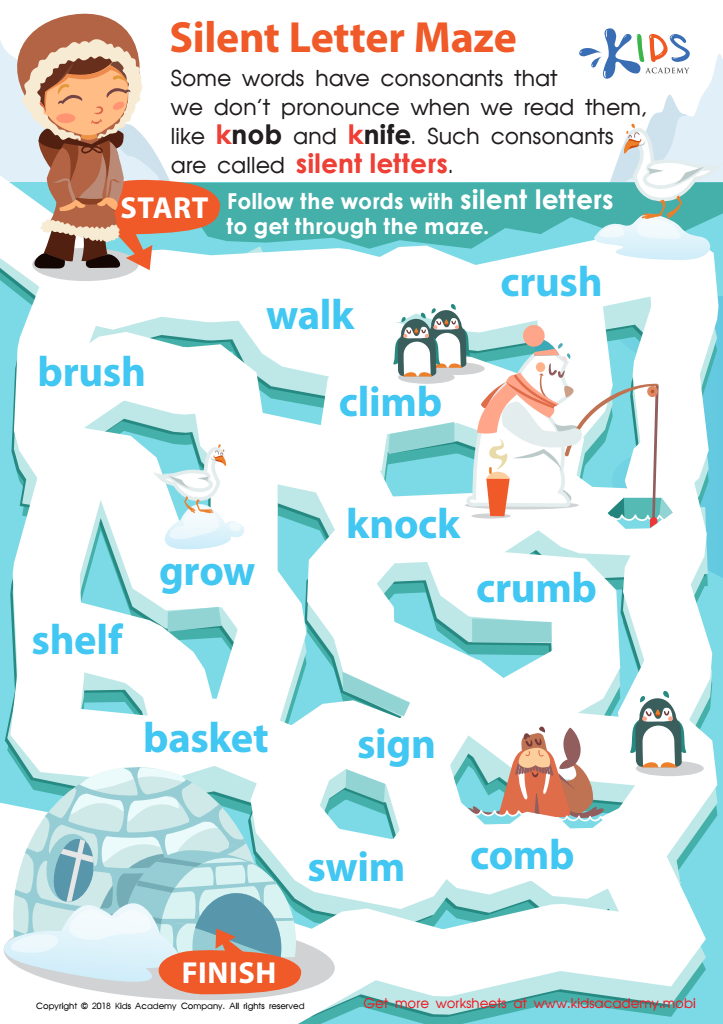
Learning to read can be tricky, especially with words with irregular pronunciations. Explain to your child that some words have consonants we do not pronounce when reading. Ask them for examples like 'knife' and 'knob'. These consonants are called silent letters. Download this pdf to practice words with silent letters and complete the maze.
Silent Letter Maze Worksheet
Worksheet


Parents and teachers should pay close attention to the developmental needs and experiences of children ages 3-9 because these formative years lay the foundation for lifelong learning and personal development. During this critical period, children's brains are exceptionally receptive to new experiences, making them primed for acquiring essential skills in language, social interaction, emotional regulation, and problem-solving.

Providing a supportive and stimulating environment helps foster curiosity and creativity, essential elements for cultivating a love for learning. Positive experiences in early childhood, such as engaging in interactive reading, cooperative play, and hands-on activities, significantly contribute to cognitive development and academic readiness.

Furthermore, the social and emotional growth that occurs during these years is critical. Children learn to navigate relationships, express emotions appropriately, and develop self-esteem. Supportive adults who model and reinforce respectful behavior, empathy, and resilience help children build the social skills required for successful interactions throughout life.

Early investment in a child's education and well-being creates a robust groundwork for their future academic success and personal growth. As a result, ensuring a nurturing and enriched environment during ages 3-9 is pivotal, setting children on a trajectory toward becoming well-rounded, capable, and confident individuals.