Filters

179 filtered results

Clear all filters
Favorites
With answer key
Interactive

179 filtered results

Difficulty Level

Grade


Subject

Check out this FREE Trial Lesson on Alphabet for age 7-9!

Correctly use Frequently used Homophones and Antonyms

Favorites
With answer key
Interactive
  • 7-9
  • Interactive
  • Alphabet
Silent Letter Maze Worksheet

Silent Letter Maze Worksheet

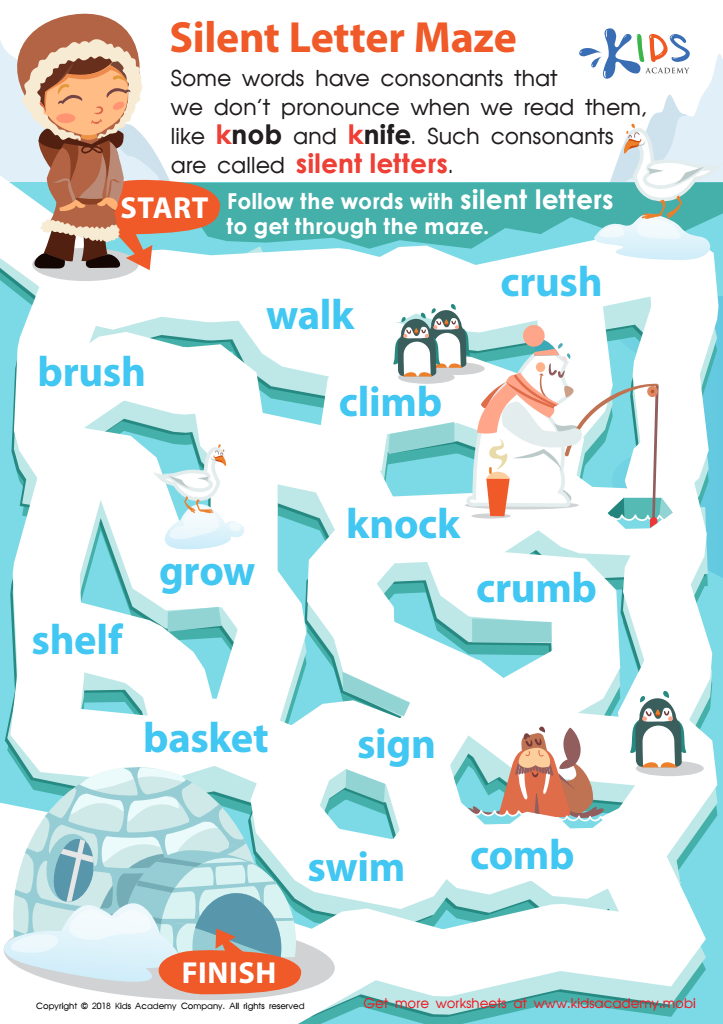
Learning to read can be tricky, especially with words with irregular pronunciations. Explain to your child that some words have consonants we do not pronounce when reading. Ask them for examples like 'knife' and 'knob'. These consonants are called silent letters. Download this pdf to practice words with silent letters and complete the maze.
Silent Letter Maze Worksheet
Worksheet
Sight Word Archery Worksheet

Sight Word Archery Worksheet

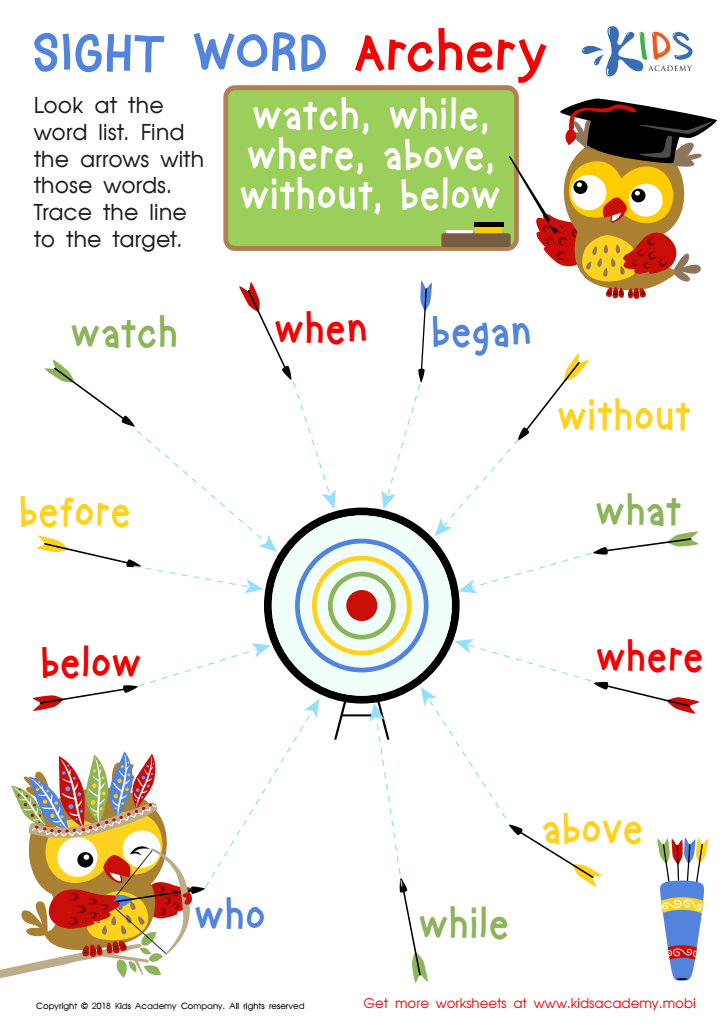
Read the words list with your kids, pointing at each one. Ask them to do the same. Help them find the arrows with those words and trace the line to the target in the centre.
Sight Word Archery Worksheet
Worksheet
Homophones: Crayons Worksheet

Homophones: Crayons Worksheet

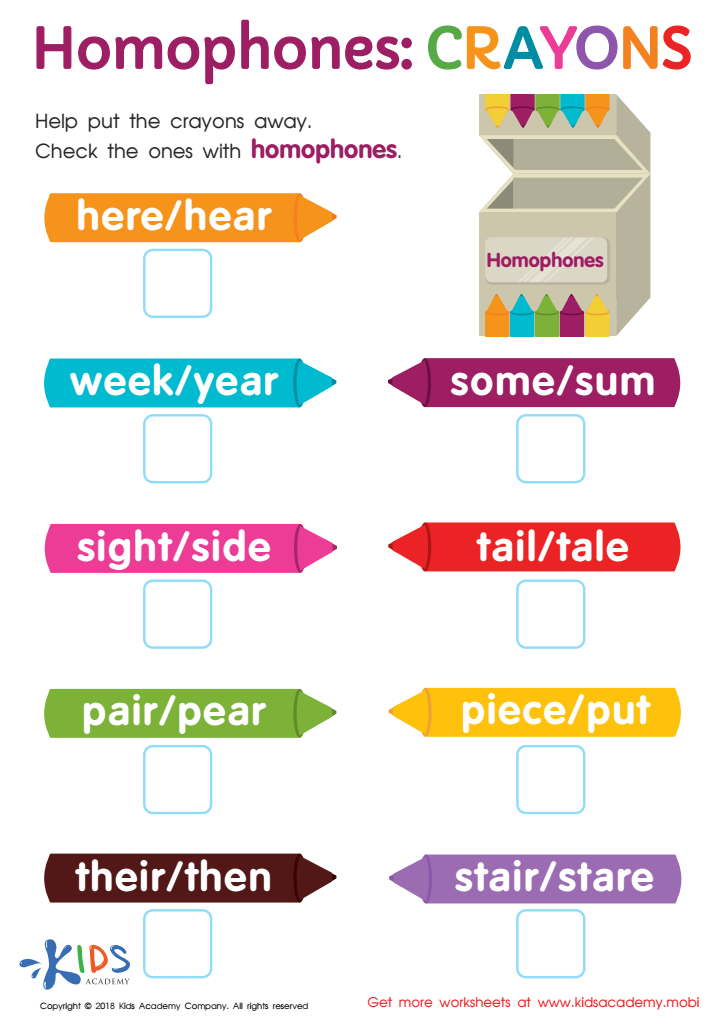
Ask your kids: "What are homophones?" Explain that homophones are words that sound alike but have different meanings, like 'dare' and 'deer'. Ask them to identify homophones by putting the crayons in this printout away according to the words.
Homophones: Crayons Worksheet
Worksheet
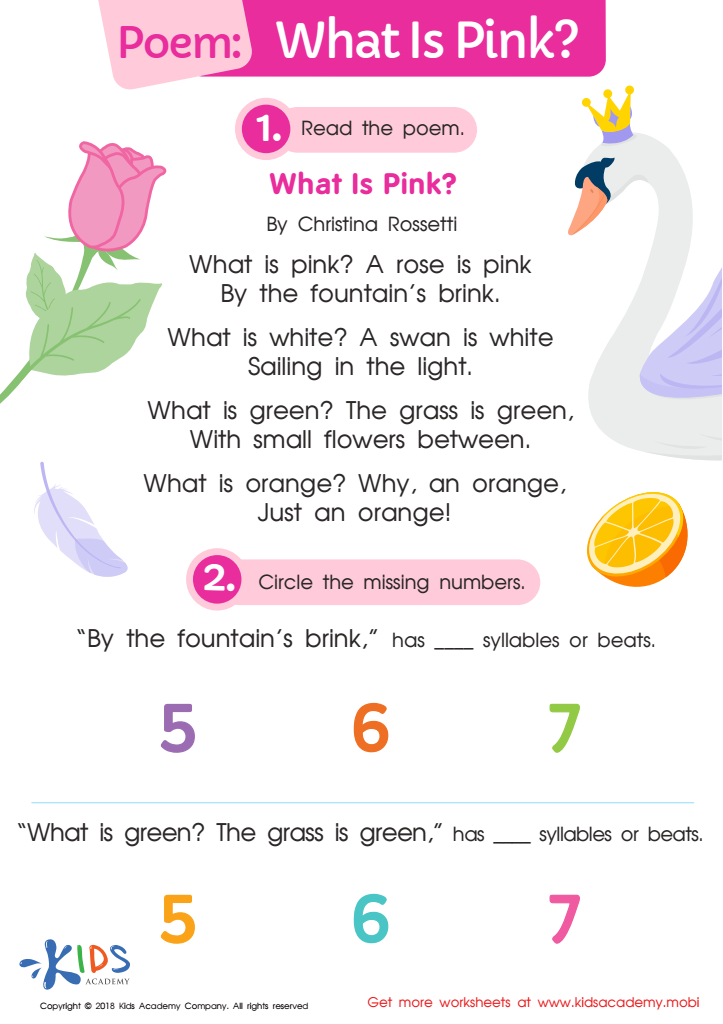
Poem: What Is Pink? Worksheet

Poem: What Is Pink? Worksheet

Help your kids learn with short, fun, interesting poems! Read it aloud to them and point out the rhyme patterns. Have them circle the missing numbers to answer two questions. Show examples of objects with the colors in the poem. This will help them learn to read, and also understand colors better.
Poem: What Is Pink? Worksheet
Worksheet
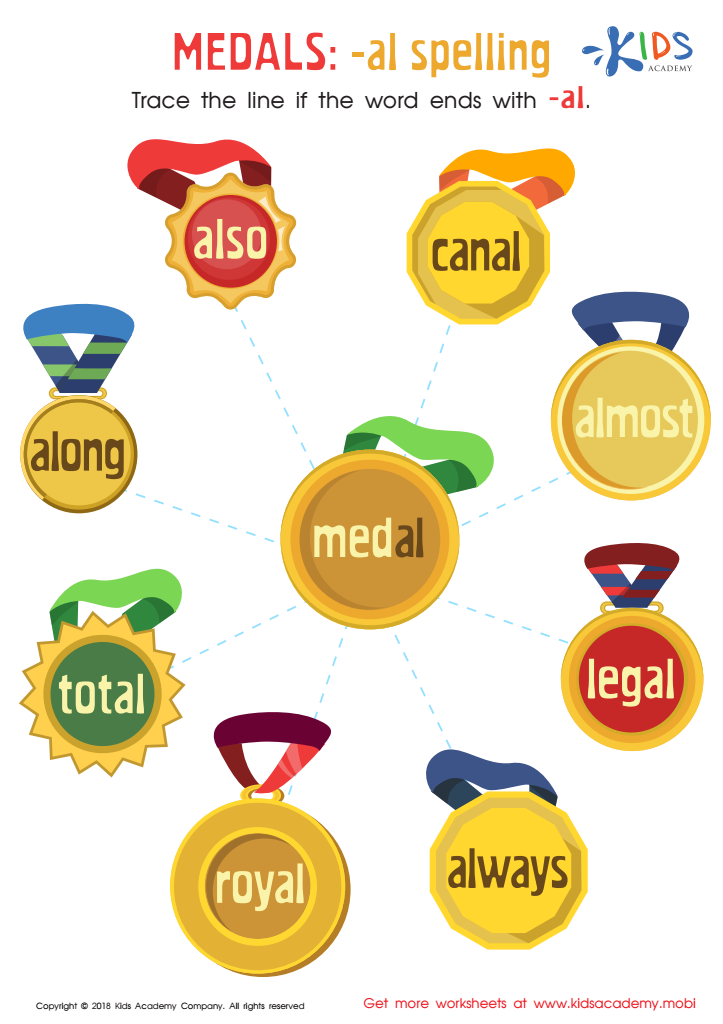
Medals: Al Spelling Worksheet

Medals: Al Spelling Worksheet

Have your students list common words ending with -al. See how many they can give and spell. Give examples of your own, assisting with spelling. Now review the words in the worksheet. Guide students to trace the line for each word ending with -al. 80 words
Medals: Al Spelling Worksheet
Worksheet
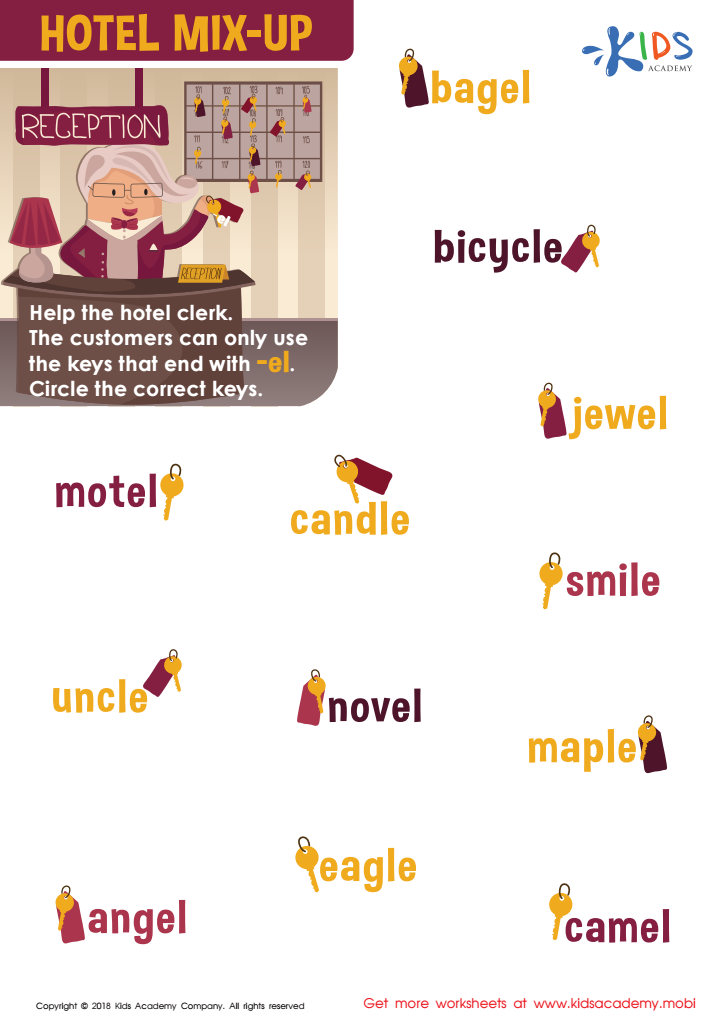
Hotel Mix-up Worksheet

Hotel Mix-up Worksheet

Before doing this worksheet, explain to your kids what a hotel is. It's a building where guests can stay for a few days and pay for their stay. In this exercise, the hotel clerk needs help finding the correct keys. Have your kids circle words ending with -el to find the right ones.
Hotel Mix-up Worksheet
Worksheet
Rhyming Words Worksheet

Rhyming Words Worksheet

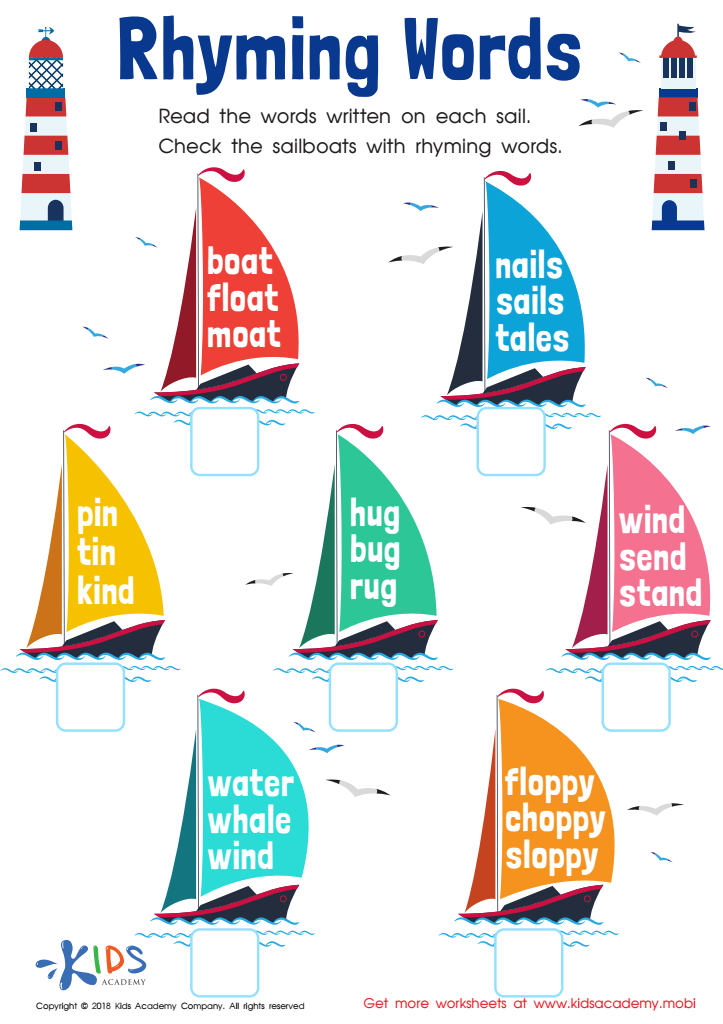
Does your child know about rhyming words? Get them interested in poetry and explain that these words have similar sounds when pronounced. Read the words on each sailboat to your child and ask them to identify the rhyming pairs. Guide them to check the sailboats.
Rhyming Words Worksheet
Worksheet
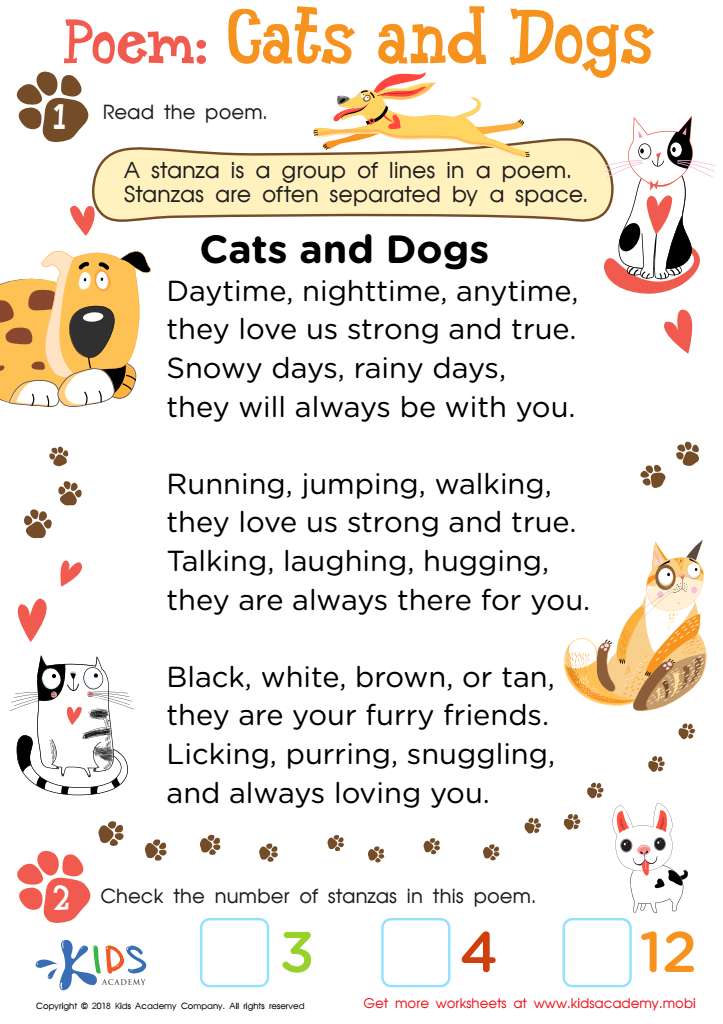
Poem: Cats and Dogs Worksheet

Poem: Cats and Dogs Worksheet

Read the poem to your child and point out where each stanza ends. Ask if they know what a stanza is (if not, explain it's a group of lines in a poem). Help them answer the question at the bottom of the printout. This simple, sweet poem about cats is easy for your child to relate to.
Poem: Cats and Dogs Worksheet
Worksheet
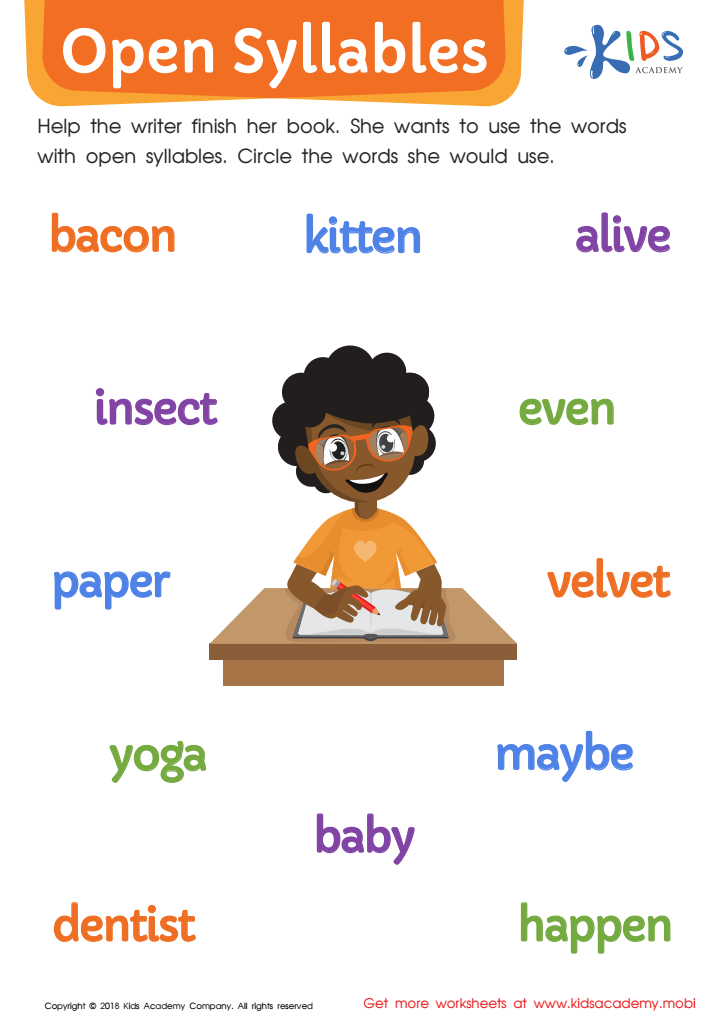
Open Syllables Worksheet

Open Syllables Worksheet

Before beginning this worksheet, make sure your child knows what open syllables are. If not, take time to teach them with examples. Then, help the writer finish her book by circling words with open syllables. She needs your child's help!
Open Syllables Worksheet
Worksheet
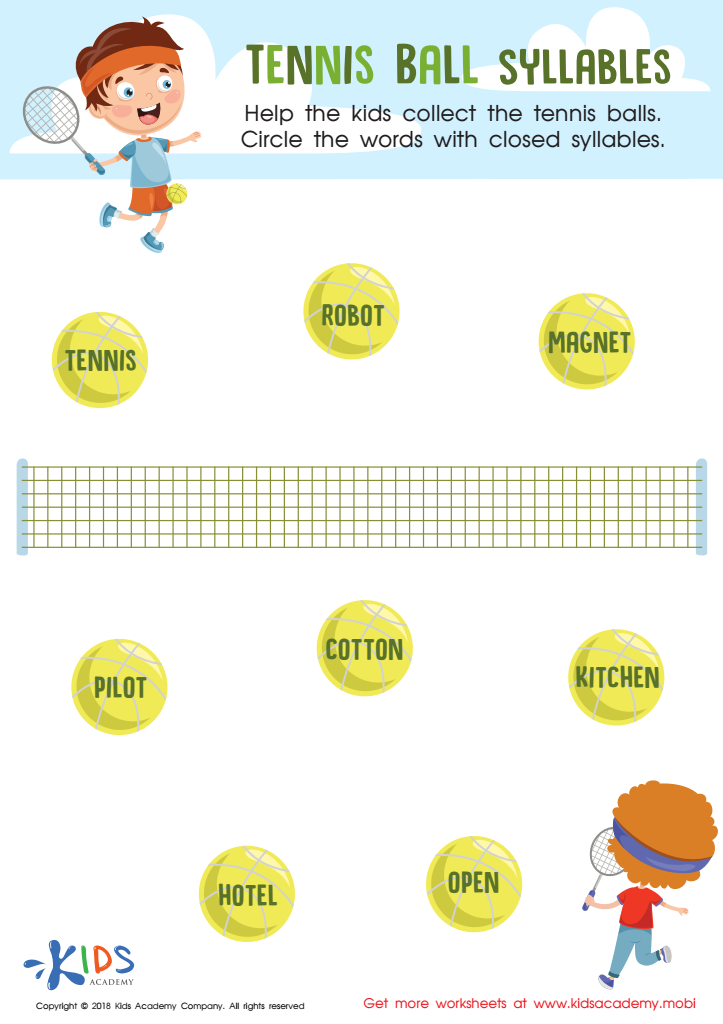
Tennis Ball Syllables Worksheet

Tennis Ball Syllables Worksheet

To help your kids become fluent speakers, they need to learn syllables. A word can have one to seven syllables, with longer words having more. For this level, they will be working with one or two syllables. Assist them as they circle the words with closed syllables in this worksheet.
Tennis Ball Syllables Worksheet
Worksheet
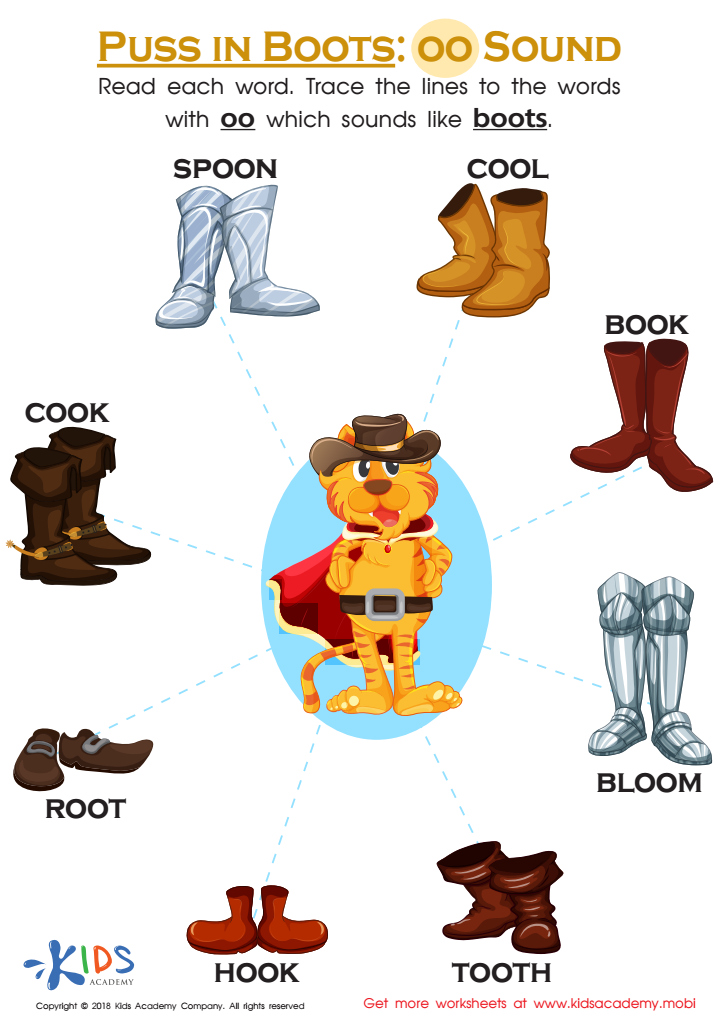
Puss in Boots: OO Sound Worksheet

Puss in Boots: OO Sound Worksheet

Read out the words in this printout with the correct pronunciation. Have your child repeat each word after you. Then have them read the words and identify the ones with the "oo" sound. Guide their hands as they trace the lines to the right words.
Puss in Boots: OO Sound Worksheet
Worksheet
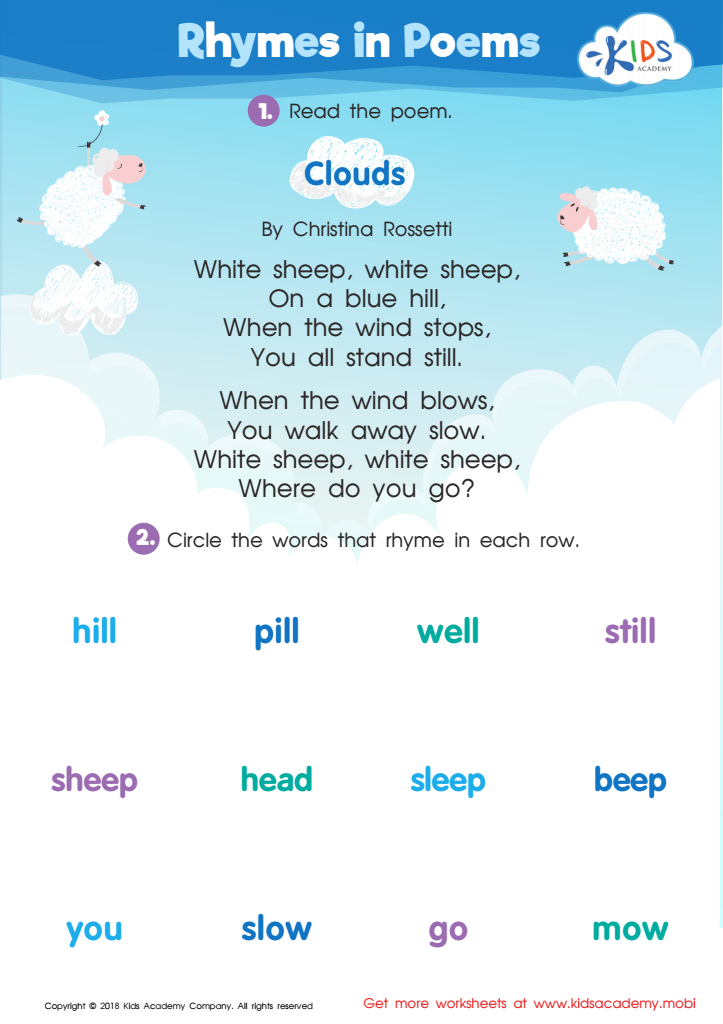
Rhymes in Poems Worksheet

Rhymes in Poems Worksheet

Poems are lovely works of literature; some with rhymes, and some without. This poem for kids is full of rhymes and tells the tale of a sheep. Read it aloud to your kids, then help them circle the rhyming words.
Rhymes in Poems Worksheet
Worksheet
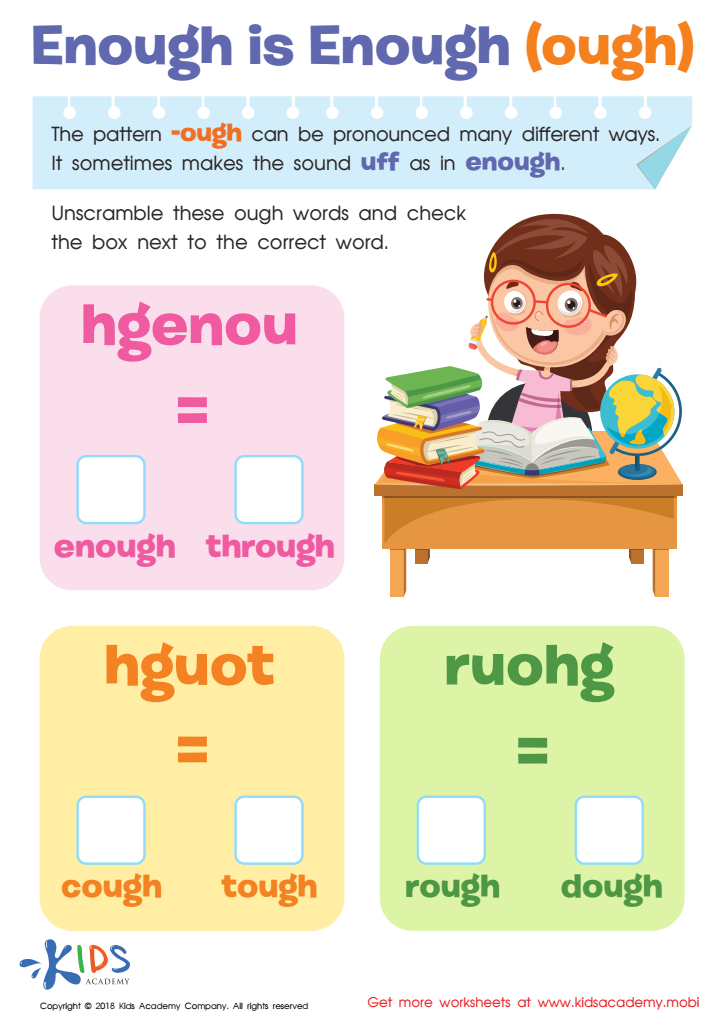
Enough Is Enough (ough) Worksheet

Enough Is Enough (ough) Worksheet

As your students learn more about reading and pronouncing words, they can explore how some word patterns can be said differently. The 'ough' pattern, for instance, can be pronounced several ways. 'Enough' has the 'uff' sound. Provide your students with examples of words pronounced similarly and help them unscramble 'ough' words on this worksheet, ticking the box for the correct word.
Enough Is Enough (ough) Worksheet
Worksheet
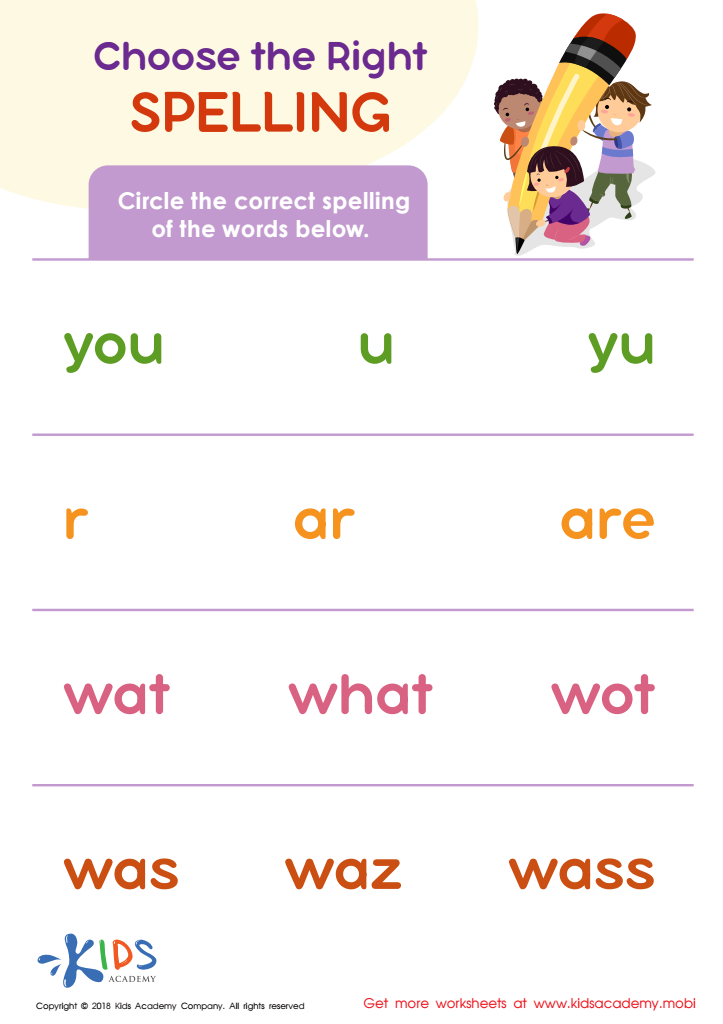
Choose the Right Spelling Worksheet

Choose the Right Spelling Worksheet

Can your kids spell? Even champions can benefit from this educational worksheet. Start with basic words, then ask your child to say each word aloud. Help them circle the correct spelling for each.
Choose the Right Spelling Worksheet
Worksheet
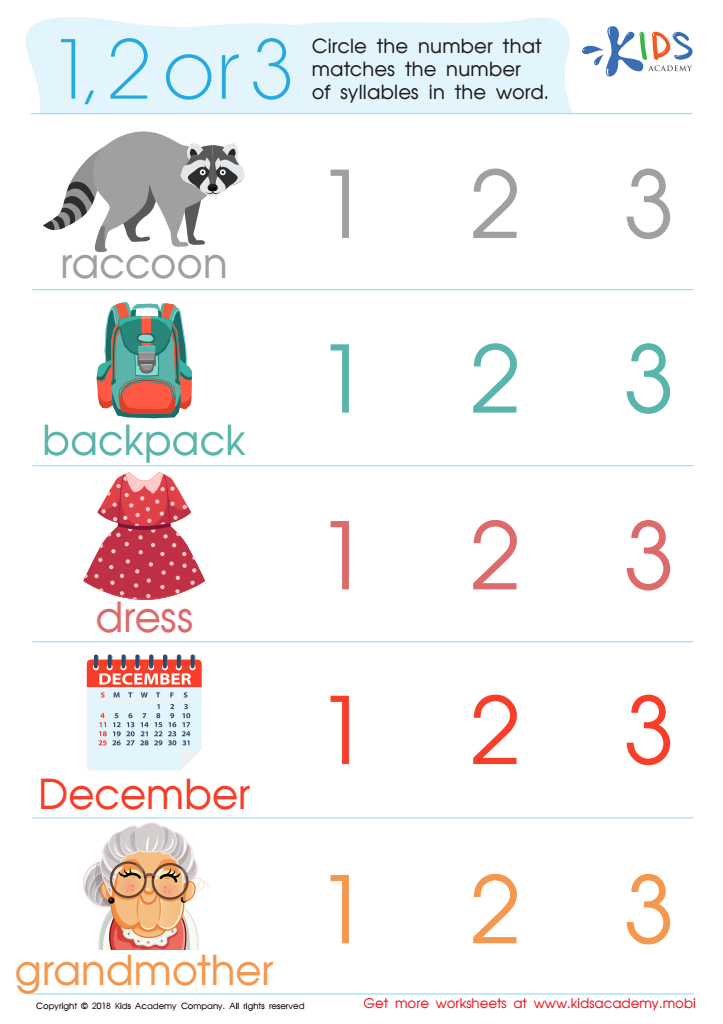
1, 2 or 3? Worksheet

1, 2 or 3? Worksheet

Do your kids know about syllables? Test their understanding with this worksheet. Read the words aloud and ask them to say them with you. Help them circle the number that matches the number of syllables in each word. Perfect for expanding knowledge or testing how much they've already learned.
1, 2 or 3? Worksheet
Worksheet
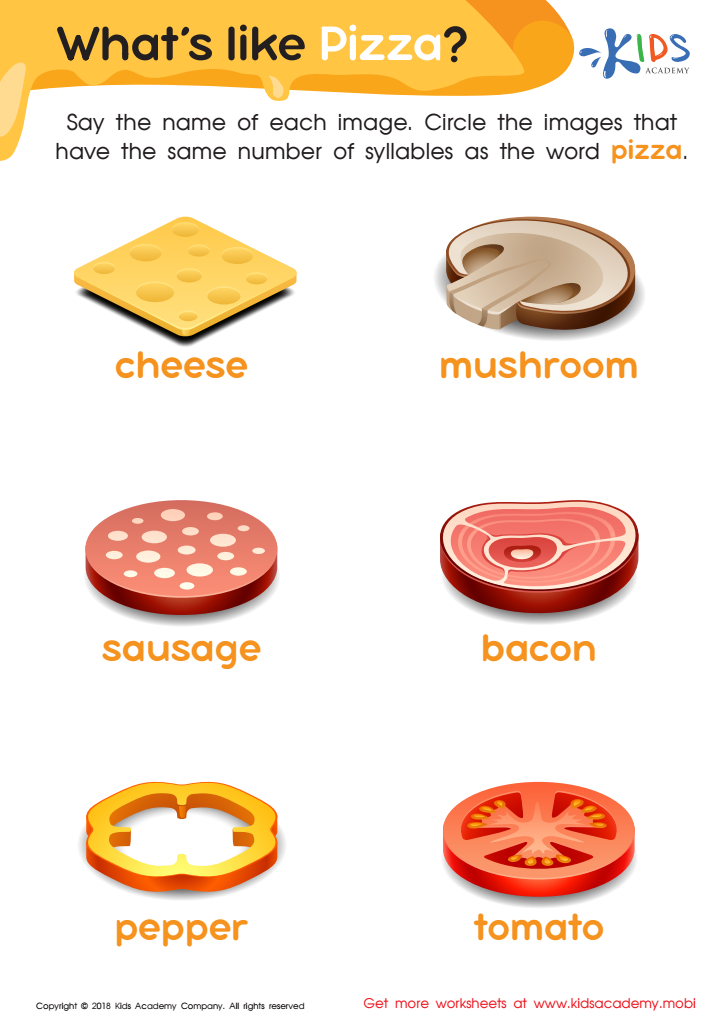
What's Like Pizza? Worksheet

What's Like Pizza? Worksheet

Encourage your kids to exercise their minds with this pizza worksheet! Ask them to name the ingredients they like on their favourite pizzas. Then, help them circle the images that have the same number of syllables as 'pizza'. They'll have fun while learning too!
What's Like Pizza? Worksheet
Worksheet
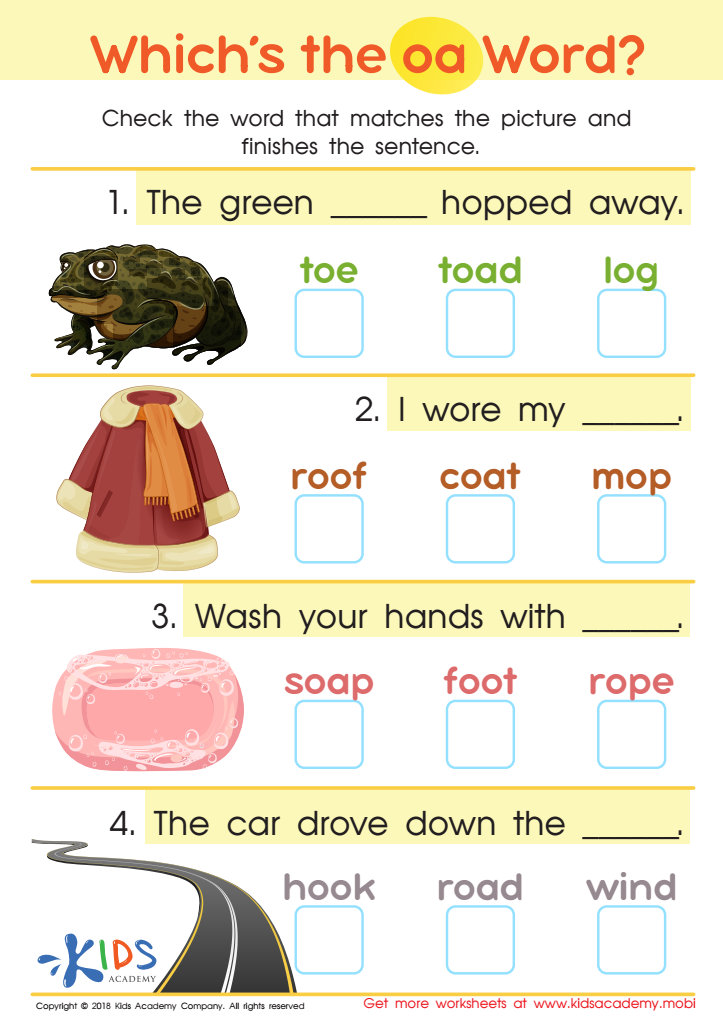
Which's the OA Word? Worksheet

Which's the OA Word? Worksheet

Encourage your kids to complete this fun worksheet. Ask them to identify the animals and objects in the pictures. Read the incomplete sentences aloud, and then find the correct word to finish the sentence. Check their work.
Which's the OA Word? Worksheet
Worksheet
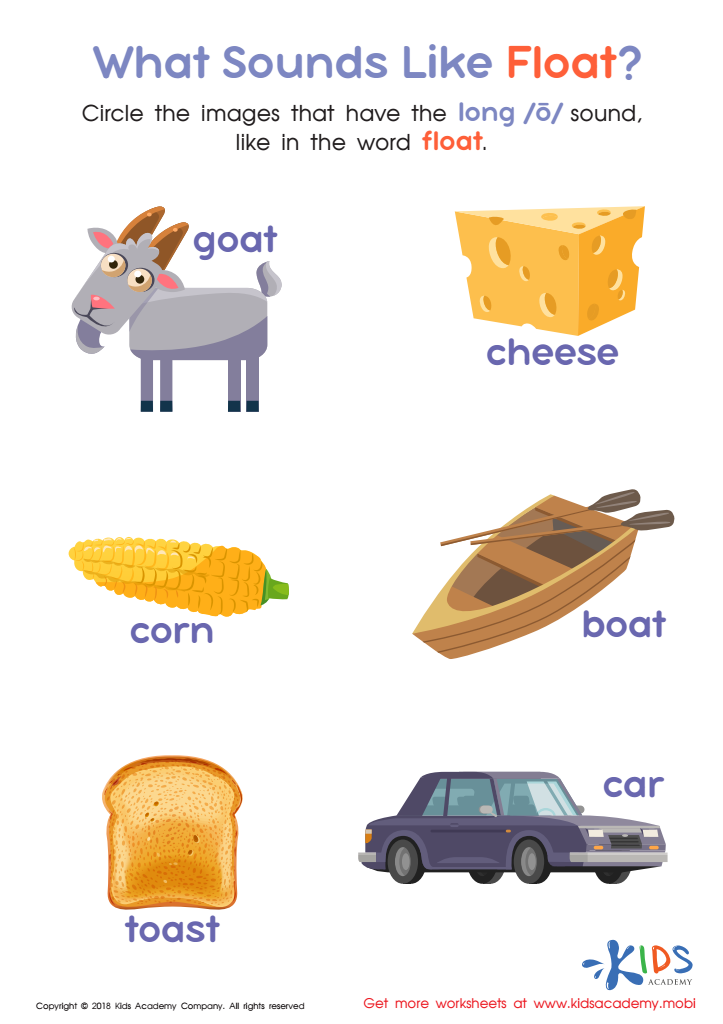
What Sounds Like Float? Worksheet

What Sounds Like Float? Worksheet

Help your kids practice the long /o/ sound with words such as 'boat', 'goat' and 'float'. Ask them to identify and circle the images in the worksheet that have the same sound. Award bonus points if they come up with more words with 'oa' spelling!
What Sounds Like Float? Worksheet
Worksheet
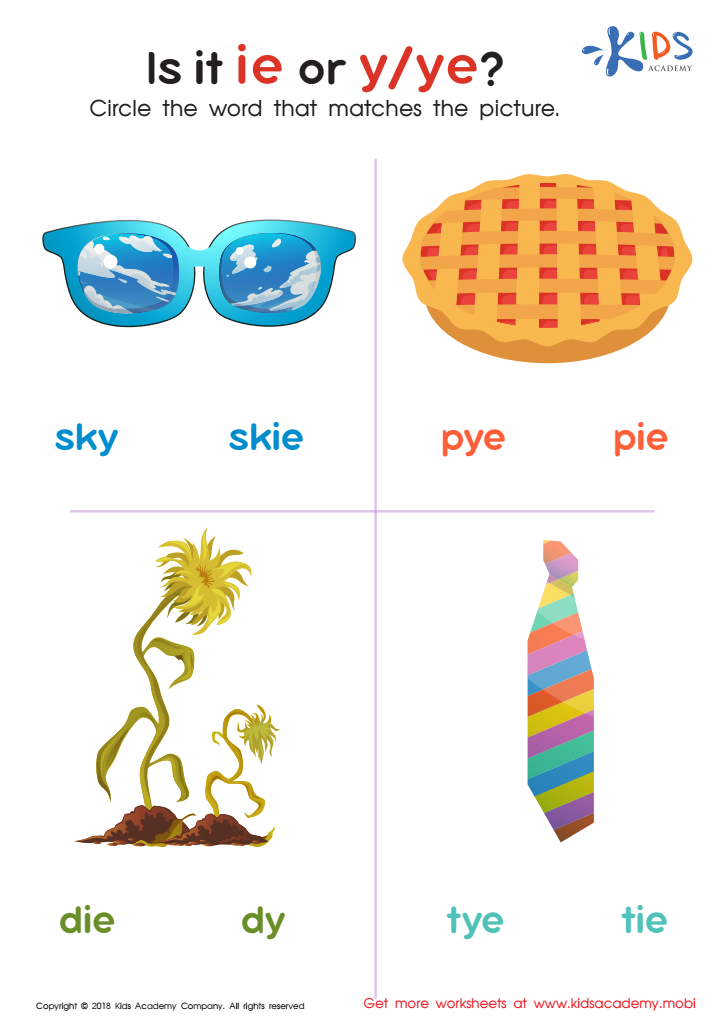
Is It IE or Y/Ye? Worksheet

Is It IE or Y/Ye? Worksheet

Test your child's picture identification skills by pointing at common items in your house and asking them to name them. Then, look at the objects in this worksheet with your little one. Point at each one, ask for the name, then ask which spelling is correct. Help them circle the correct word.
Is It IE or Y/Ye? Worksheet
Worksheet
Hungry Caterpillar Maze Worksheet

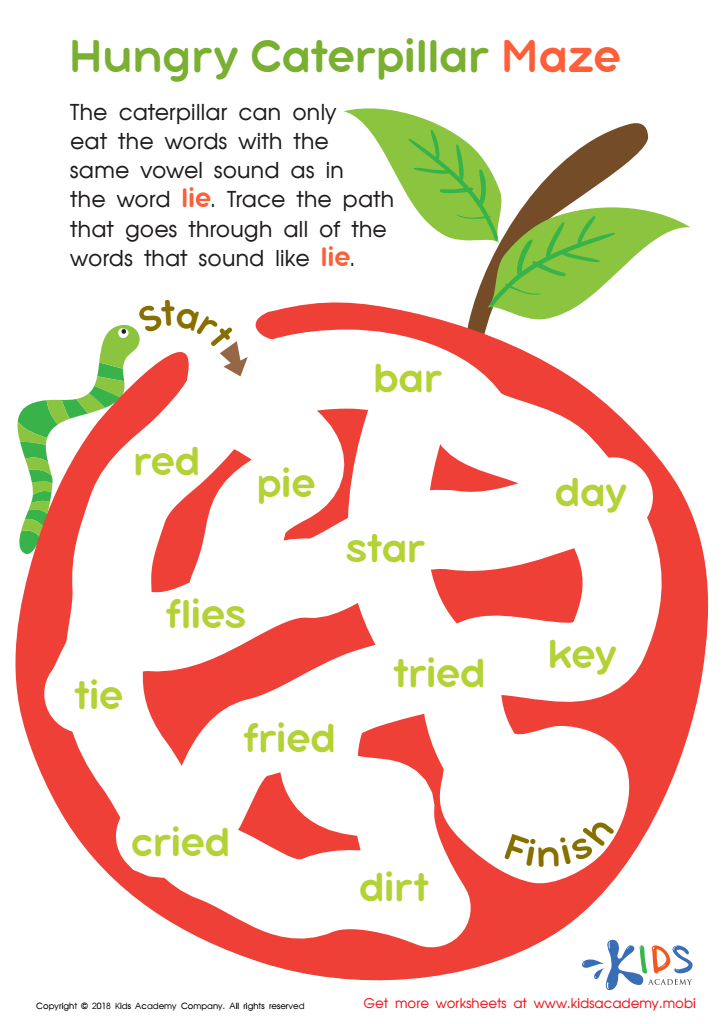
Hungry Caterpillar Maze Worksheet

Remind the kids that caterpillars turn into butterflies! This worksheet helps them practice their vowel sounds. They must trace the path of words that sound like ‘lie’ to help the caterpillar reach the finish line. It's a fun way to learn and explore!
Hungry Caterpillar Maze Worksheet
Worksheet
The AI Tree Worksheet

The AI Tree Worksheet

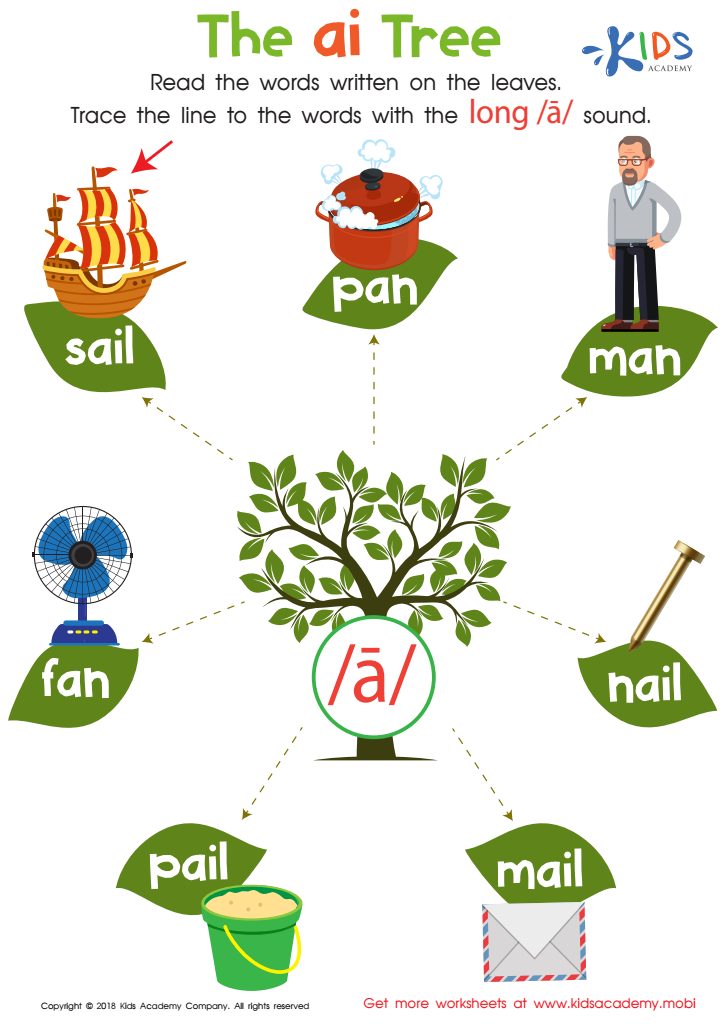
Help your kids learn to read better with this worksheet! Introduce the vowel pair 'ai' and give them familiar examples. Ask them to give you some in return. Then, have them read the words on the leaves and help them trace the ones with the long /a/ sound.
The AI Tree Worksheet
Worksheet
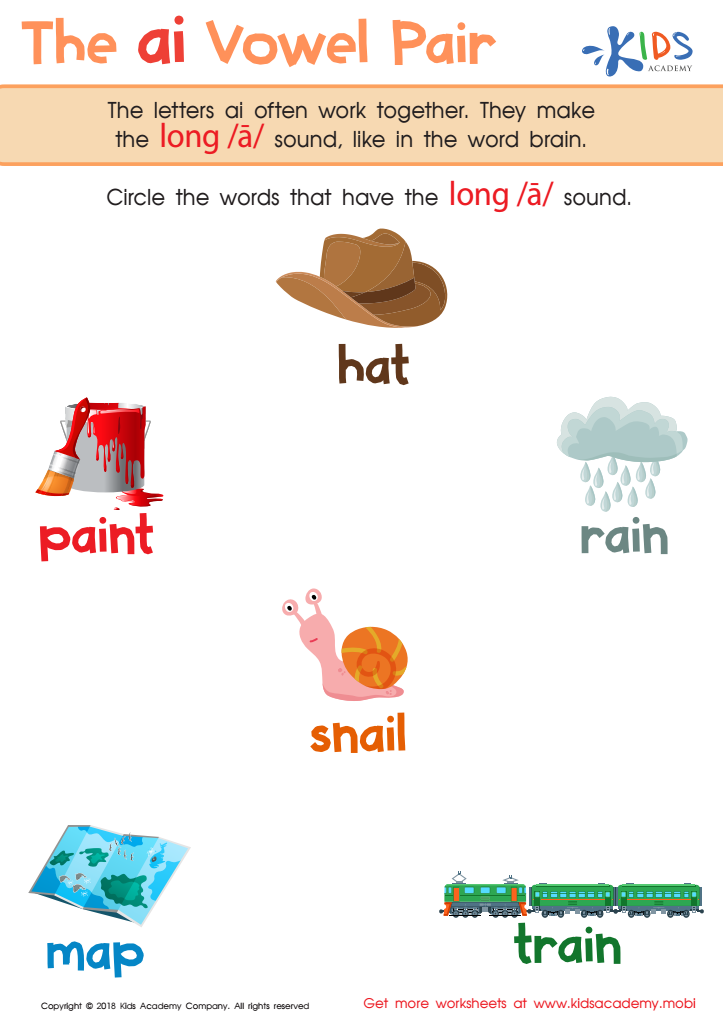
The AI Vowel Pair Worksheet

The AI Vowel Pair Worksheet

Vowel pairs make different sounds than individual letters. The 'ai' combination often forms the long /a/ sound, like in 'brain' and 'strain'. Get your kids to look at the pictures in the worksheet, identify each and say the name aloud. Help them circle the words with the long /a/ sound.
The AI Vowel Pair Worksheet
Worksheet
Is It EE, EA, or AY? Worksheet

Is It EE, EA, or AY? Worksheet

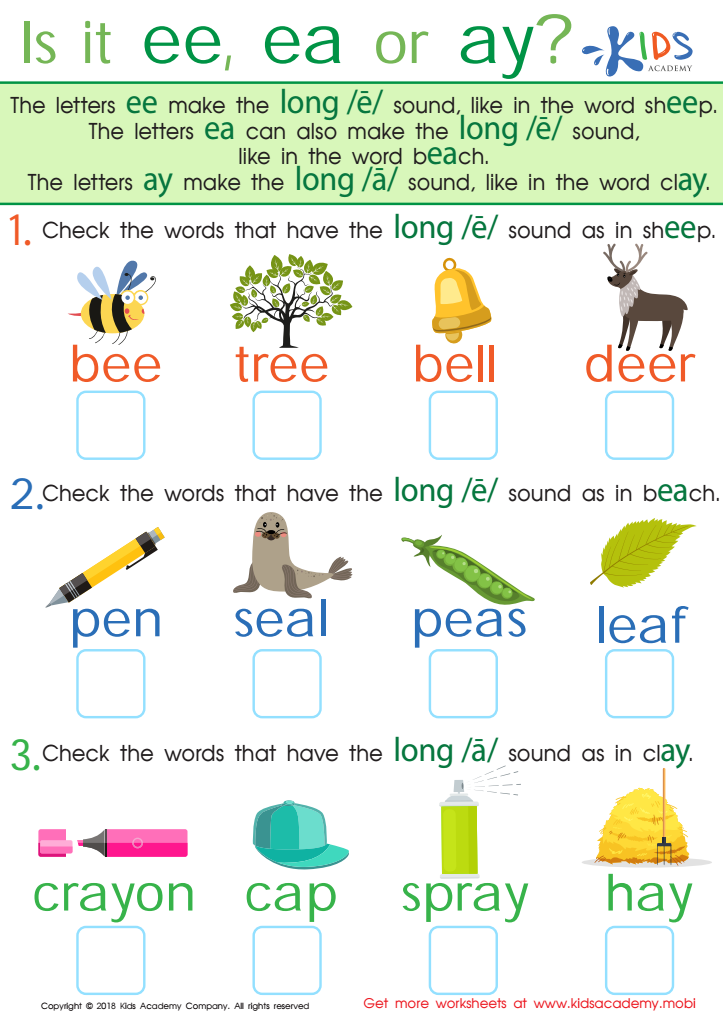
When 'ee', 'ea' and 'ay' are in words, they usually make the long /e/ and /a/ sounds. Examples of words with 'ee' are "sheep", 'beach' and 'seat' with 'ea', and 'clay' and 'play' with 'ay'. Check this colourful worksheet with your kids; help them find the words that make the long /e/ sound like 'sheep'.
Is It EE, EA, or AY? Worksheet
Worksheet
Is It Silent? Worksheet

Is It Silent? Worksheet

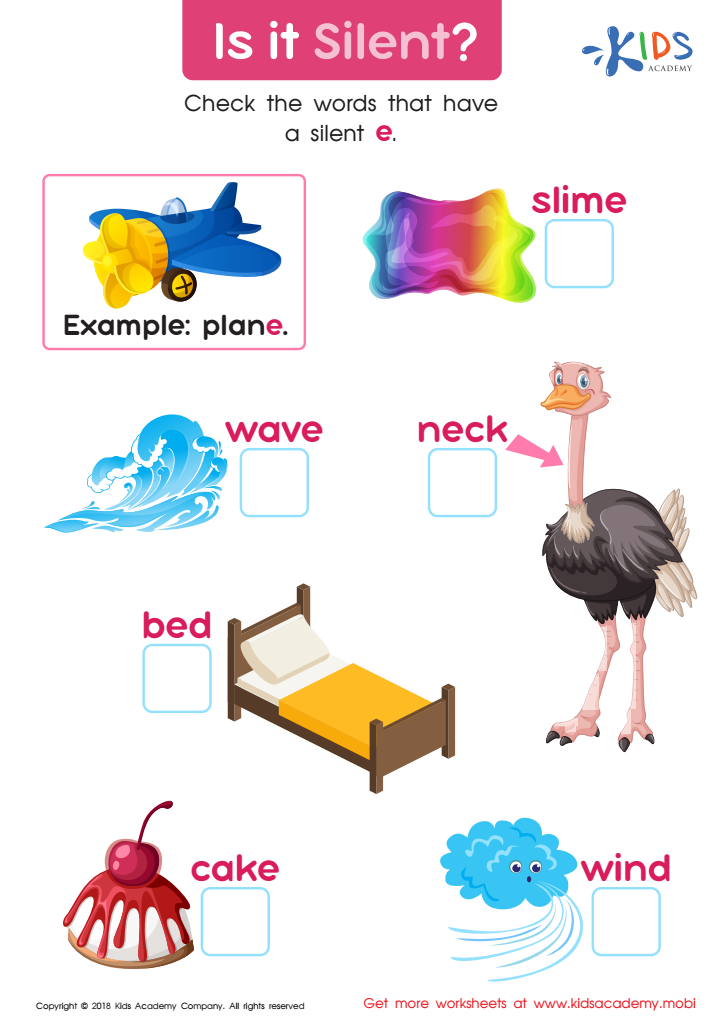
Phonetics can be tricky, like the sound of /e/ in 'egg' vs. the silent /e/ at the end of 'slime'. Ask your students to give more examples. Read out the words in this worksheet with your kids and ask them to identify the silent /e/ ones.
Is It Silent? Worksheet
Worksheet


Caring about the Alphabet for children ages 7-9 is crucial for both parents and teachers because it forms the bedrock of literacy development. During these formative years, children transition from simple letter recognition to developing reading fluency and writing skills. Mastery of the alphabet at this stage enables kids to decode words, giving them the tools they need to read independently. Proficiency in reading directly impacts academic success across all subjects, as it enhances comprehension skills and fosters a love of learning.

For teachers, ensuring that each child has a strong grasp of the alphabet helps in differentiating instruction and providing appropriate interventions for struggling students. Emotional and social development is also tied to literacy; children who read well can engage more fully in stories and discussions, boosting their confidence and interpersonal skills.

Parents play a vital role too, as engaging children with fun, alphabet-centered activities can reinforce what is learned in school. Reading together and playing educational games at home supports classroom instruction and encourages a positive attitude towards learning. In essence, attention to the alphabet at this age group sets the stage for a lifetime of educational benefits and a deeper connection to the world of words and ideas.