Filters

1537 filtered results

Clear all filters
Favorites
With answer key
Interactive

1537 filtered results

Difficulty Level

Grade


Check out this FREE Trial Lesson for age 6-8!

Cut Circles into Equal Parts

Favorites
With answer key
Interactive
  • 6-8
  • Interactive
  • Normal
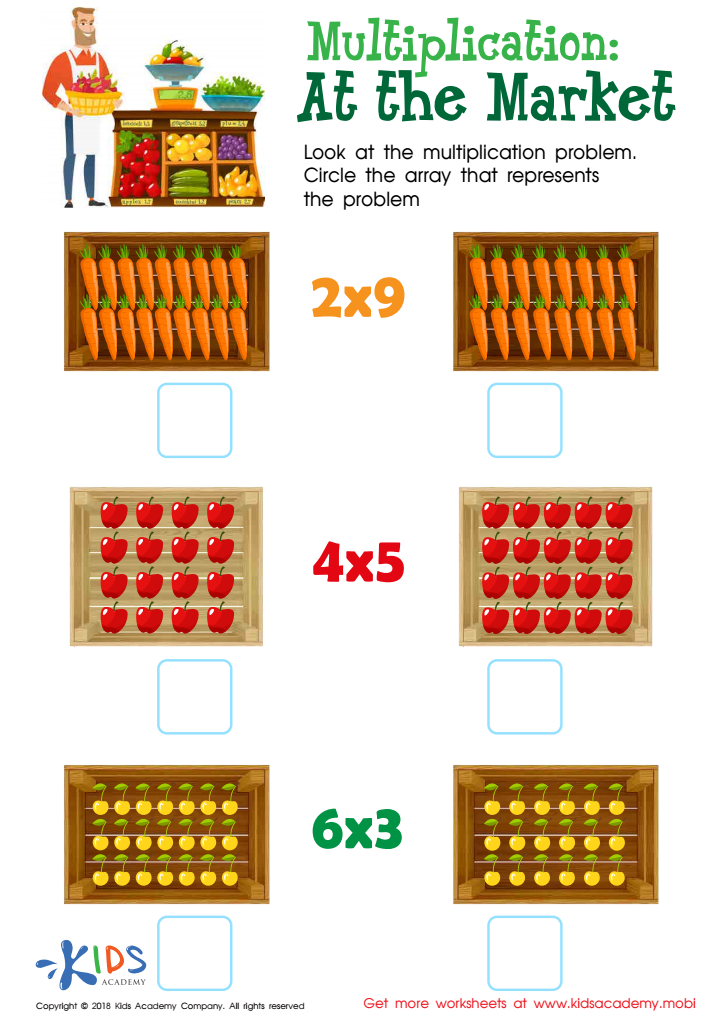
At the market - multiplication worksheet for 3rd grade

At the Market Worksheet

Head to At the Market! This attractive worksheet features arrays of delicious fruits and veggies that'll have 3rd graders working on their multiplication. Solve the problems, choose the correct answer, and learn while having fun!
At the Market Worksheet
Worksheet
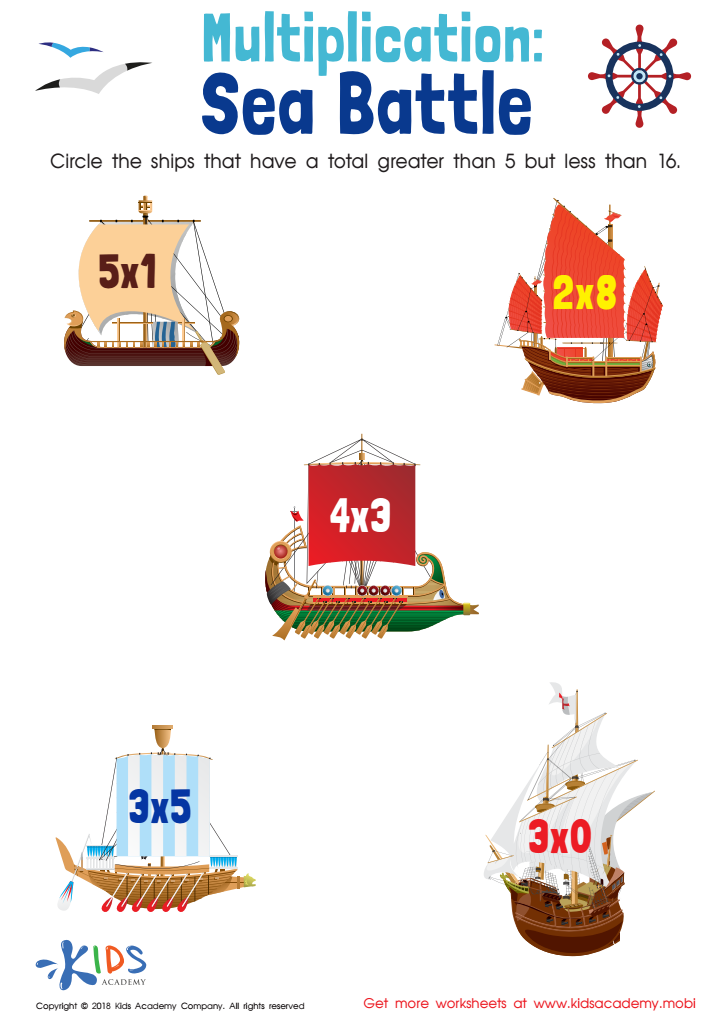
Sea battle: multiplication worksheet

Sea Battle: Multiplication Worksheet
Test your child's math skills and give them an exciting adventure with our Sea Battle: Multiplication Worksheet. Have them solve the multiplication problems on each ship's sail then circle the answers between 5 and 16. An entertaining way to boost their math skills!
Sea Battle: Multiplication Worksheet
Worksheet
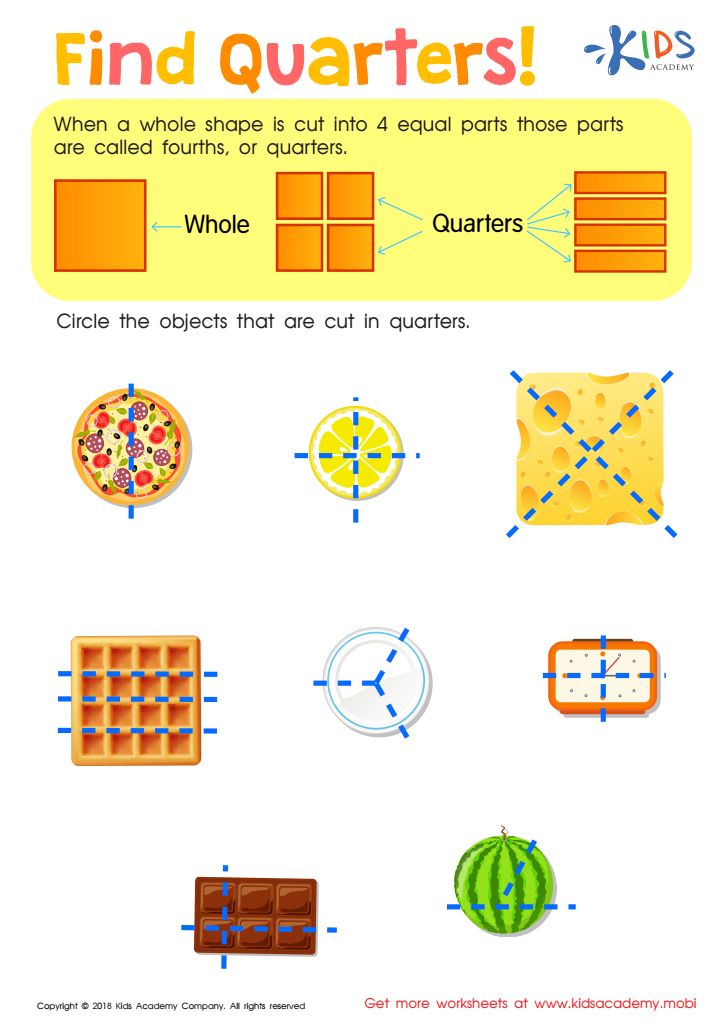
Find Quarters Worksheet

Find Quarters Worksheet

Ask your child if they know what it is called when a shape is cut into two equal parts. If yes, introduce them to quarters. Tell them that when a shape is cut into 4 equal parts, each part is called a quarter. Have them do this exercise by finding and circling objects split into quarters.
Find Quarters Worksheet
Worksheet
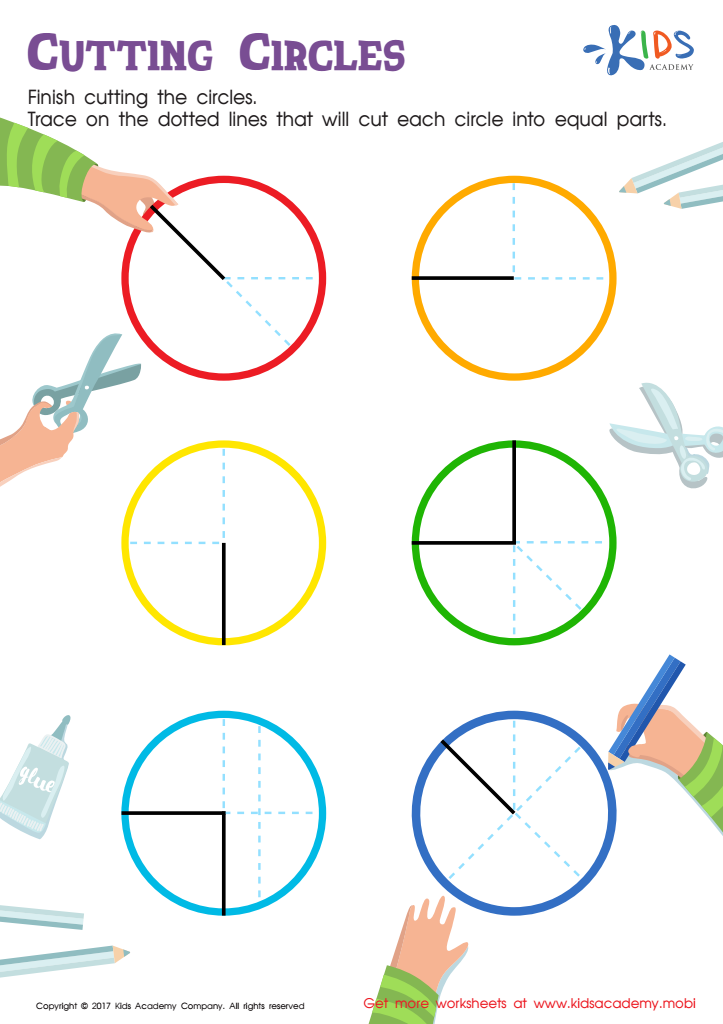
Cutting Circles Worksheet

Cutting Circles Worksheet

Allow your child to refresh their memory by asking them what two equal halves, four equal parts and three equal parts are called. Then, look at the picture pdf with them. Challenge them to cut up the circles into equal parts, by tracing the dotted lines. This exercise will help them with their math skills!
Cutting Circles Worksheet
Worksheet
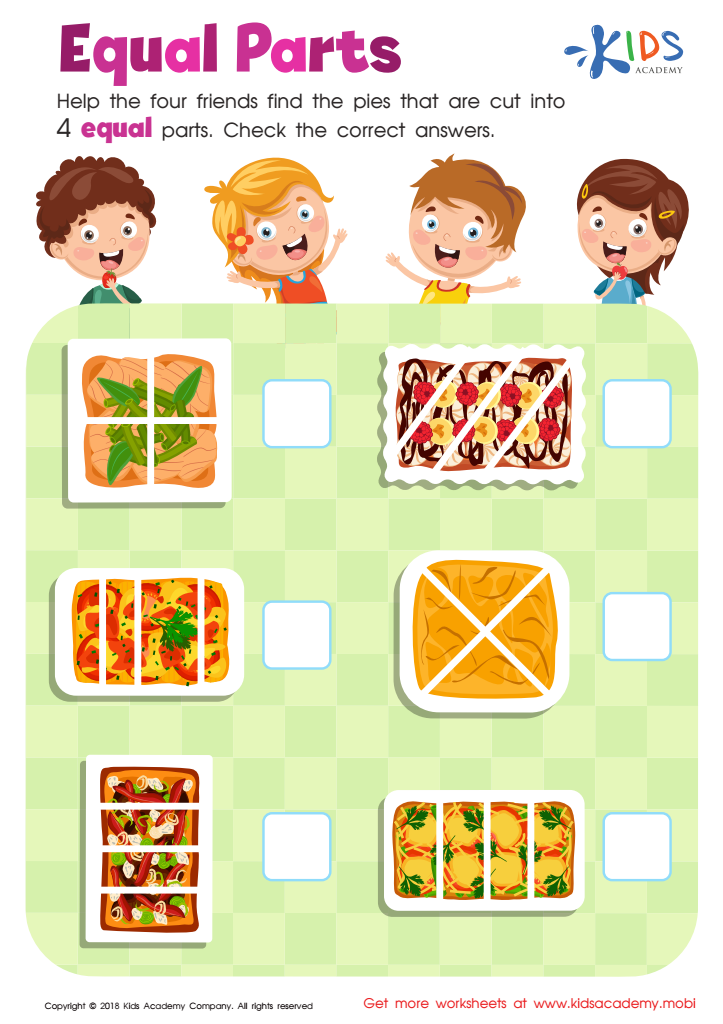
Equal Parts: Food Worksheet

Equal Parts: Food Worksheet

Kids love pies! In this worksheet, they must help four friends share one equally. Six pictures of pies cut in different ways are provided. Your child must choose the one where the pie is divided into four equal parts. That way, each friend gets an equal share.
Equal Parts: Food Worksheet
Worksheet
Clothes Math: Bar Graph Word Problems Worksheet

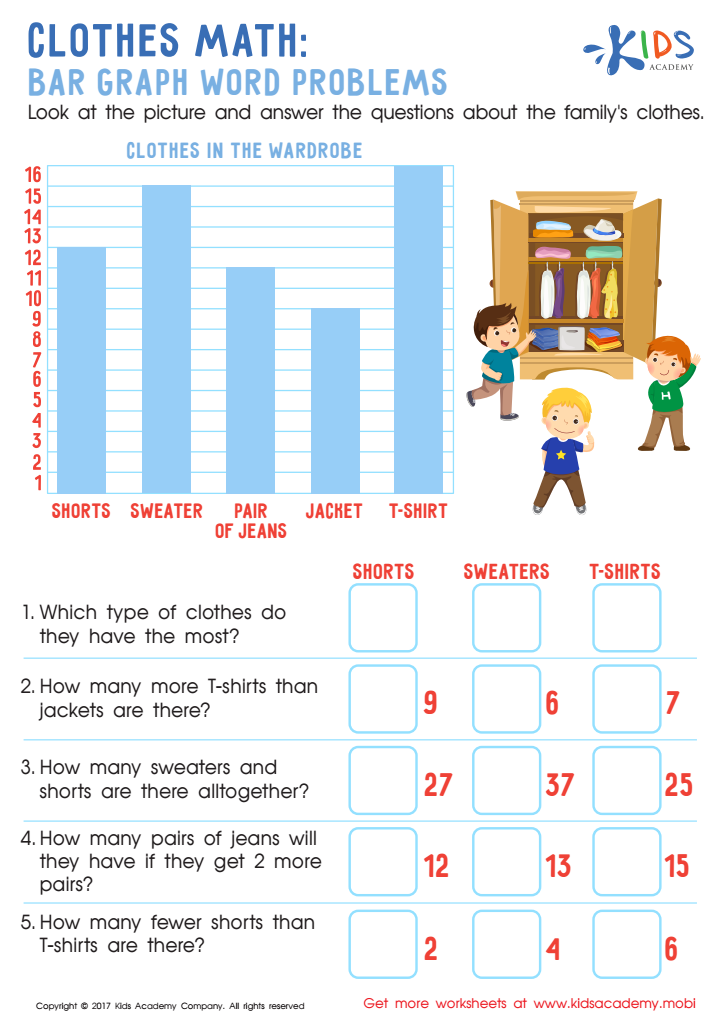
Clothes Math: Bar Graph Word Problems Worksheet

Introduce your kids to a family like theirs with this worksheet. They'll look at the picture of three children in front of a wardrobe and the graph of clothes inside. Ask them questions about the number of items like jeans, sweaters, shorts, jackets, and t-shirts. Let them explore their understanding of counting and family similarity.
Clothes Math: Bar Graph Word Problems Worksheet
Worksheet
Tick Tock Time Worksheet

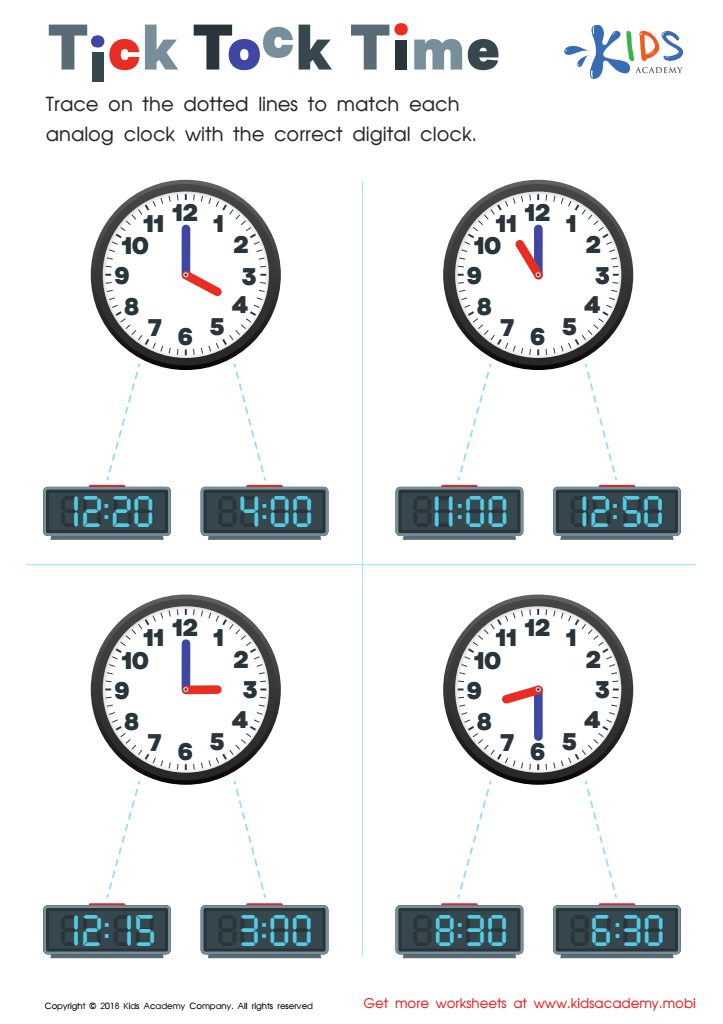
Tick Tock Time Worksheet

Trace the dotted lines on this worksheet to match analog and digital clocks! It's a great way to help your kids learn time-telling. They'll get better at converting analog to digital, and vice versa. Get your children to try it - it's a fun way to practice!
Tick Tock Time Worksheet
Worksheet
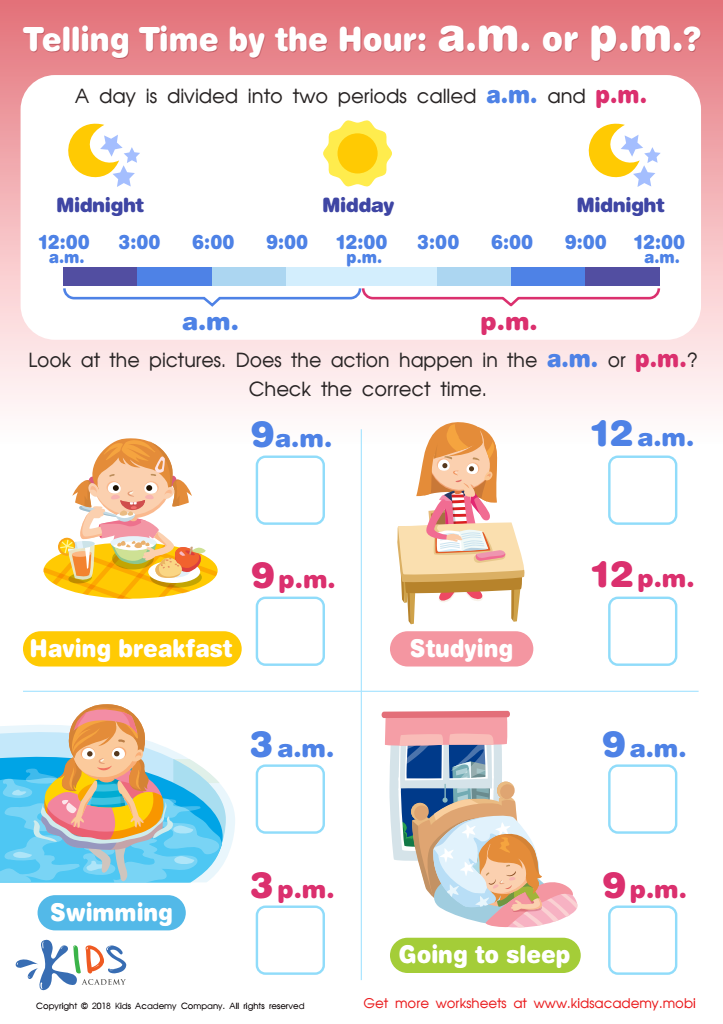
Tilling Time by the Hour: a.m. or p.m.? Worksheet

Tilling Time by the Hour: a.m. or p.m.? Worksheet

Can your child tell the time? This worksheet will help them learn. Explain a.m and p.m. and look at the pictures together. Ask your child if the activities happen in the a.m or p.m and help them check the correct time.
Tilling Time by the Hour: a.m. or p.m.? Worksheet
Worksheet
Telling Time by the Hour: Analog Clock Worksheet

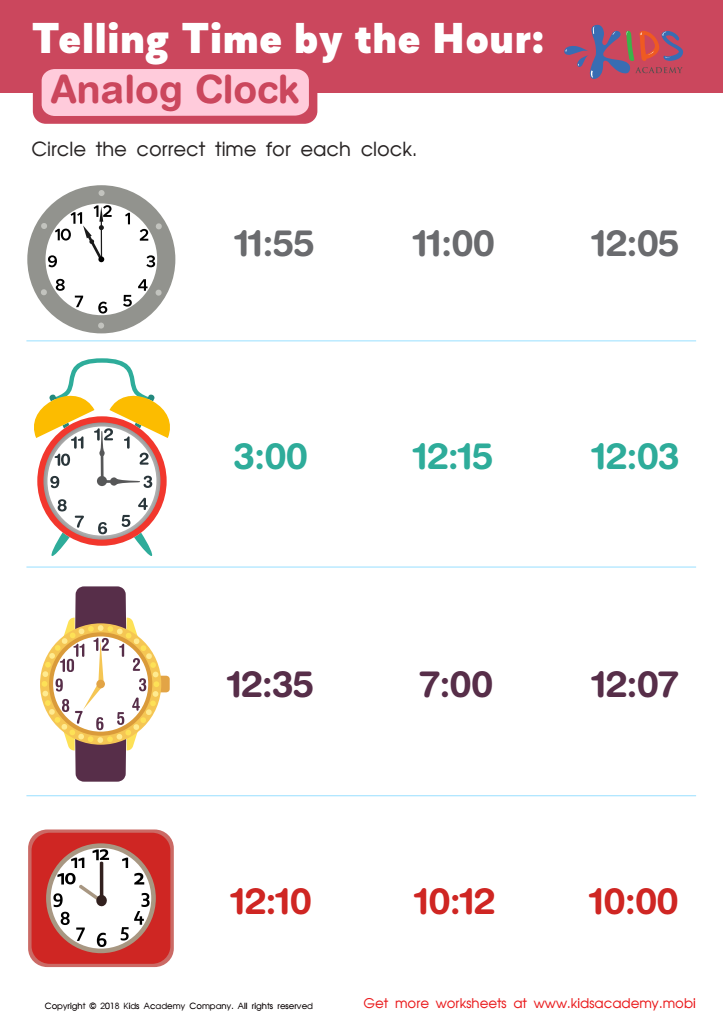
Telling Time by the Hour: Analog Clock Worksheet

Are your kids skilled at telling time? Find out with this worksheet featuring four clocks. Ask your child to identify the type of clock, then circle the correct time from the options. Help your child if needed and get the answers you need.
Telling Time by the Hour: Analog Clock Worksheet
Worksheet
3D Shapes Quest Worksheet

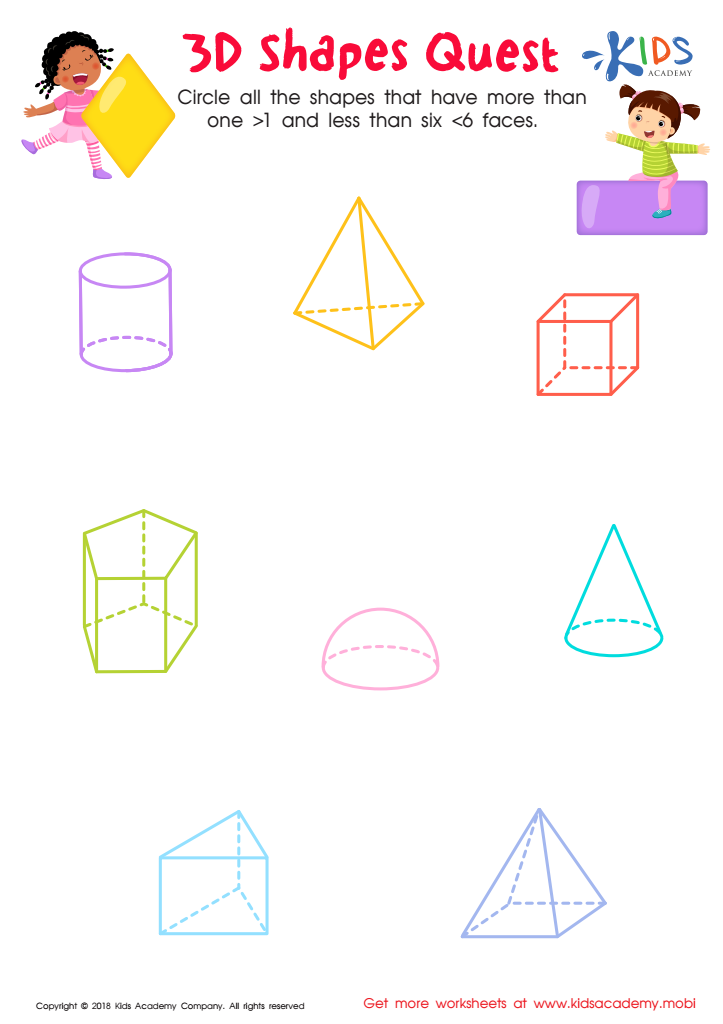
3D Shapes Quest Worksheet

Ask your child if they know what faces of shapes are. If not, explain that faces are flat surfaces on shapes. Ask what a square and rectangle have in common - both have four faces. Your child's task is to circle shapes with more than 1 and less than 6 faces in this exercise.
3D Shapes Quest Worksheet
Worksheet
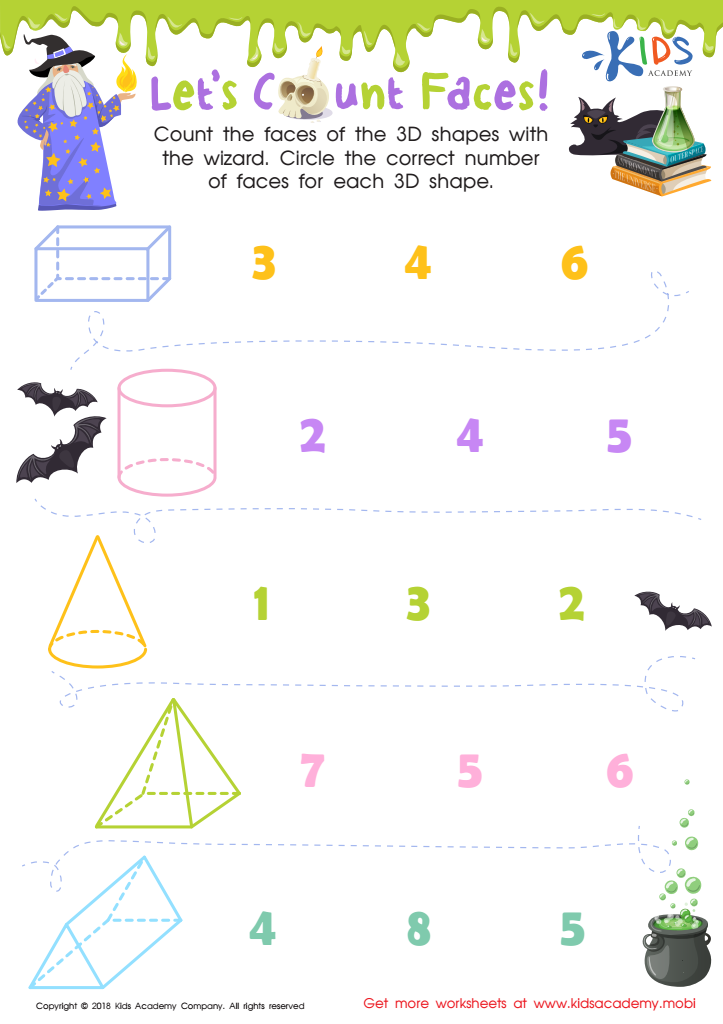
Let's Count Faces! Worksheet

Let's Count Faces! Worksheet

Help the wizard count the faces of 3D shapes! Ask your kids to identify the shapes before beginning, then have them circle the correct number of faces. Enjoy this fun wizard-themed worksheet with your kids!
Let's Count Faces! Worksheet
Worksheet
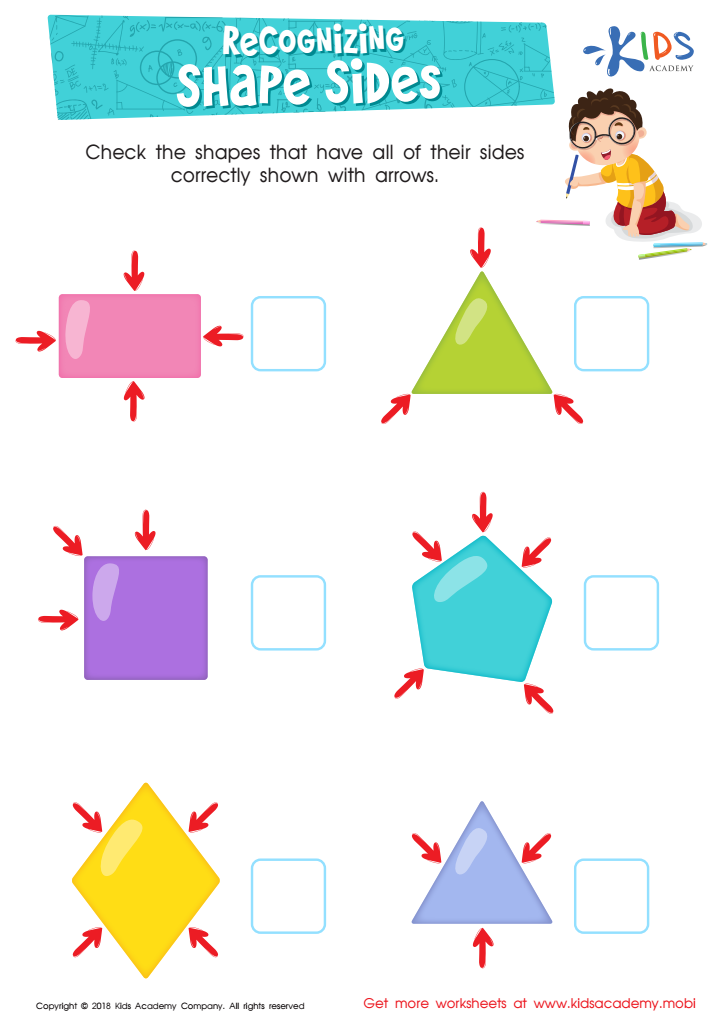
Recognizing Shape Sides Worksheet

Recognizing Shape Sides Worksheet

This exercise will help your child recognize shape sides. Go over the difference between sides and angles first, then have them check the shapes with arrows to show the sides. They'll quickly get the hang of it and find it much easier after completing the colorful worksheet.
Recognizing Shape Sides Worksheet
Worksheet
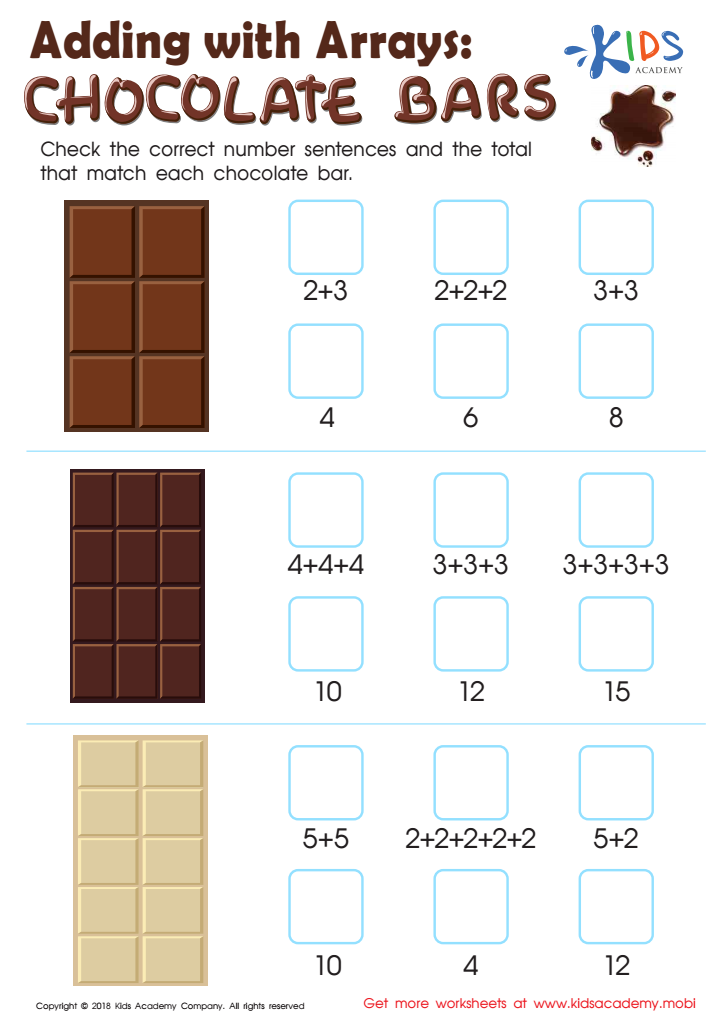
Adding with Arrays: Chocolate Bars Worksheet

Adding with Arrays: Chocolate Bars Worksheet

Kids love chocolates! Gauge how enthused your kids get when you mention them. This worksheet is a fun exercise about chocolates - get your kids to check the correct number sentences and totals for each chocolate bar. Reward their hard work with some chocolates - extra incentive for a job well done!
Adding with Arrays: Chocolate Bars Worksheet
Worksheet
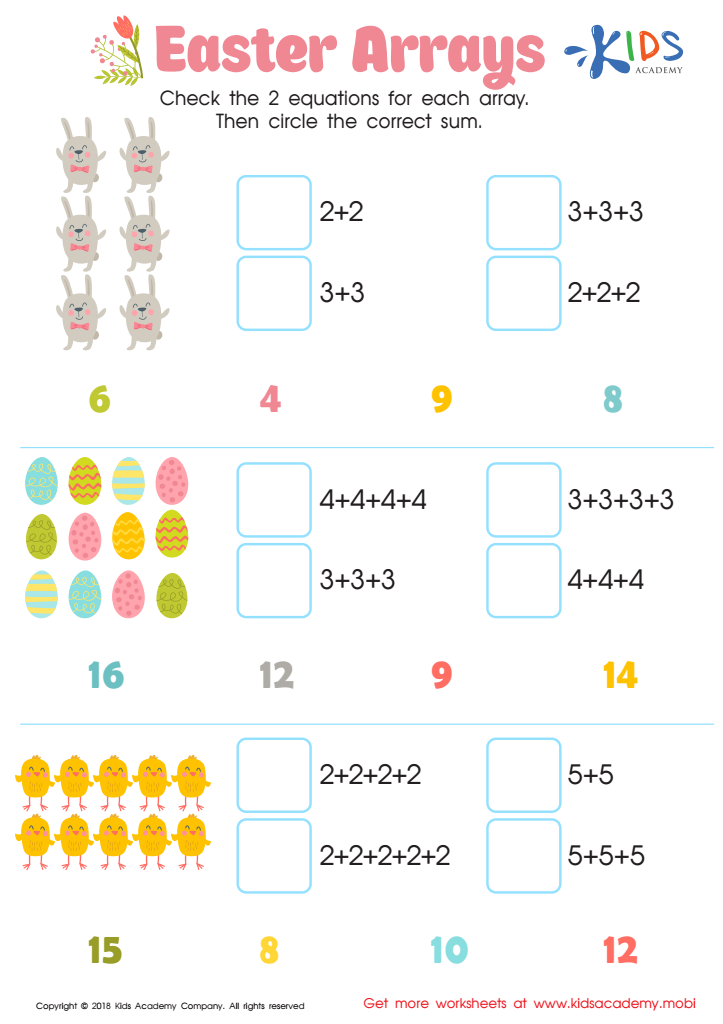
Easter Arrays Worksheet

Easter Arrays Worksheet

Does your child love Easter? Do they adore the Easter bunny and egg hunts? Help them have fun with this worksheet! Go through it with them and check the equations for each array. Then, have them circle the correct sum. It's a great way to make the holiday extra exciting!
Easter Arrays Worksheet
Worksheet
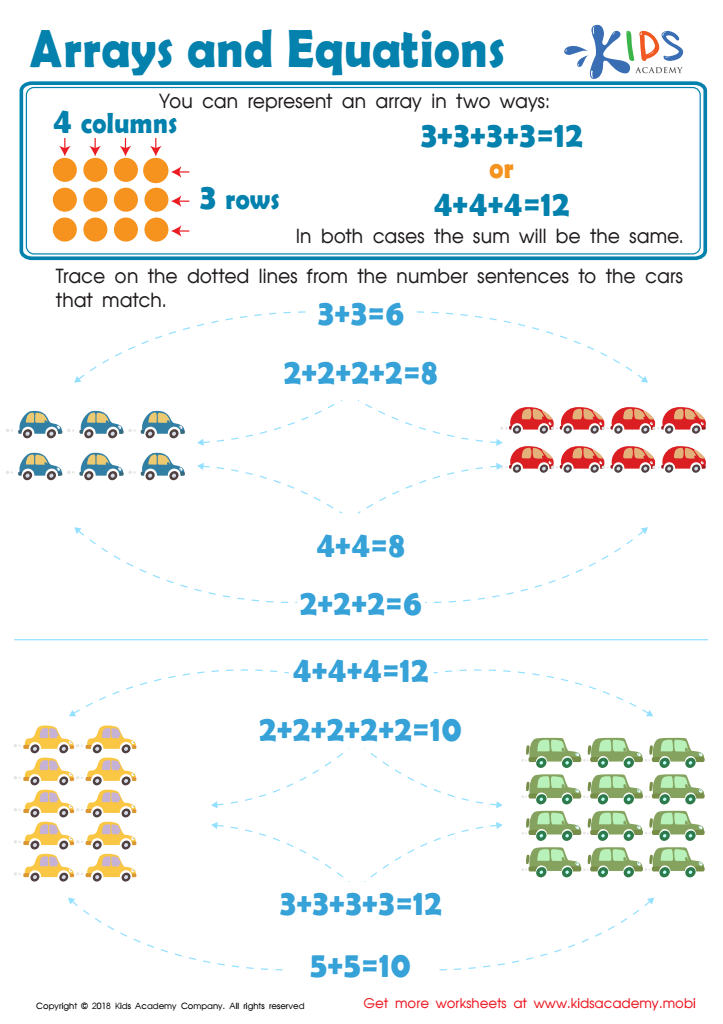
Arrays and Equations Worksheet

Arrays and Equations Worksheet

An array is objects, pix, or numbers organized in rows and columns. Show kids two ways to interpret this: 3 rows in 4 places = 12 and 4 columns in 3 places = 12. Help your child trace the number sentences to the matching cars. All equations always add up to the same amount.
Arrays and Equations Worksheet
Worksheet
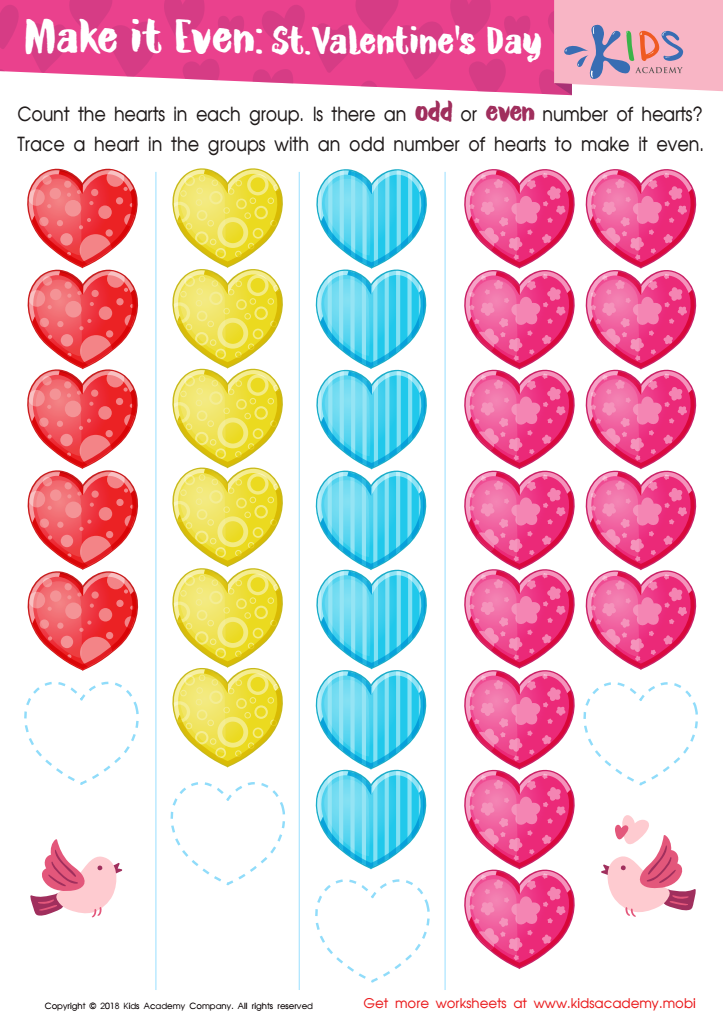
Make it Even: St. Valentine's Day Worksheet

Make it Even: St. Valentine's Day Worksheet

Does your child love Valentine's Day? Make it special with this worksheet! Kids can use their counting skills to determine if each group has an even or odd number of hearts, then trace a heart in the odd groups. Help them make it even and have fun!
Make it Even: St. Valentine's Day Worksheet
Worksheet
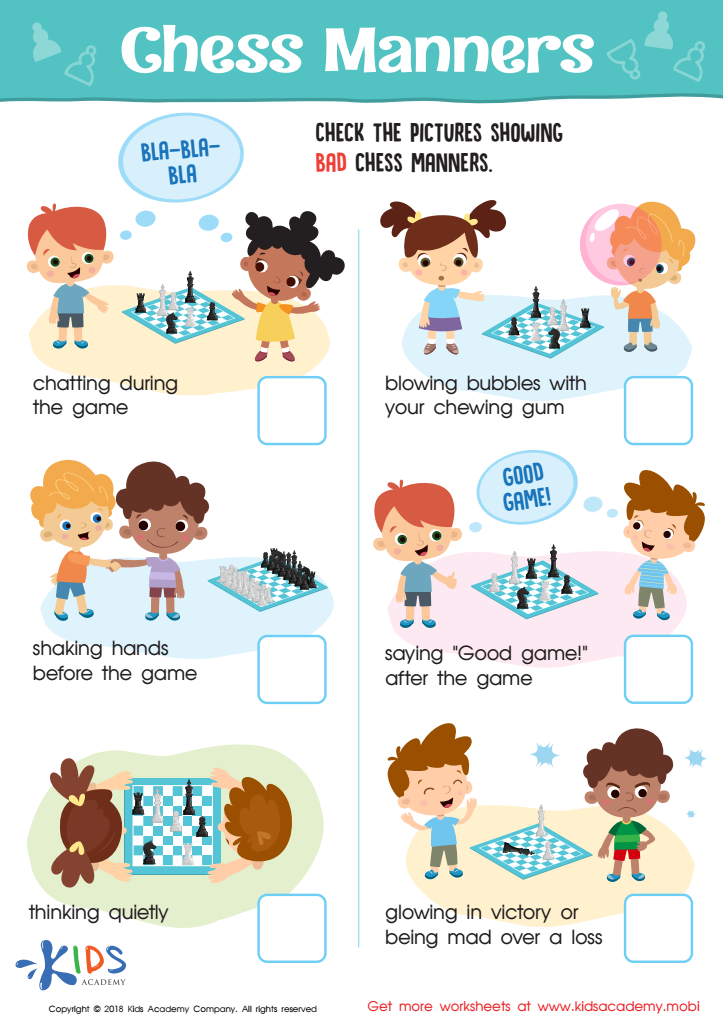
Chess Manners Worksheet

Chess Manners Worksheet

Teach your child chess manners in addition to table and social ones. Chess has clear rules and etiquette which must be followed for a proper game. Review this worksheet with your kid and discuss the pictures that show inappropriate behaviours. This will help them understand how to play the game correctly and with good manners.
Chess Manners Worksheet
Worksheet
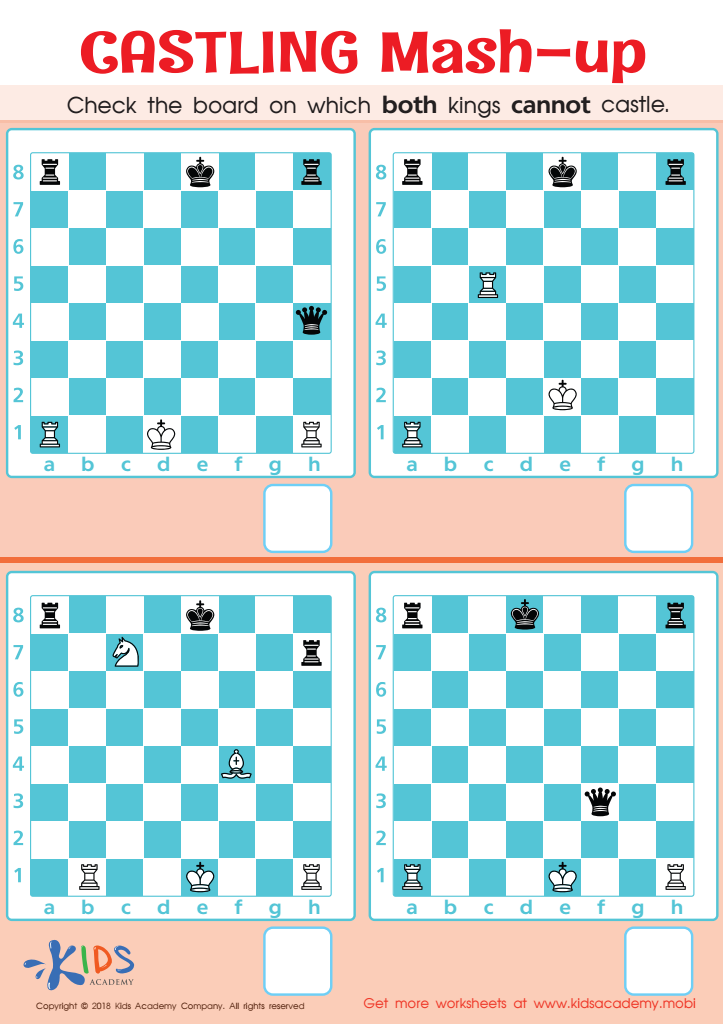
Castling Mash–up Worksheet

Castling Mash–up Worksheet

Before starting the worksheet, ensure your child understands castling in chess. If not, take time to explain it. Once they have a clear grasp of the rules, help them complete the exercise. Check the board to ensure that neither king can castle.
Castling Mash–up Worksheet
Worksheet
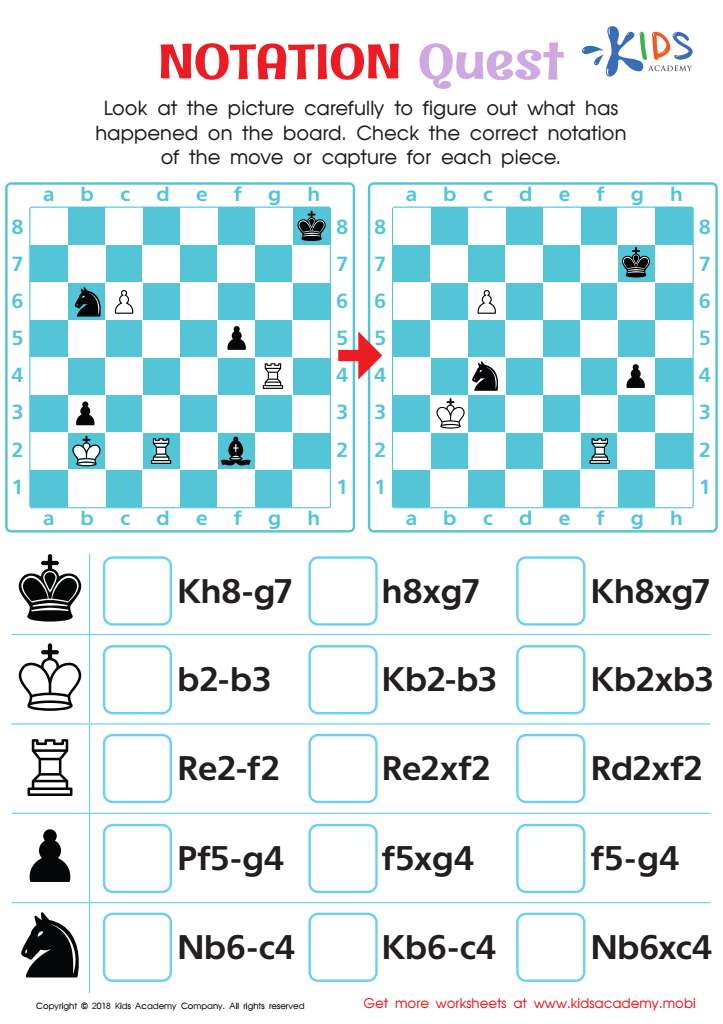
Notation Quest Worksheet

Notation Quest Worksheet

Examine the two chess boards with your kids. On one, chess pieces haven't moved; on the other, pieces have captured each other. Get your child to note the moves and captures with this simple worksheet.
Notation Quest Worksheet
Worksheet
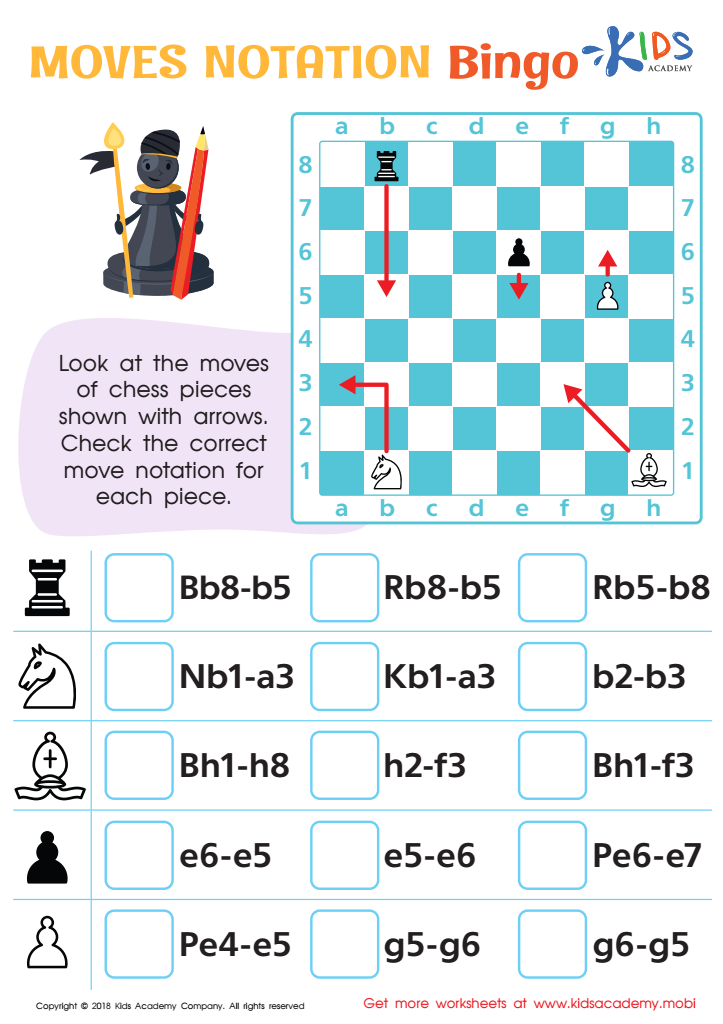
Moves Notation Bingo Worksheet


Moves Notation Bingo Worksheet

Test your child's chess notation skills with this simple worksheet. Download the PDF which shows a chess board and arrows pointing to pieces. Ask your child to identify the moves and note them down correctly. The notations needed are for bishop, pawn, rook and knight. Up to 80 words.
Moves Notation Bingo Worksheet
Worksheet
Notation of Moves Writing it Down Worksheet

Notation of Moves Writing it Down Worksheet

Notating chess moves can be tricky for kids to learn. This worksheet will help them better understand it. To notate a move, write the piece's short name, start and end squares, and separate them with a "-". For instance, Bd4-d2 means a bishop moved from b4 to d2. No need to write pawns' short names.
Notation of Moves Writing it Down Worksheet
Worksheet
Notation of Captures Writing it Down Worksheet

Notation of Captures Writing it Down Worksheet

To teach students how to record captures in chess, use this worksheet. Write down the piece's short name, start sq., and the sq. where it captures, separating them with an X. For example, Rd2Xd4 means a rook moved d2 to d4 and took a piece. Pawn captures don't need a name.
Notation of Captures Writing it Down Worksheet
Worksheet
Chess Pieces Quest Worksheet

Chess Pieces Quest Worksheet

Help your child prepare for the chess quest by refreshing their knowledge of the symbols and characteristics of each chess piece. Then, have them try the 9 questions on this worksheet. These questions will assess their understanding of the symbols and how many pieces each player starts with.
Chess Pieces Quest Worksheet
Worksheet
What's My Name? Worksheet

What's My Name? Worksheet

Test your child's chess knowledge with this colorful worksheet! There are six pieces lined up with names underneath. Ask your child to name each piece, then check if it's correct. Help them succeed by brushing up on the different pieces and their names.
What's My Name? Worksheet
Worksheet


Parents and teachers should care about what is considered "normal" development for children ages 6-8, as this stage is crucial for emotional, cognitive, and social growth. During these formative years, children begin to develop a stronger sense of self and establish peer relationships, which influences their self-esteem and interpersonal skills. Understanding normal development helps caregivers identify milestones in areas such as language skills, motor coordination, and emotional regulation. This knowledge aids in recognizing when a child may need additional support or intervention, ensuring that they grow in a nurturing environment.

Moreover, this age is marked by increased curiosity and learning engagement, so it's essential to provide appropriate educational resources and encourage an inquiry-based approach to learning. Parents and teachers who are aware of normal behaviors and challenges can create supportive settings, promote positive behaviors, and foster resilience. Understanding normal development also bridges communication with fellow educators and therapists, enhancing the child's overall success. When adults are informed about typical growth patterns, they better equip children to thrive academically, emotionally, and socially, ultimately setting the foundation for a well-rounded adulthood. Investing in this understanding enriches not only the child's developmental trajectory but also strengthens the parent-teacher partnership.