Filters

2280 filtered results

Clear all filters
Favorites
With answer key
Interactive

2280 filtered results

Difficulty Level

Grade


Subject

    Check out this FREE Trial Lesson on Math for age 5-7!

    Z

    Favorites
    With answer key
    Interactive
    • 5-7
    • Math
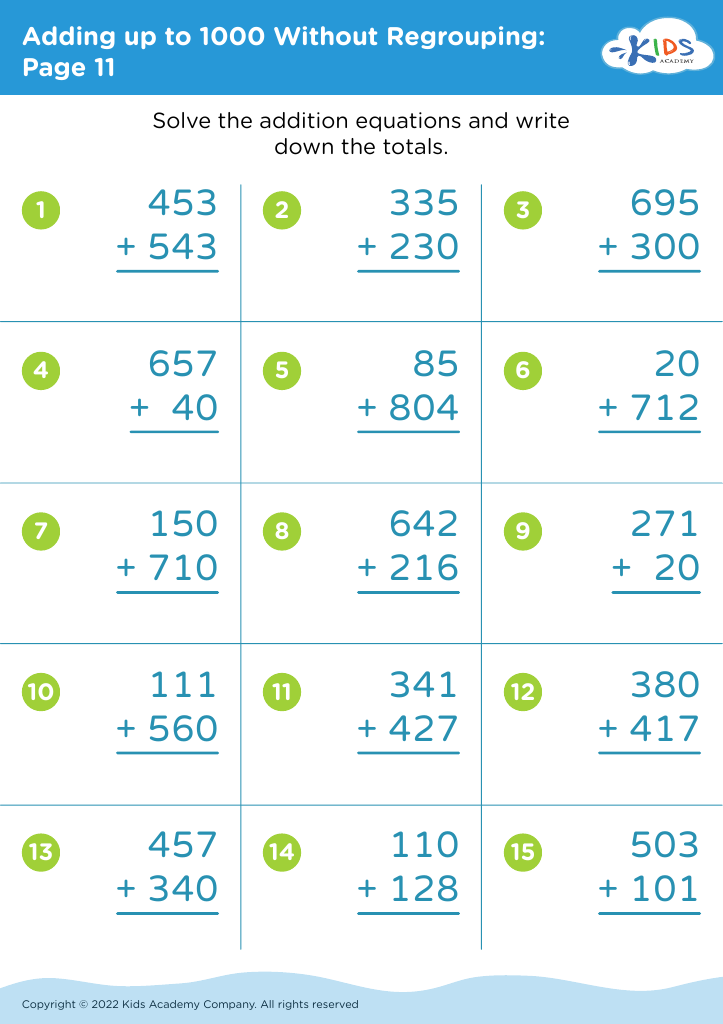
    Adding up to 1000 Without Regrouping: Page 11
    Adding up to 1000 Without Regrouping: Page 11
    Adding up to 1000 Without Regrouping: Page 11
    Worksheet
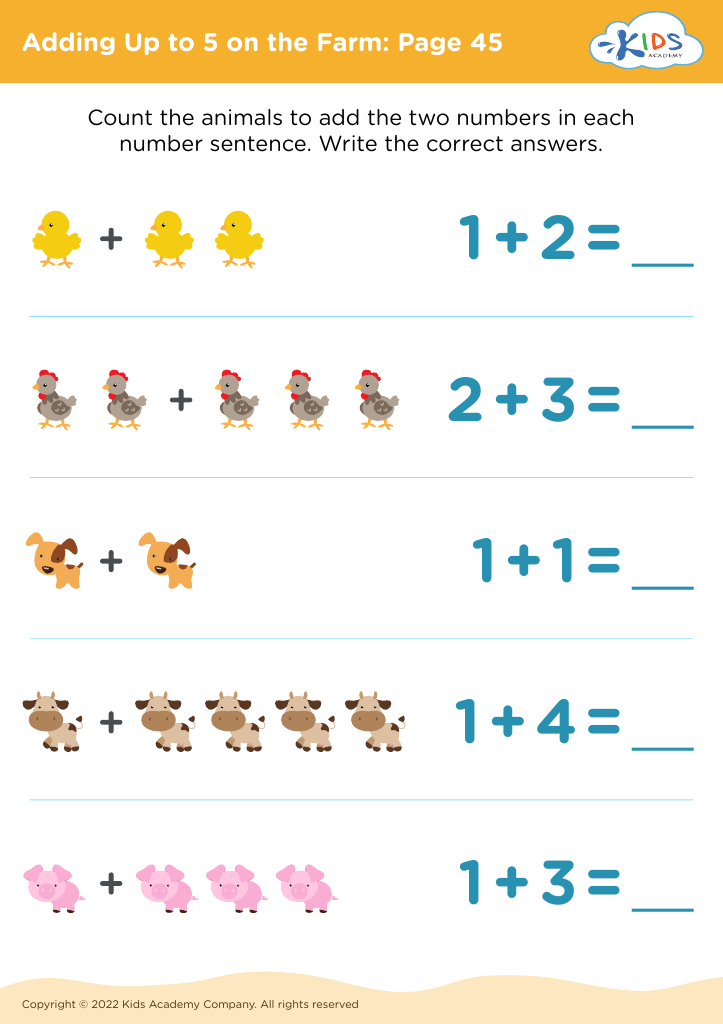
    Adding Up to 5 on the Farm: Page 45
    Adding Up to 5 on the Farm: Page 45
    Adding Up to 5 on the Farm: Page 45
    Worksheet
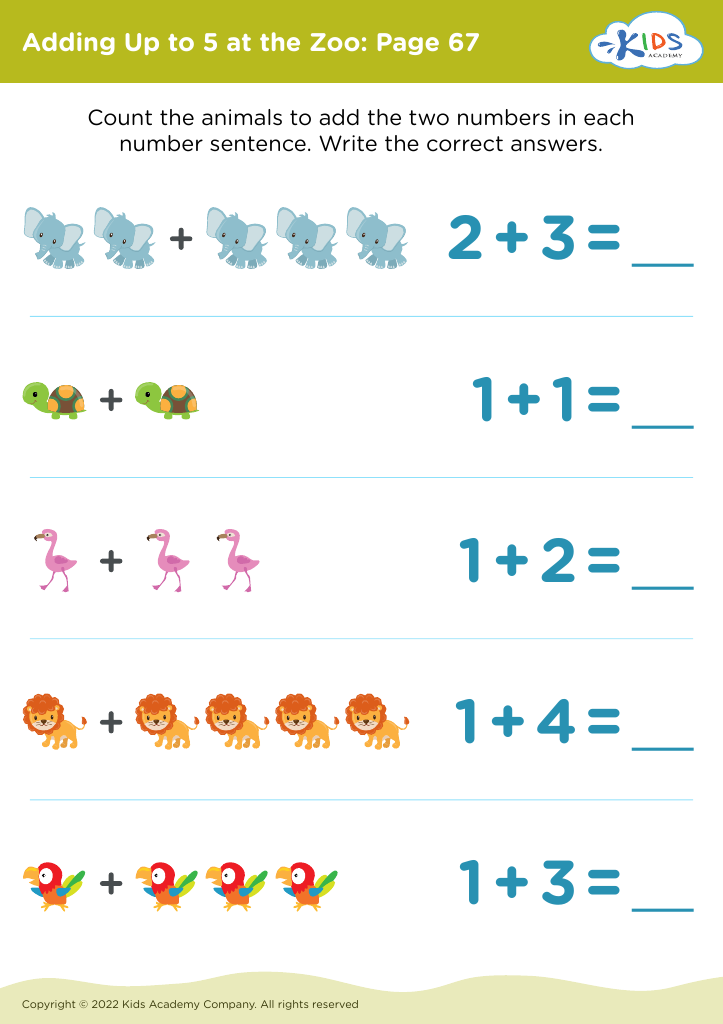
    Adding Up to 5 at the Zoo: Page 67
    Adding Up to 5 at the Zoo: Page 67
    Adding Up to 5 at the Zoo: Page 67
    Worksheet
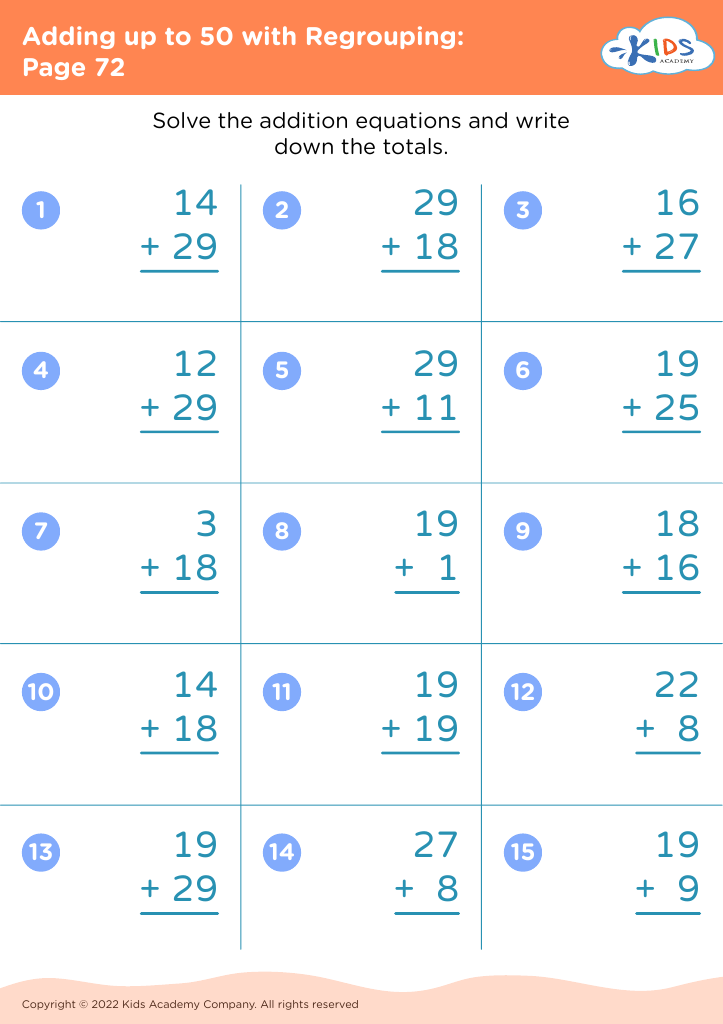
    Adding up to 50 with Regrouping: Page 72
    Adding up to 50 with Regrouping: Page 72
    Adding up to 50 with Regrouping: Page 72
    Worksheet
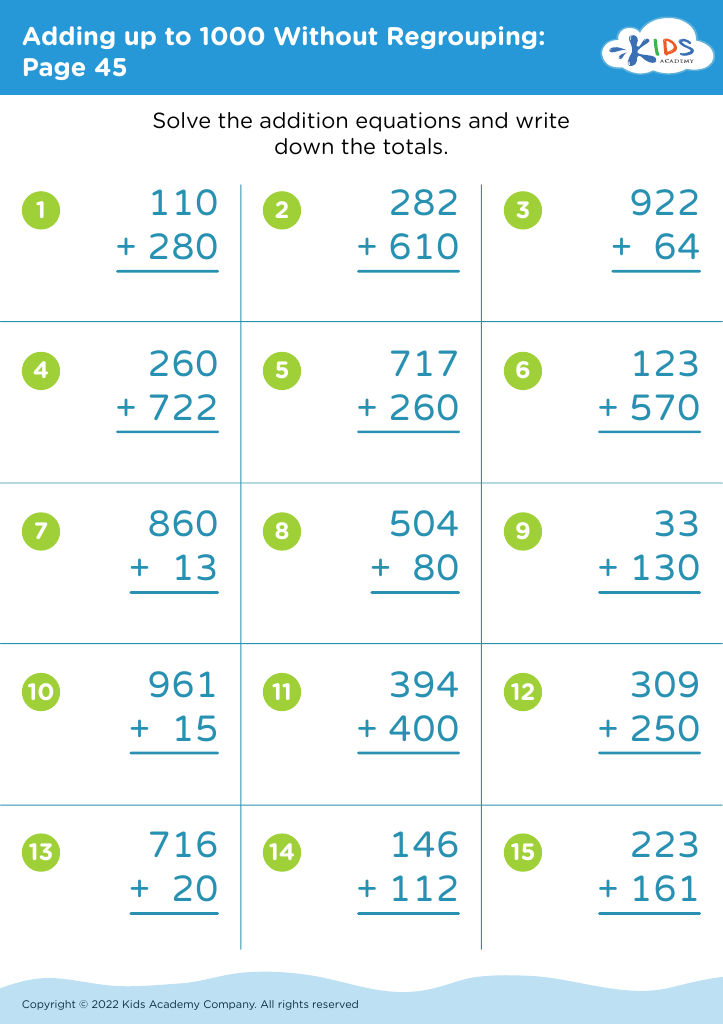
    Adding up to 1000 Without Regrouping: Page 45
    Adding up to 1000 Without Regrouping: Page 45
    Adding up to 1000 Without Regrouping: Page 45
    Worksheet
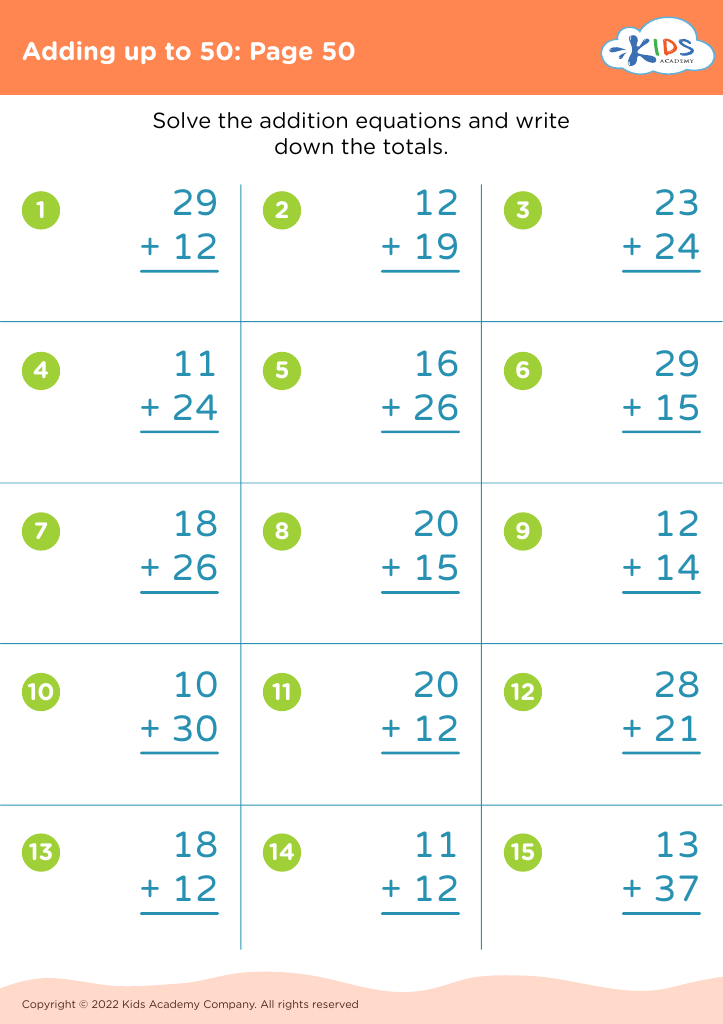
    Adding up to 50: Page 50
    Adding up to 50: Page 50

    Adding up to 50: Page 50

    Adding up to 50: Page 50
    Worksheet
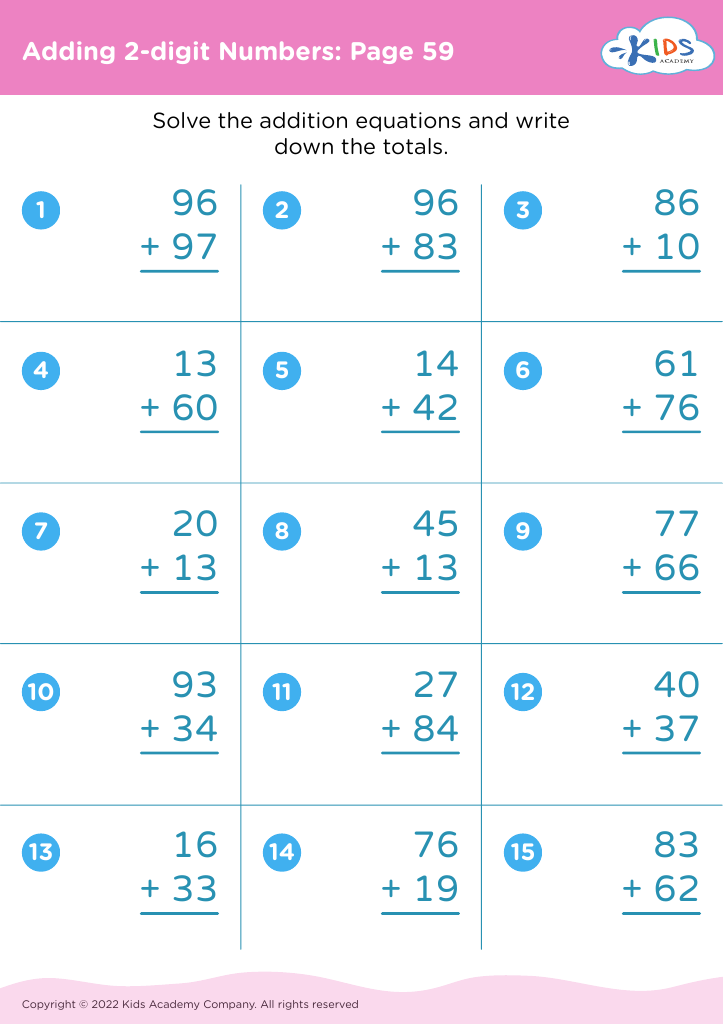
    Adding 2-digit Numbers: Page 59
    Adding 2-digit Numbers: Page 59

    Adding 2-digit Numbers: Page 59

    Adding 2-digit Numbers: Page 59
    Worksheet
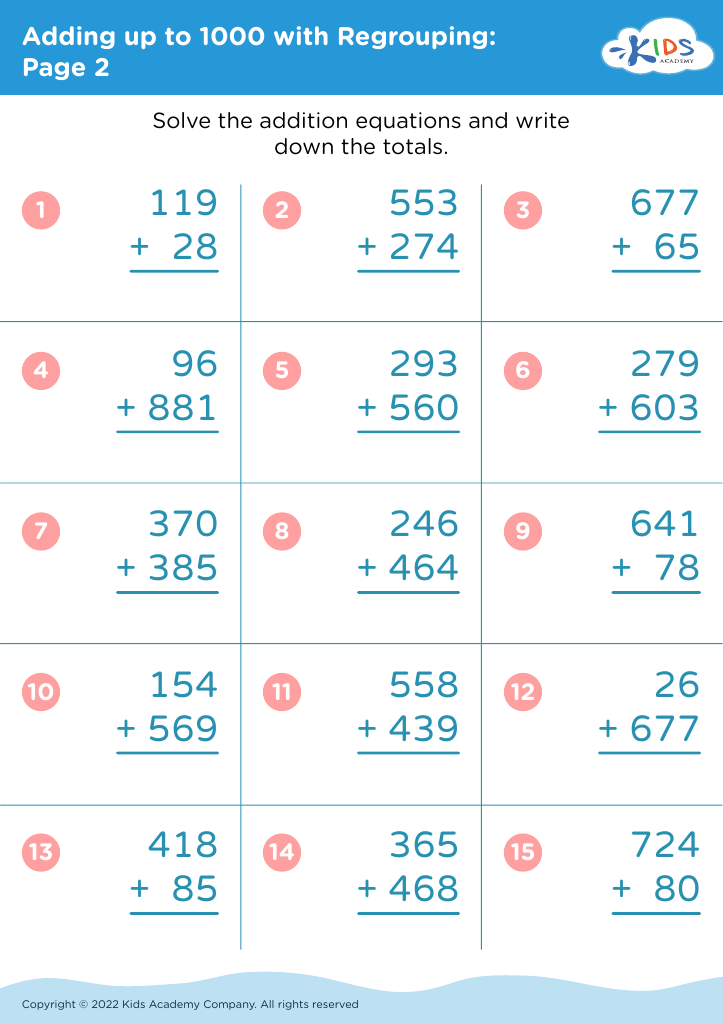
    Adding up to 1000 with Regrouping: Page 2
    Adding up to 1000 with Regrouping: Page 2
    Adding up to 1000 with Regrouping: Page 2
    Worksheet
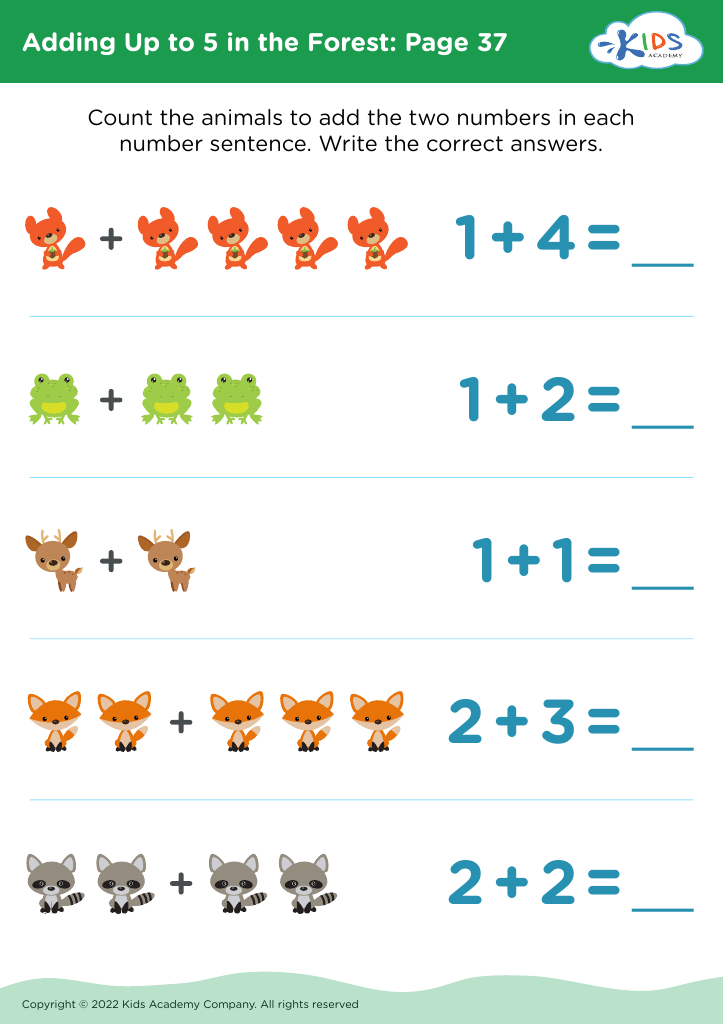
    Adding Up to 5 in the Forest: Page 37
    Adding Up to 5 in the Forest: Page 37
    Adding Up to 5 in the Forest: Page 37
    Worksheet
    Pet Survey Worksheet
    Pet Survey Worksheet

    Pet Survey Worksheet

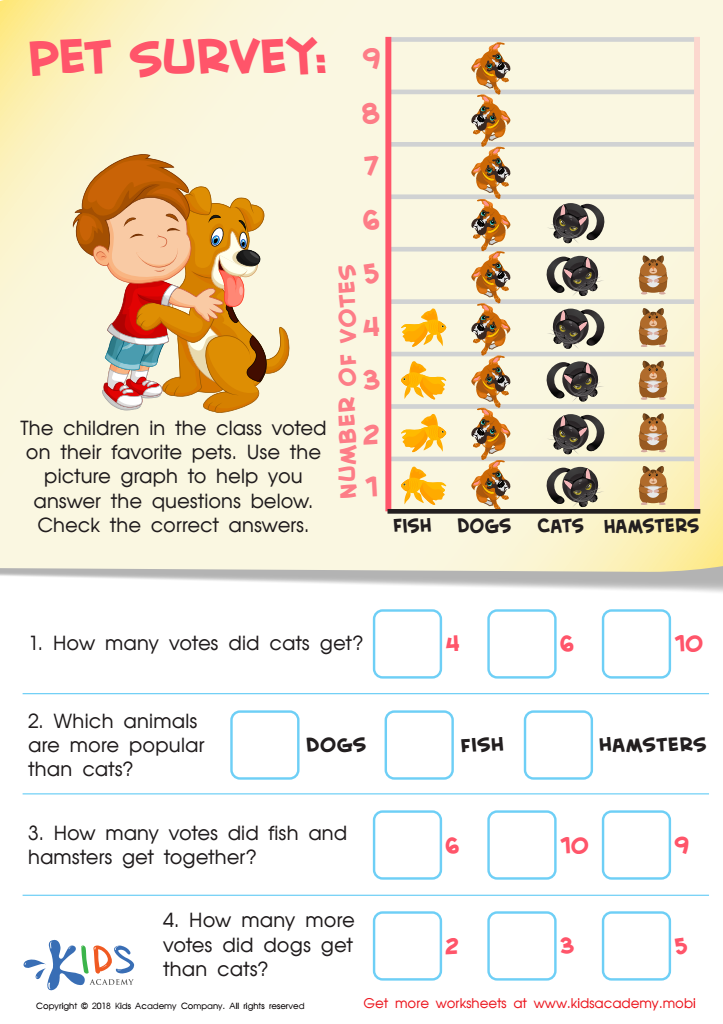
    Do you have a furry family member? If the answer is yes and your kids love animals, they'll enjoy this worksheet. The picture graph shows the children's votes for their favorite pet - fish, dog, cat and hamster. Ask your child to use the graph to answer the questions. Guide them to check the right answer.
    Pet Survey Worksheet
    Worksheet
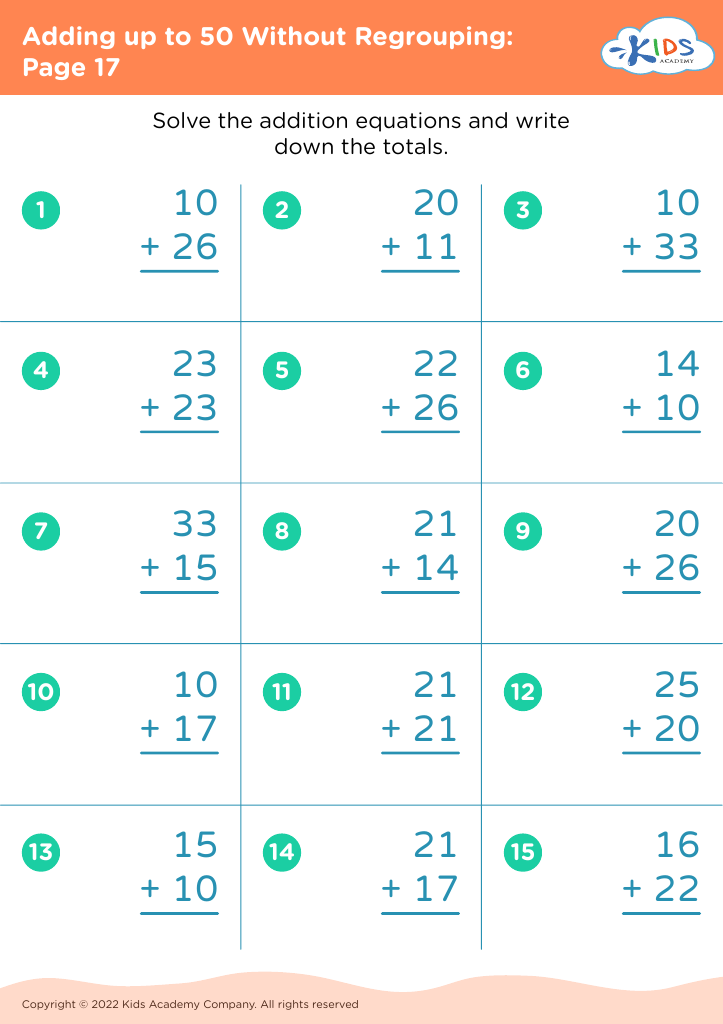
    Adding up to 50 Without Regrouping: Page 17
    Adding up to 50 Without Regrouping: Page 17
    Adding up to 50 Without Regrouping: Page 17
    Worksheet
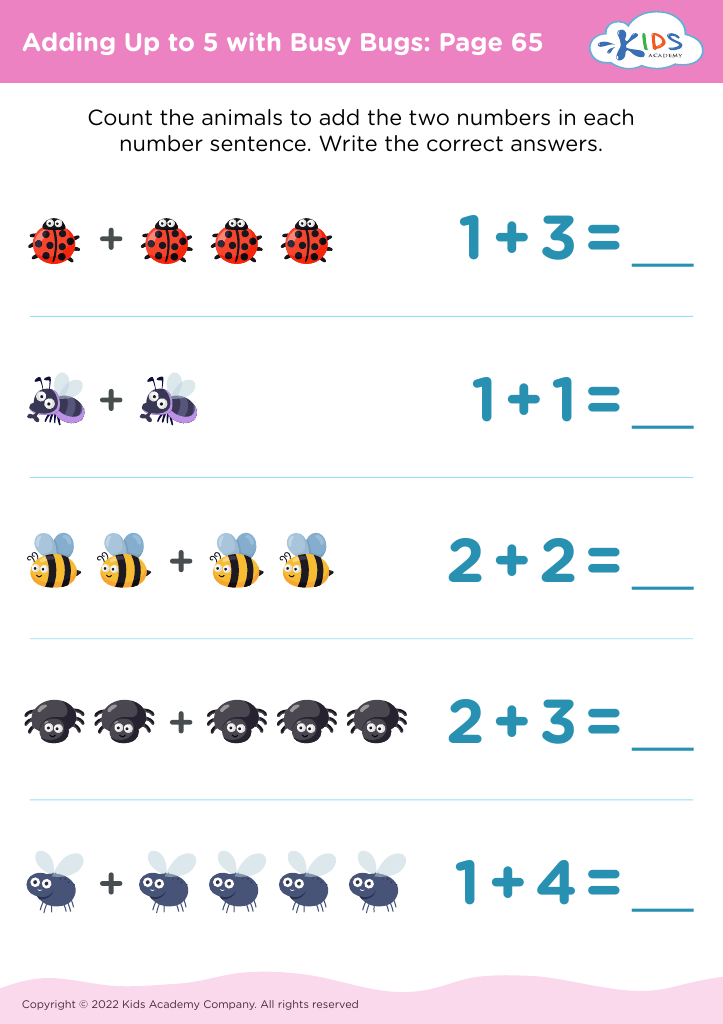
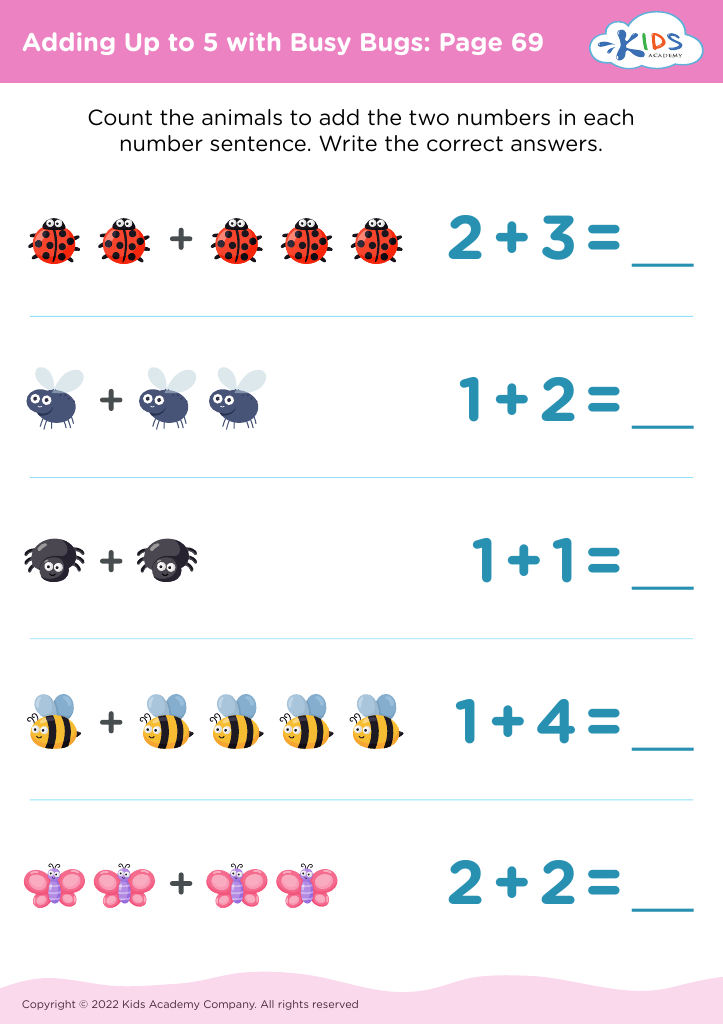
    Adding Up to 5 with Busy Bugs: Page 65
    Adding Up to 5 with Busy Bugs: Page 65
    Adding Up to 5 with Busy Bugs: Page 65
    Worksheet
    Data: Assessment 1 Worksheet
    Data: Assessment 1 Worksheet

    Data: Assessment 1 Worksheet

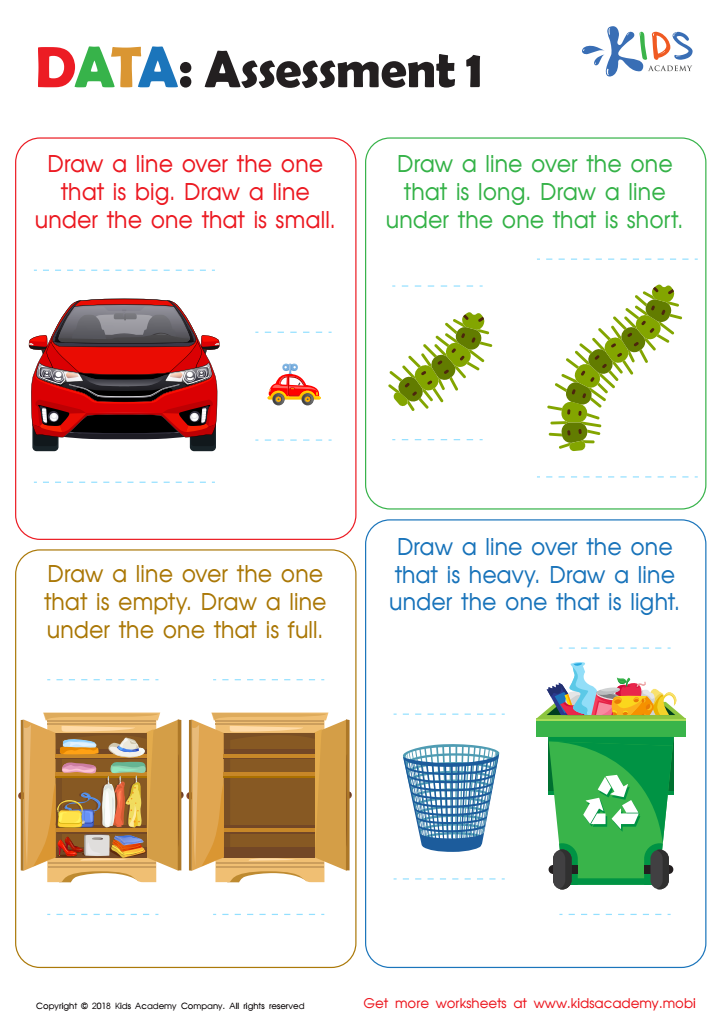
    Assess your students' knowledge of measurement words with this worksheet. Have them compare and describe objects/quantities using words like "big", "small", "long", "short", "empty", "full", "heavy" and "light". Encourage further learning by asking students to provide examples of each word meaning.
    Data: Assessment 1 Worksheet
    Worksheet
    Adding up to 50: Page 24
    Adding up to 50: Page 24

    Adding up to 50: Page 24

    Adding up to 50: Page 24
    Worksheet
    Skip Counting by 10 Free Worksheet
    Skip Counting by 10 Free Worksheet

    Learn Dozens: Skip Counting by Tens Printable
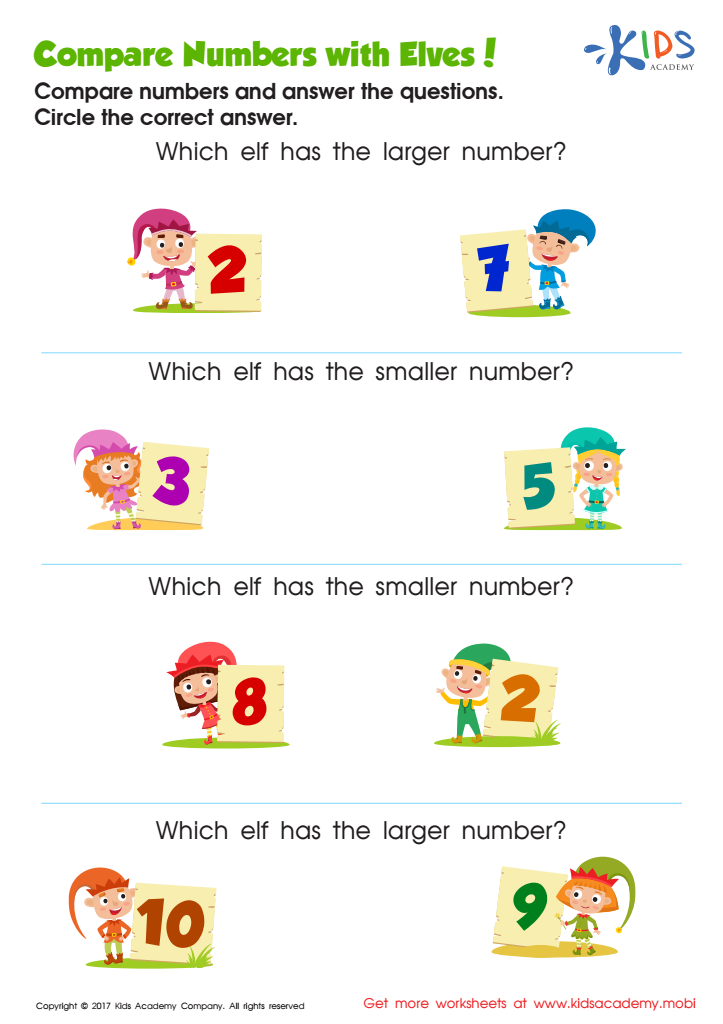
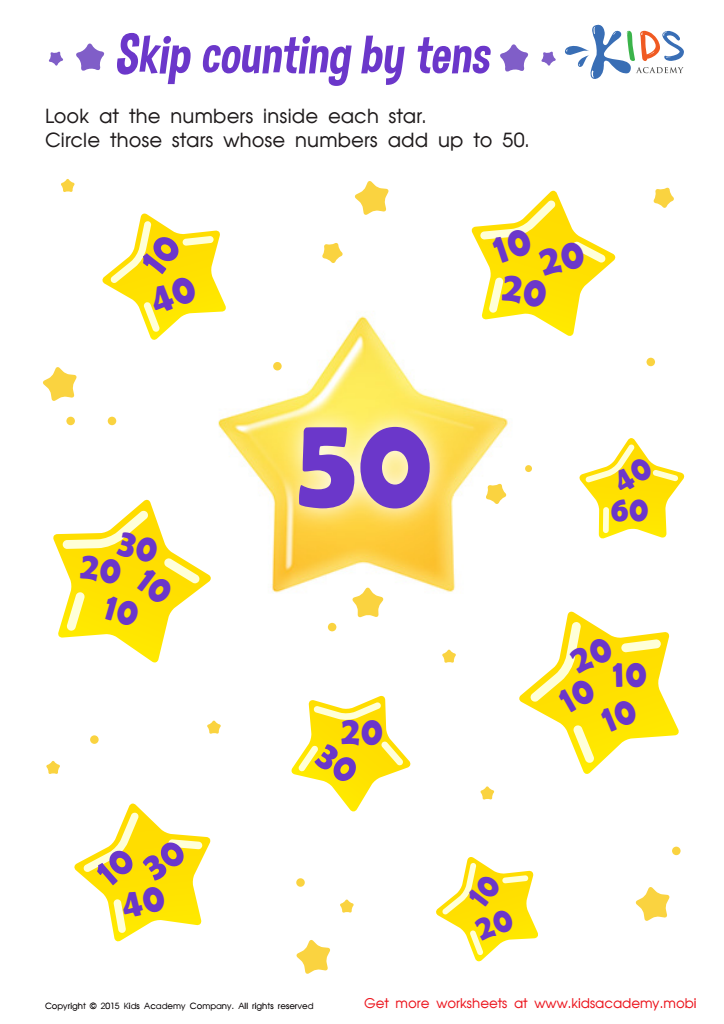
    This skip counting by 10 worksheet helps kids strengthen fluency, practice addition & build number sense. They'll use problem-solving skills to find the correct answer, which is revealed by stars. This worksheet is a fun way to practice crucial foundational math skills.
    Learn Dozens: Skip Counting by Tens Printable
    Worksheet
    Comparing numbers worksheet for kindergarten
    Comparing numbers worksheet for kindergarten

    Comparing Numbers Worksheet for Kindergarten
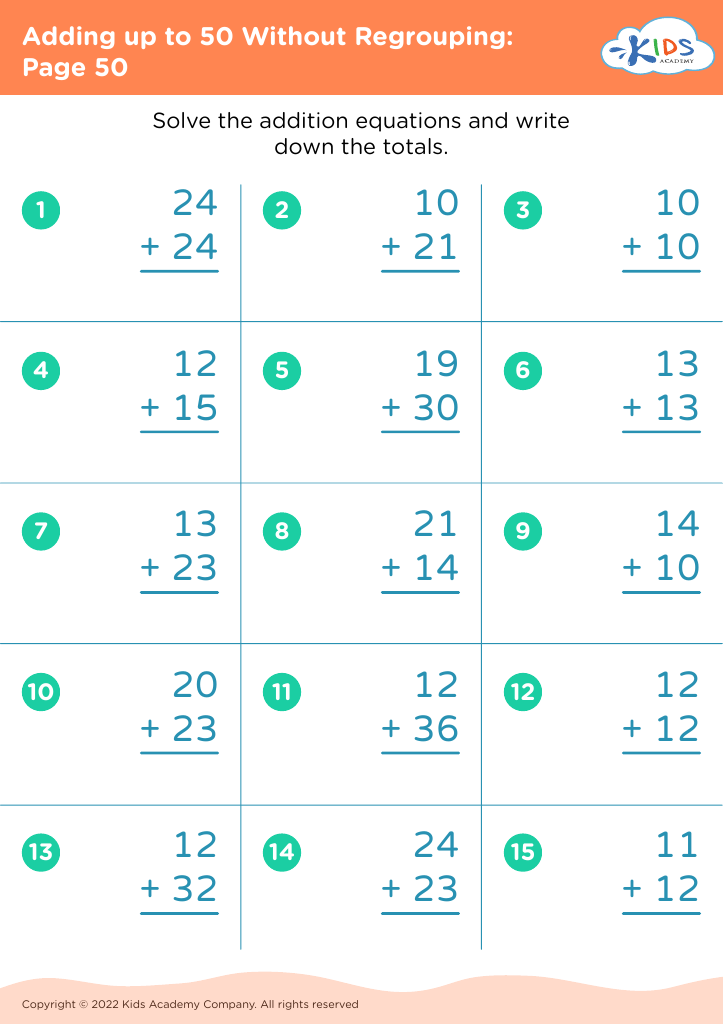
    Your child will love helping Santa's elves compare numbers with this fun worksheet for kindergarten! They must determine which number is bigger or smaller then circle the answer. It's a great activity for Christmas or any time!
    Comparing Numbers Worksheet for Kindergarten
    Worksheet
    Adding up to 50 Without Regrouping: Page 50
    Adding up to 50 Without Regrouping: Page 50
    Adding up to 50 Without Regrouping: Page 50
    Worksheet
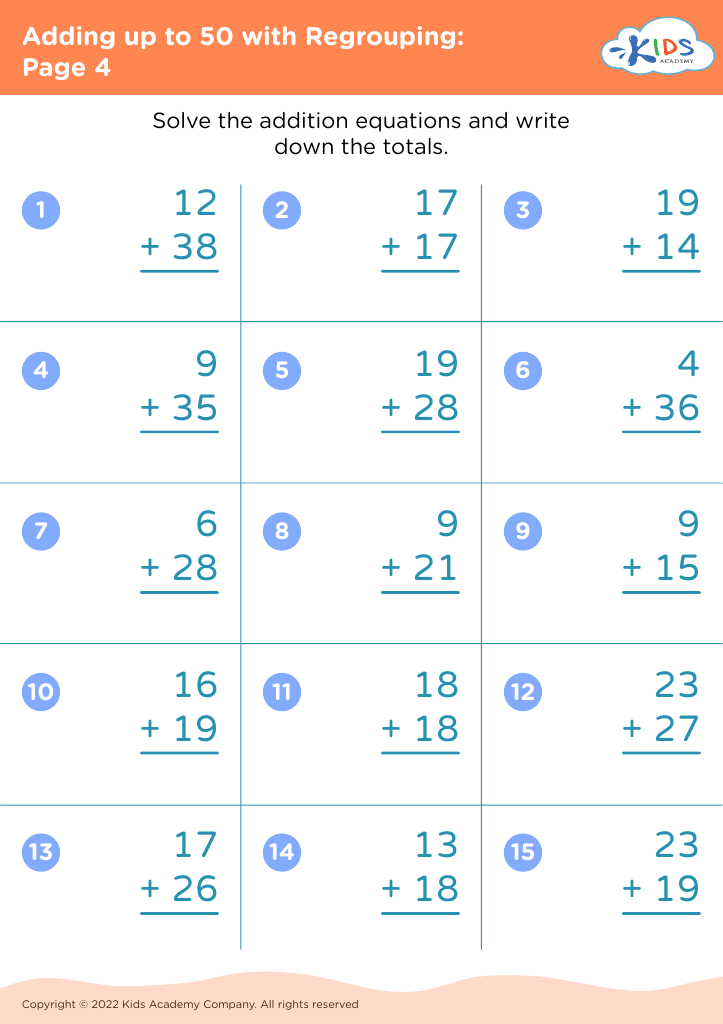
    Adding up to 50 with Regrouping: Page 4
    Adding up to 50 with Regrouping: Page 4
    Adding up to 50 with Regrouping: Page 4
    Worksheet
    Soup Towers Worksheet
    Soup Towers Worksheet

    Soup Towers Worksheet

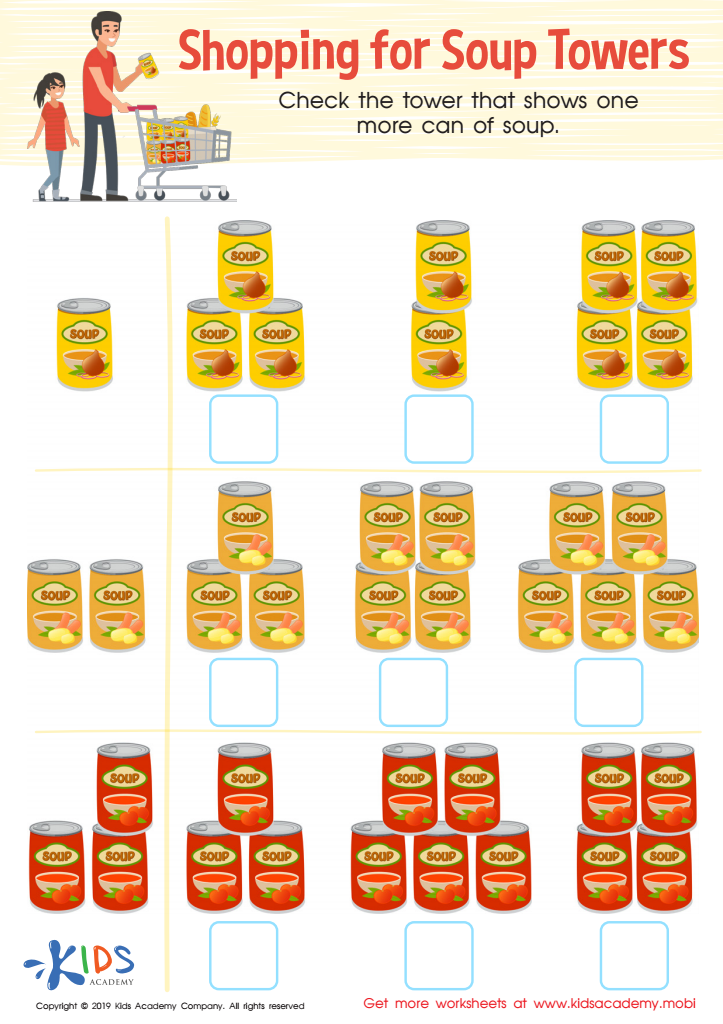
    Do your kids come shopping? Transform it into a learning experience! Point out items and ask your kids what they are. Count each stack of cans, and have them check the tower with an extra can of soup. It's a great way to teach them counting and counting up!
    Soup Towers Worksheet
    Worksheet
    Adding Up to 5 with Busy Bugs: Page 69
    Adding Up to 5 with Busy Bugs: Page 69
    Adding Up to 5 with Busy Bugs: Page 69
    Worksheet
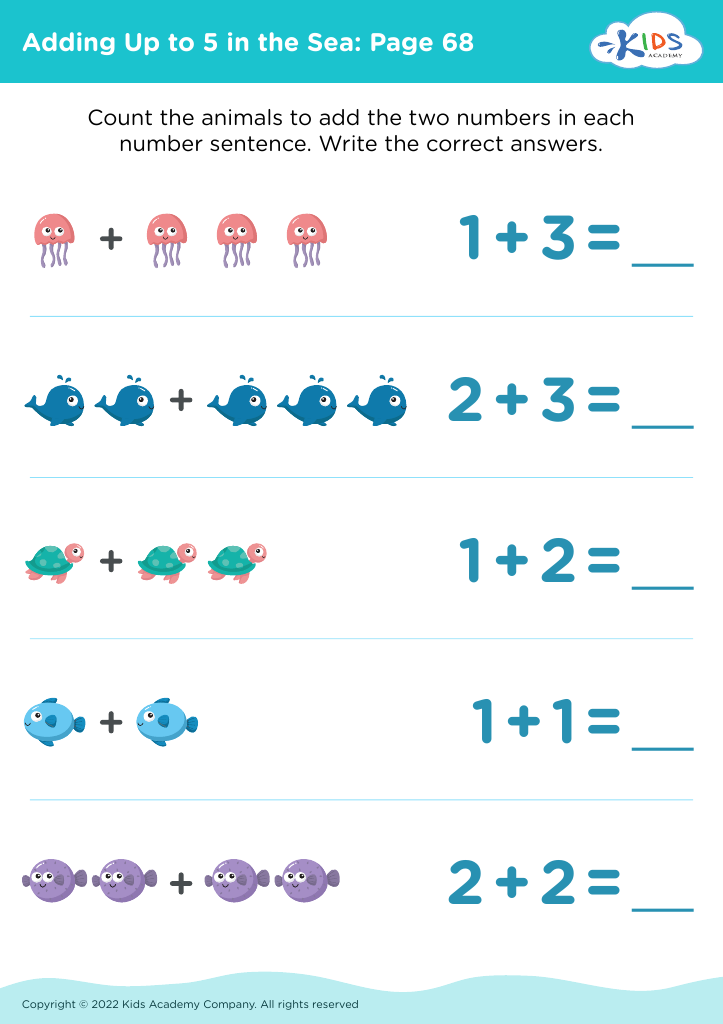
    Adding Up to 5 in the Sea: Page 68
    Adding Up to 5 in the Sea: Page 68
    Adding Up to 5 in the Sea: Page 68
    Worksheet
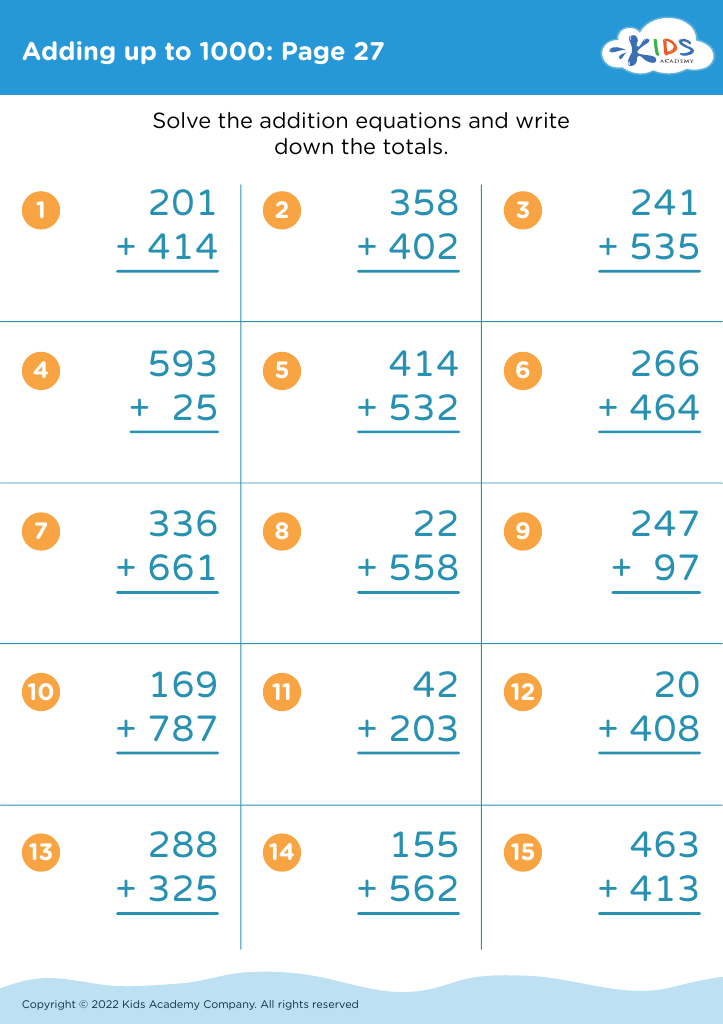
    Adding up to 1000: Page 27
    Adding up to 1000: Page 27

    Adding up to 1000: Page 27

    Adding up to 1000: Page 27
    Worksheet
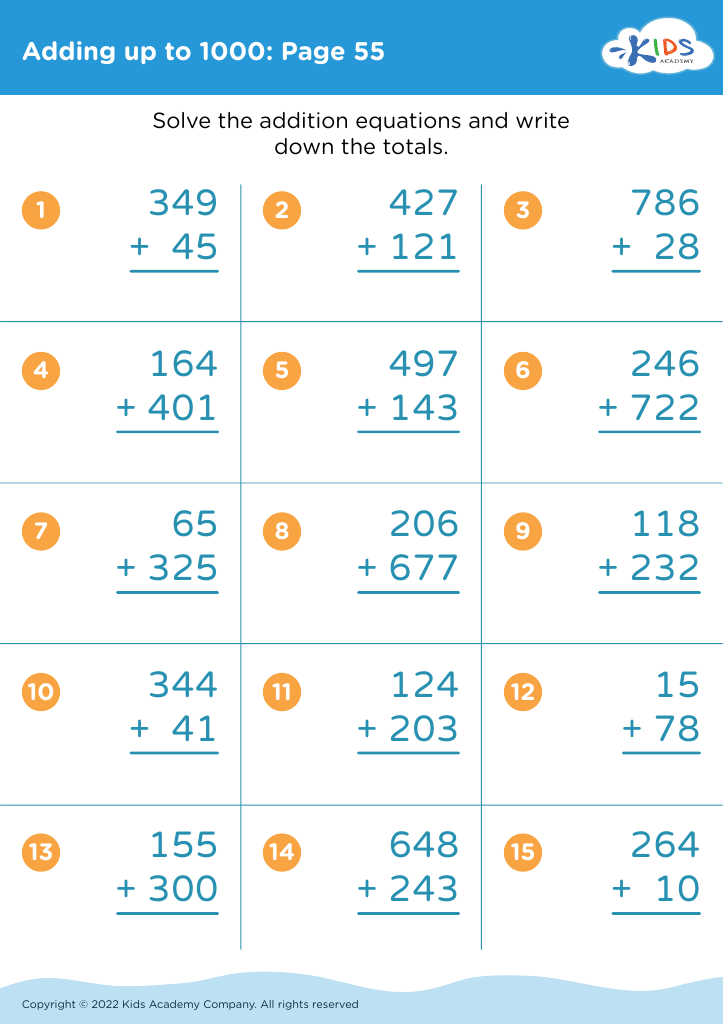
    Adding up to 1000: Page 55
    Adding up to 1000: Page 55

    Adding up to 1000: Page 55

    Adding up to 1000: Page 55
    Worksheet
    Adding up to 1000 with Regrouping: Page 47
    Adding up to 1000 with Regrouping: Page 47
    Adding up to 1000 with Regrouping: Page 47
    Worksheet


    Mathematical proficiency for children aged 5-7 is foundational to their later academic and real-life success. At this age, children are naturally curious and adept at learning new concepts, which makes the early years ideal for introducing math. Basic mathematical skills such as counting, recognizing numbers, understanding shapes, and simple arithmetic lay the groundwork for more complex problem-solving abilities essential in everyday tasks and future learning.

    Early math experiences can enhance cognitive development, fostering skills in logical reasoning, pattern recognition, and critical thinking. These skills are not only applicable in mathematical contexts but also in subjects like science and reading comprehension, where logical structure and sequencing play key roles.

    Additionally, positive early interactions with math can influence a child's attitude towards the subject, promoting a lifelong interest and confidence in their abilities. This is crucial, as a negative attitude or anxiety about math can hinder a child's academic performance and limit career opportunities in fields that require strong mathematical skills.

    For parents and teachers, fostering a supportive and enthusiastic learning environment can make math engaging and fun. This might include hands-on activities, the use of educational games, and real-world applications that make abstract concepts tangible. Ensuring that children aged 5-7 build a solid mathematical foundation is a significant step in their overall development and future success.