Subtraction Worksheets for Ages 3-7 - Page 2
86 filtered results
-
From - To
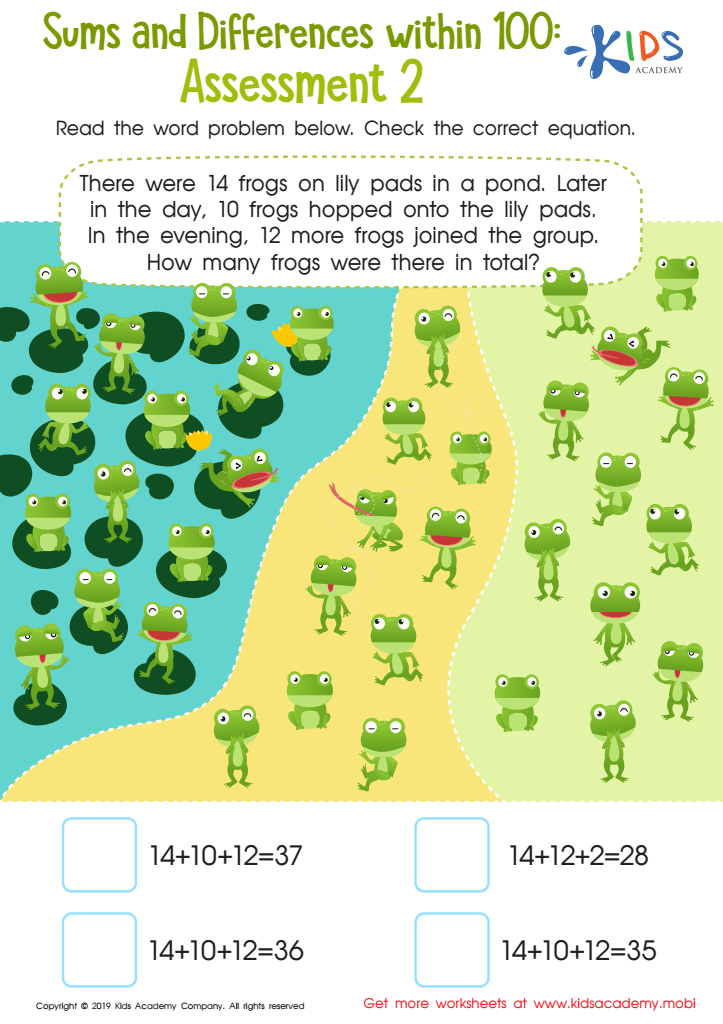
Sums and Differences Within 1 - Assessment 2 Worksheet
 Assign to My Students
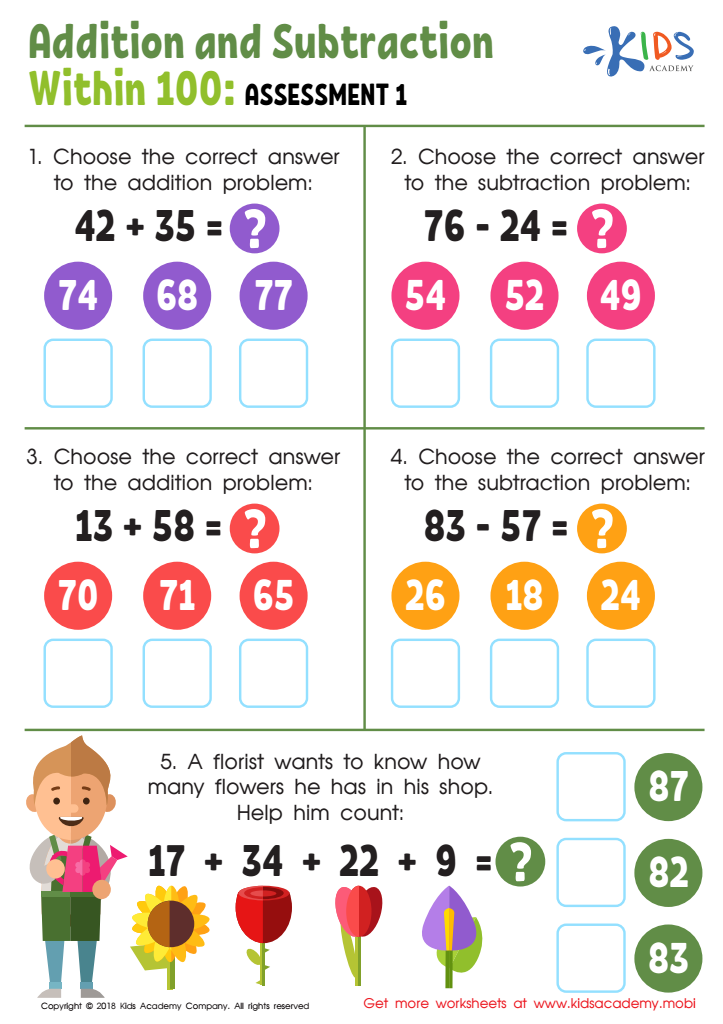
Addition and Subtraction Within 100 Worksheet
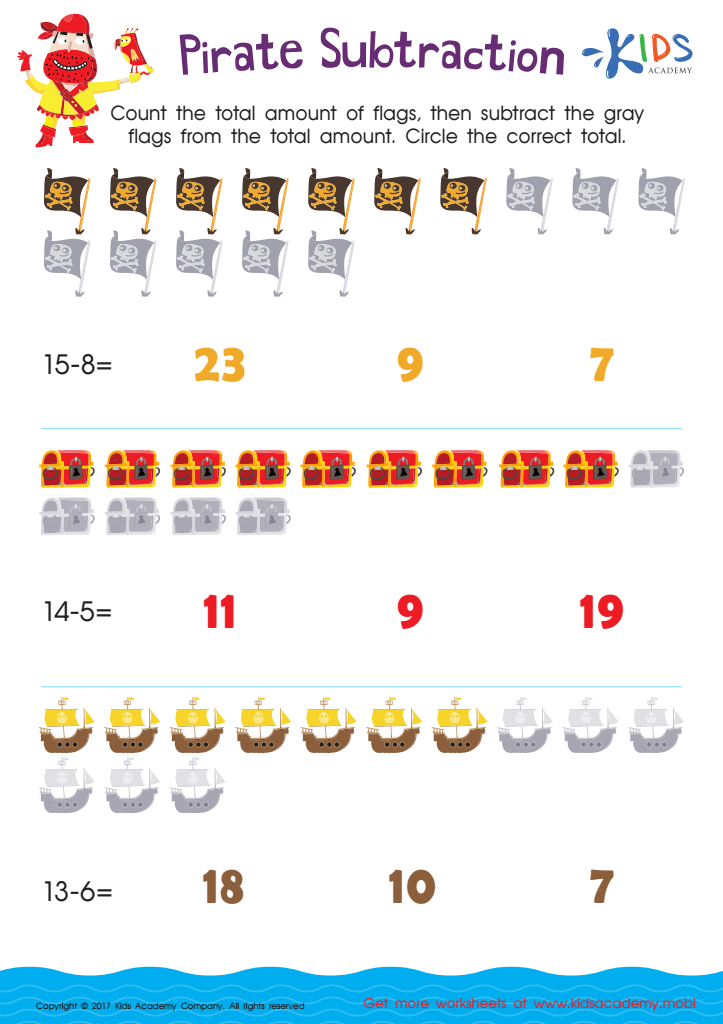
Pirate Subtraction Substraction Worksheet
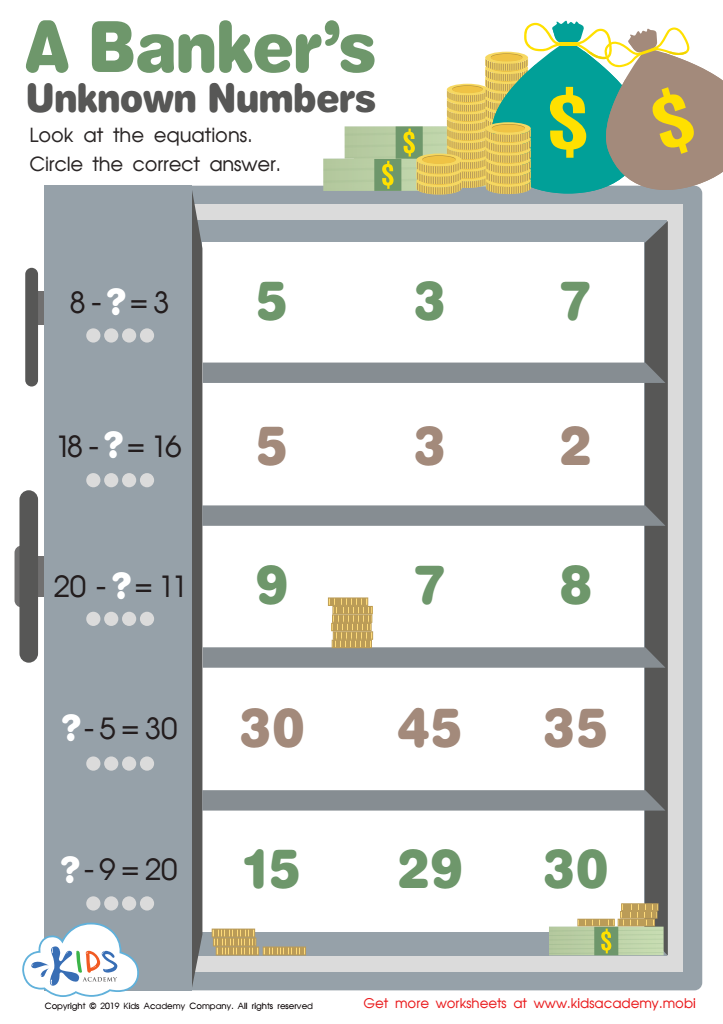
A Banker's Unknown Numbers Worksheet
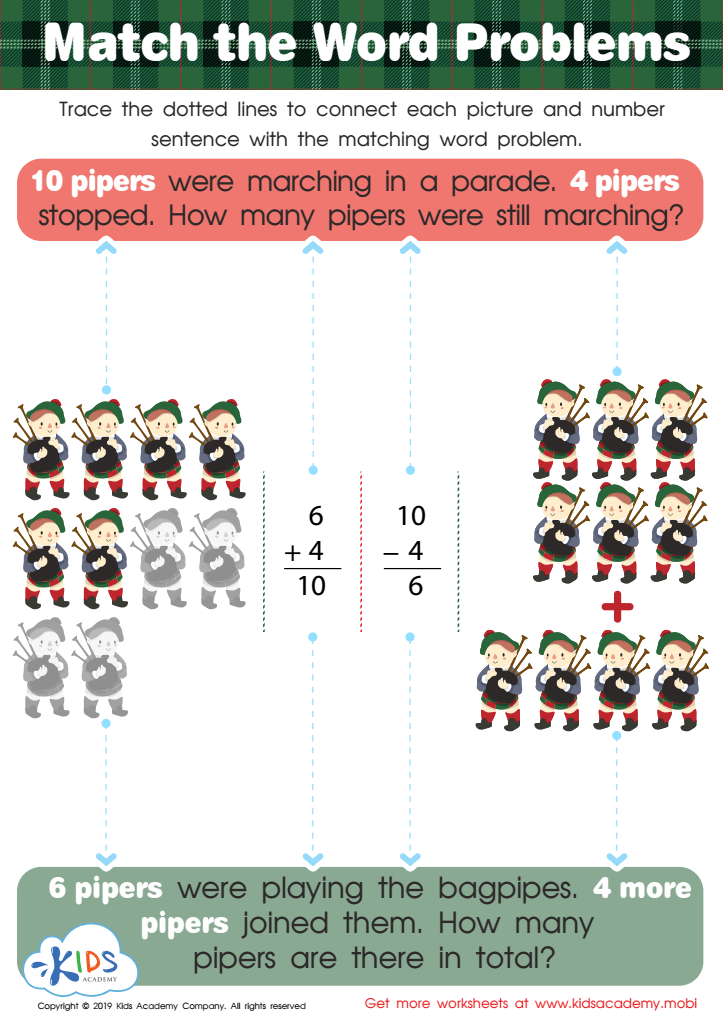
Match the Word Problems Worksheet
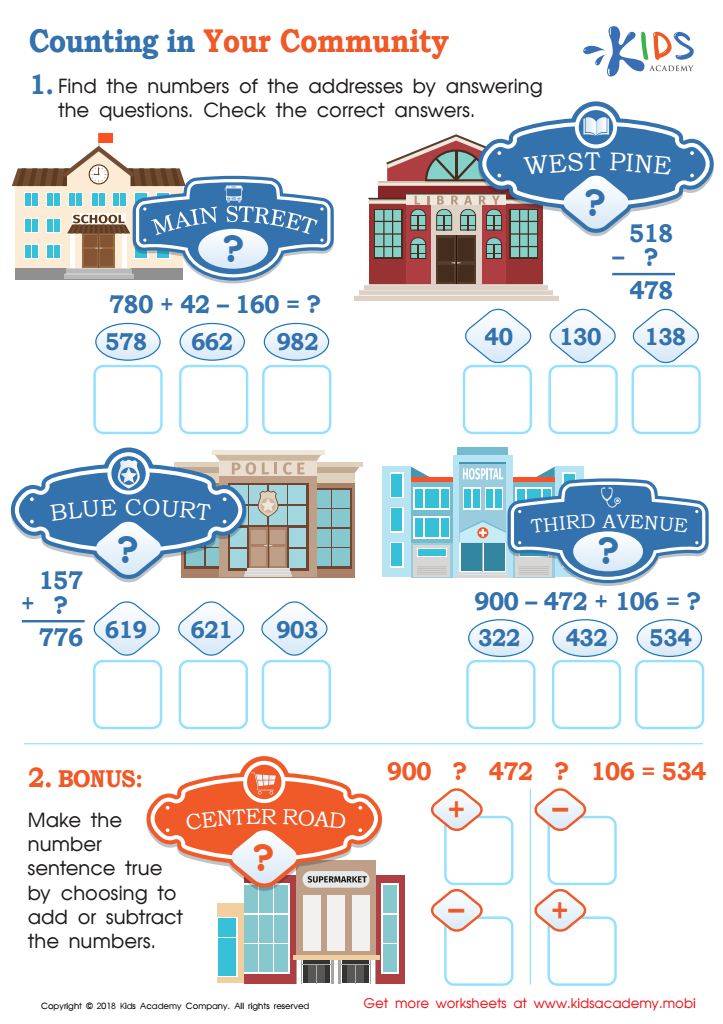
Counting in Your Community Worksheet
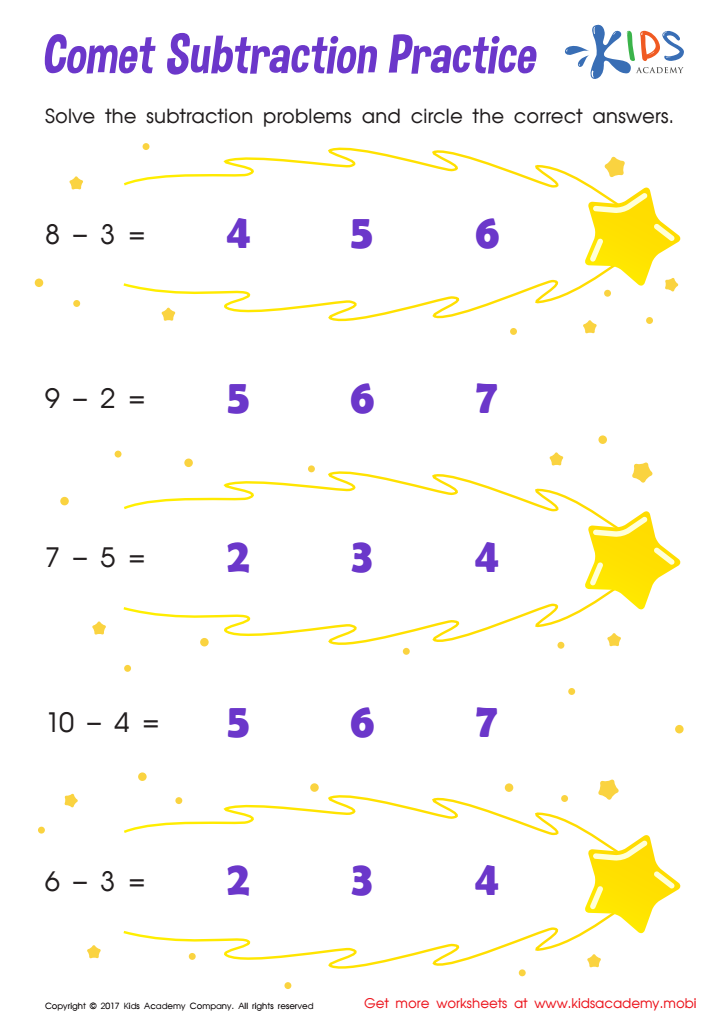
Comet Subtraction Practice Substraction Worksheet
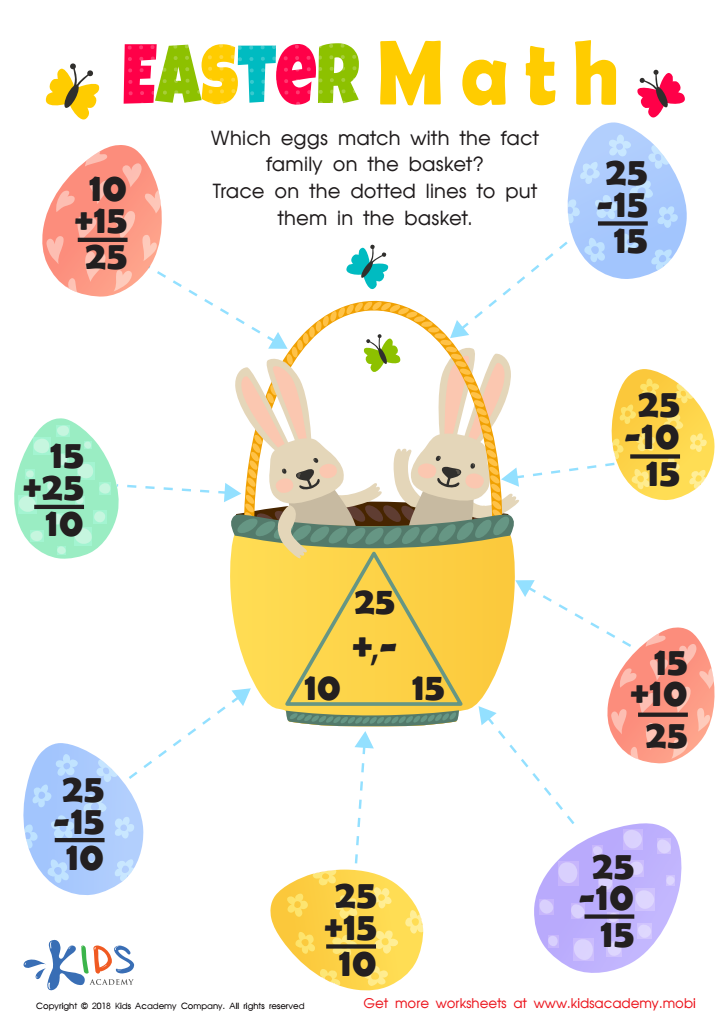
Fact Families: Easter Math Worksheet
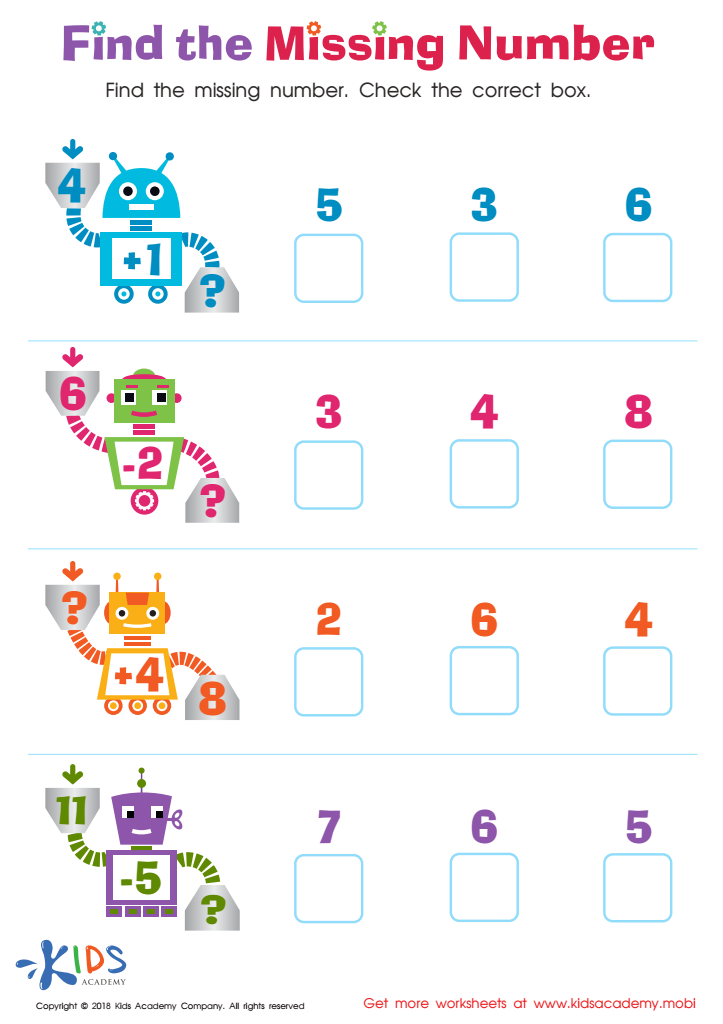
Find the Missing Number Worksheet
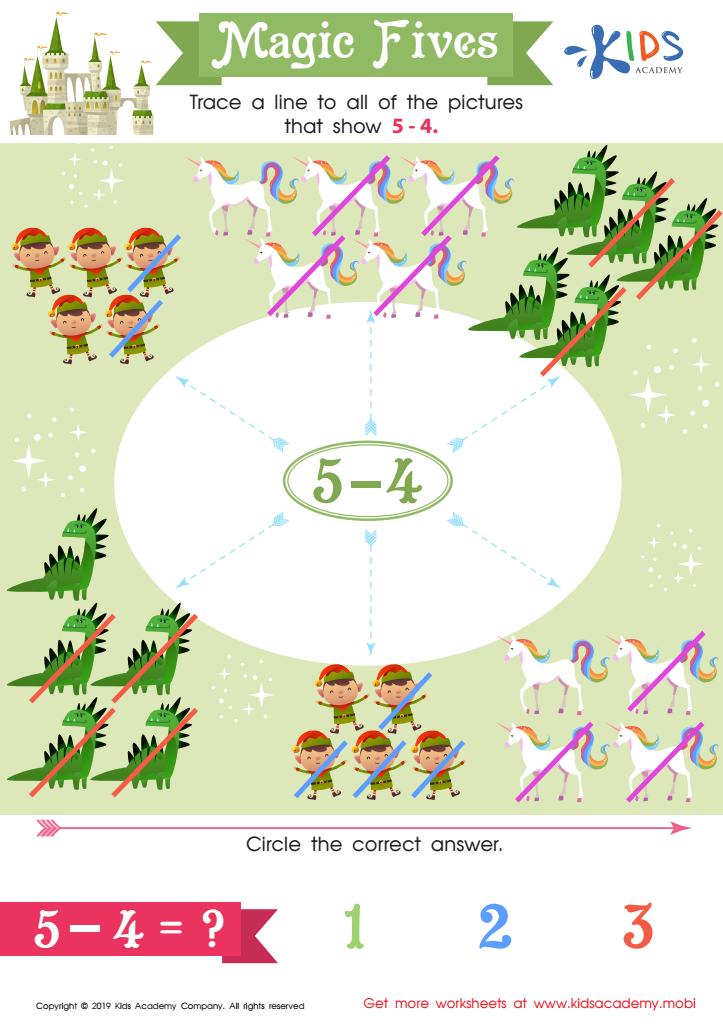
Magic Fives Worksheet
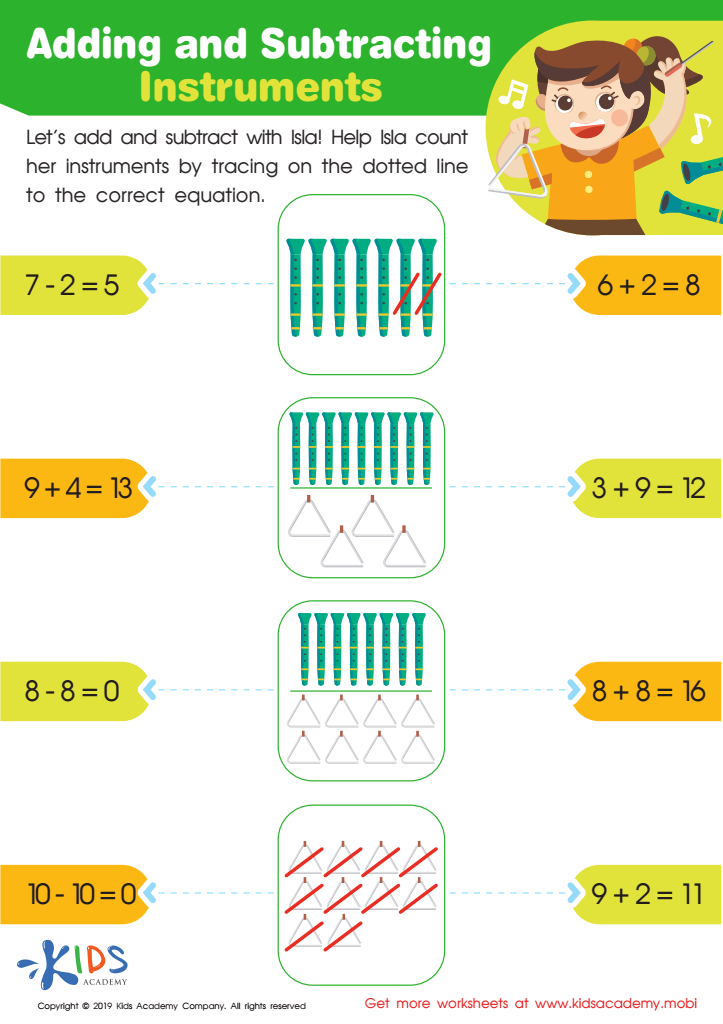
Adding and Subtracting: Instruments Worksheet
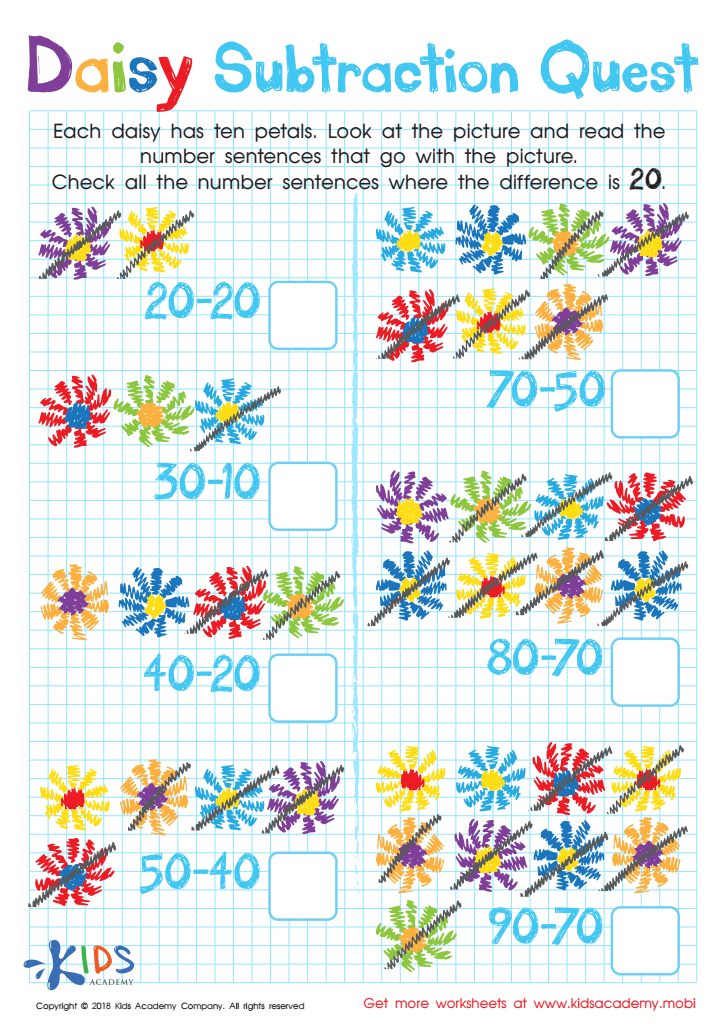
Daisy Subtraction Quest Worksheet
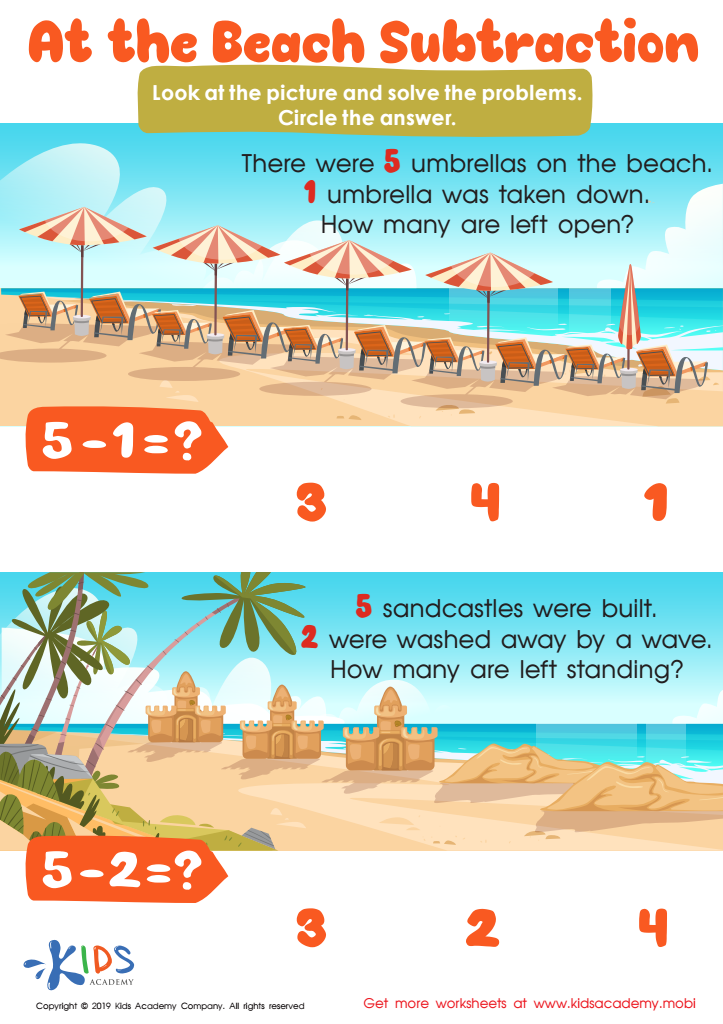
At the Beach Subtraction Worksheet
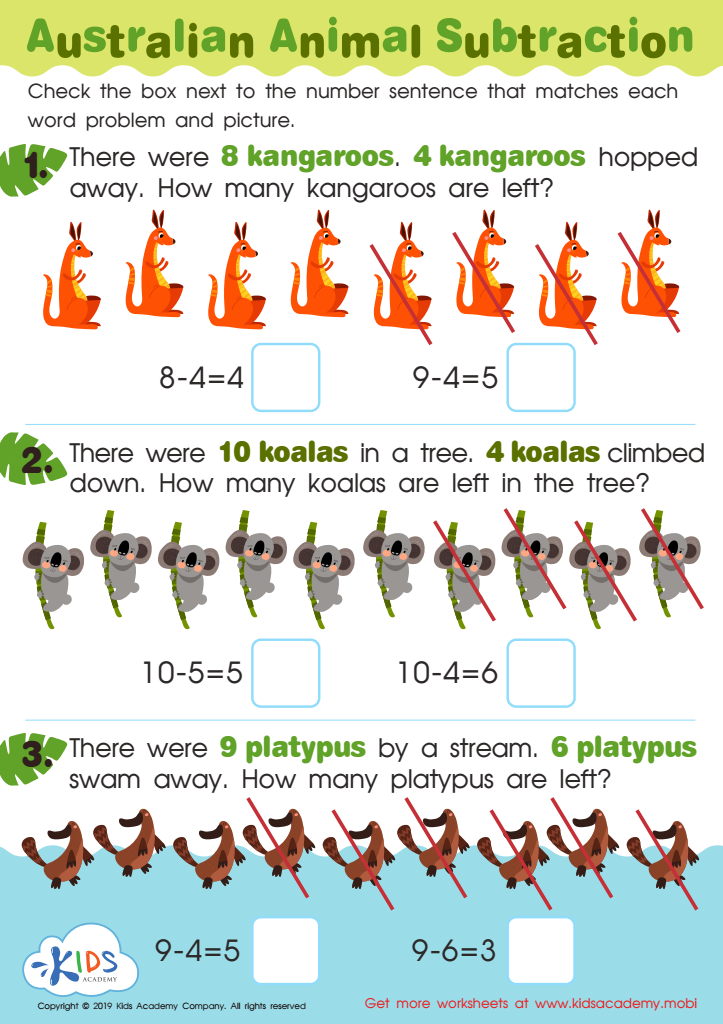
Australian Animal Subtraction Worksheet
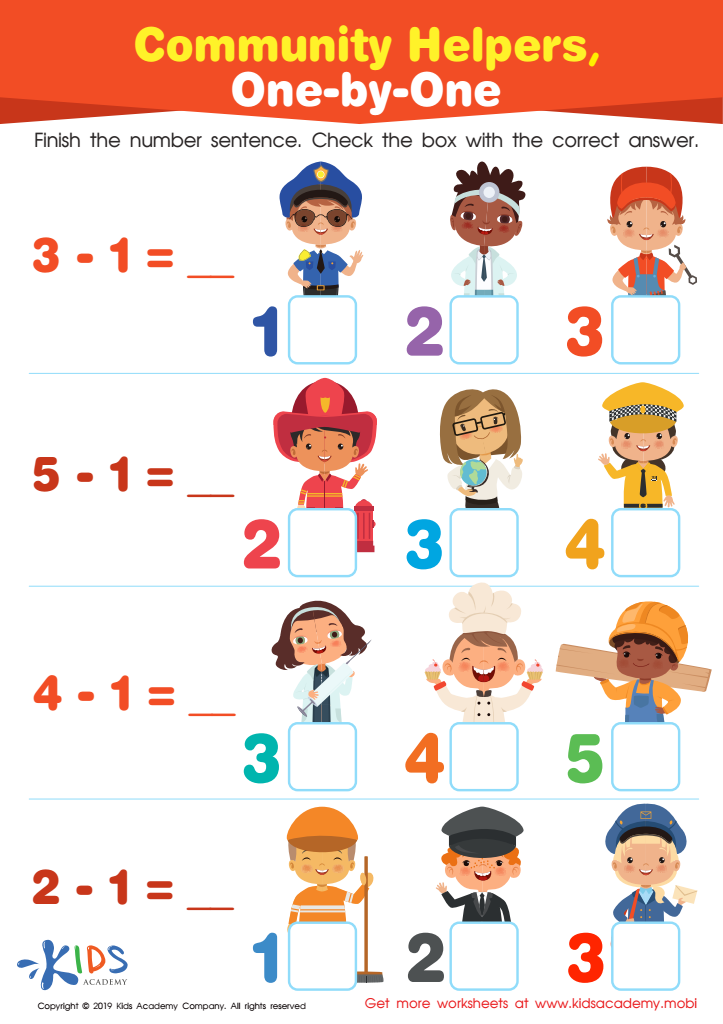
Community Helpers, One-by-One Worksheet
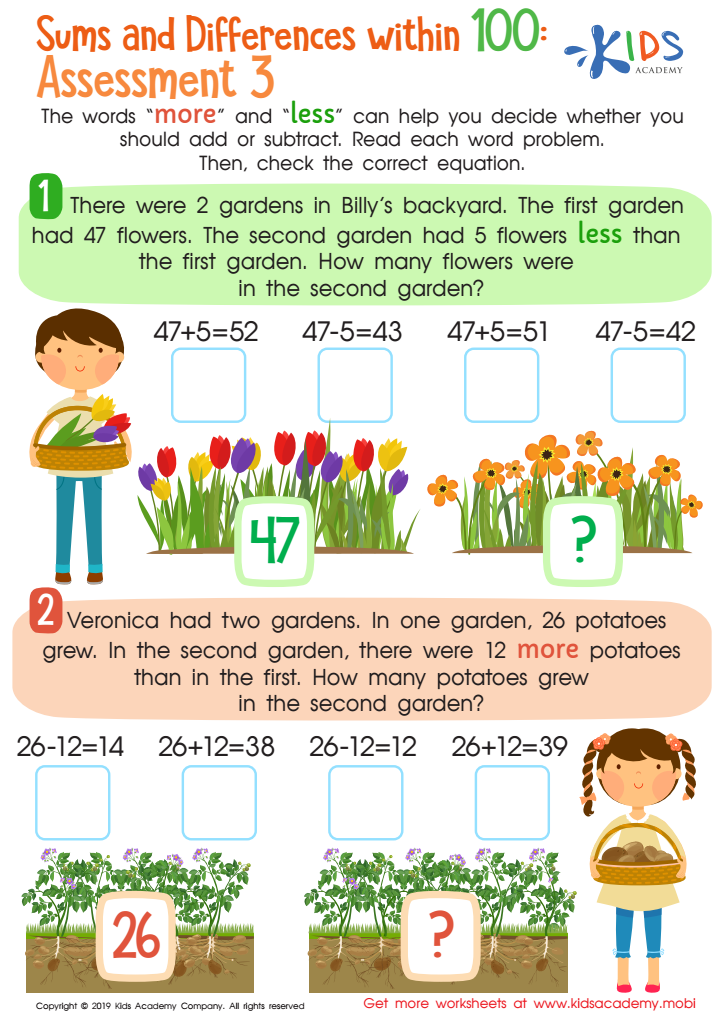
Sums and Differences Within 1 - Assessment 3 Worksheet
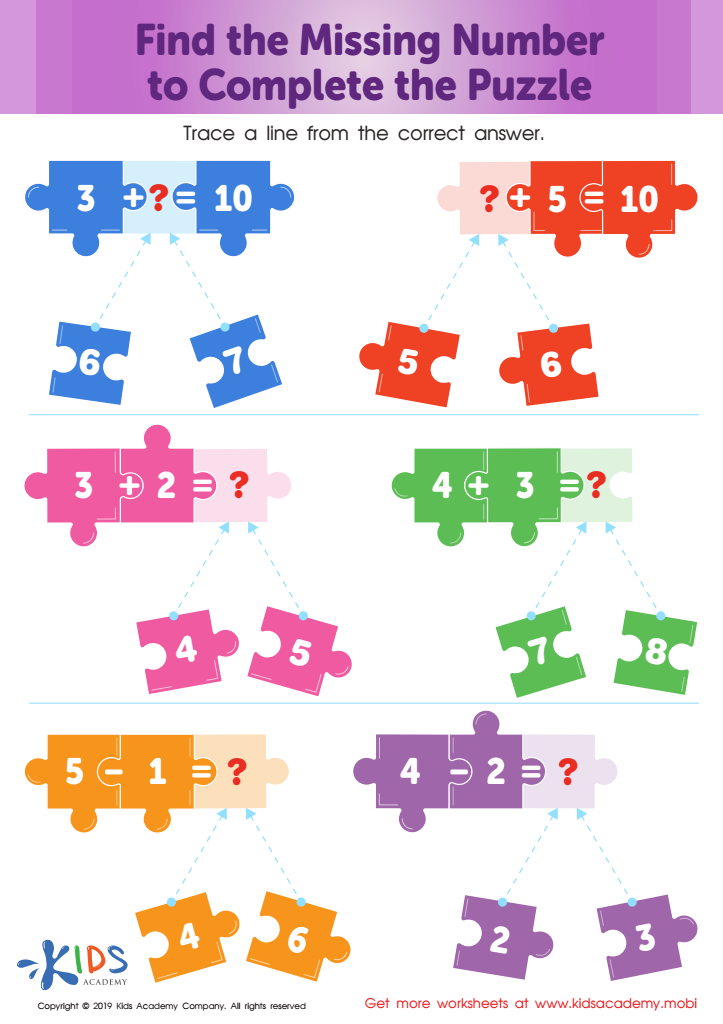
Find the Missing Number to Complete the Puzzle Worksheet
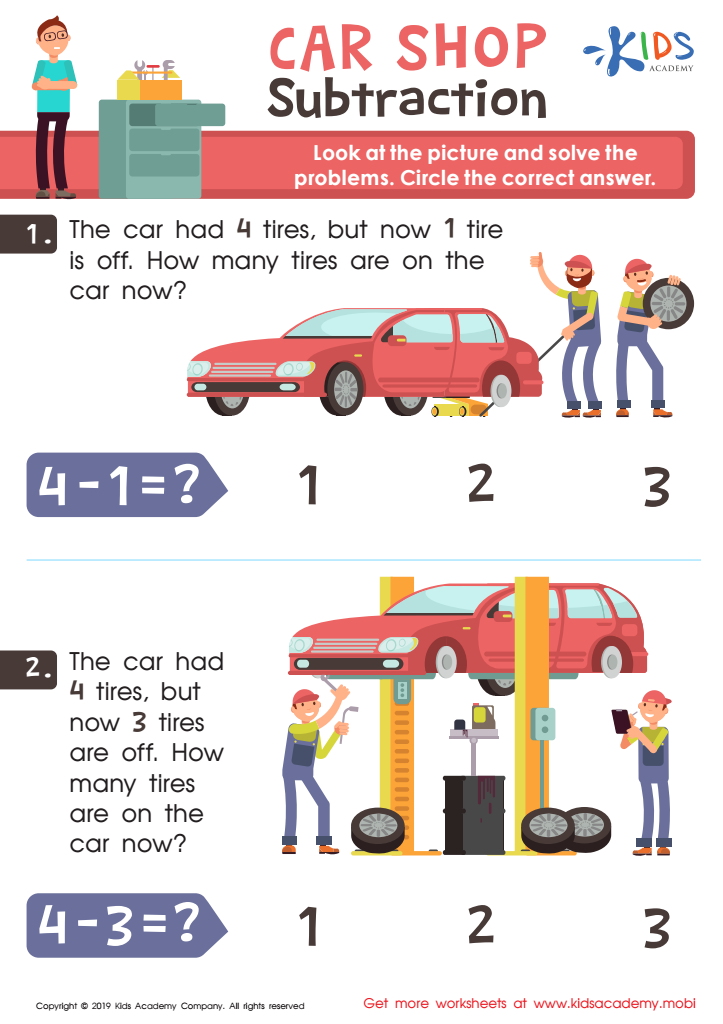
Car Shop Subtraction Worksheet
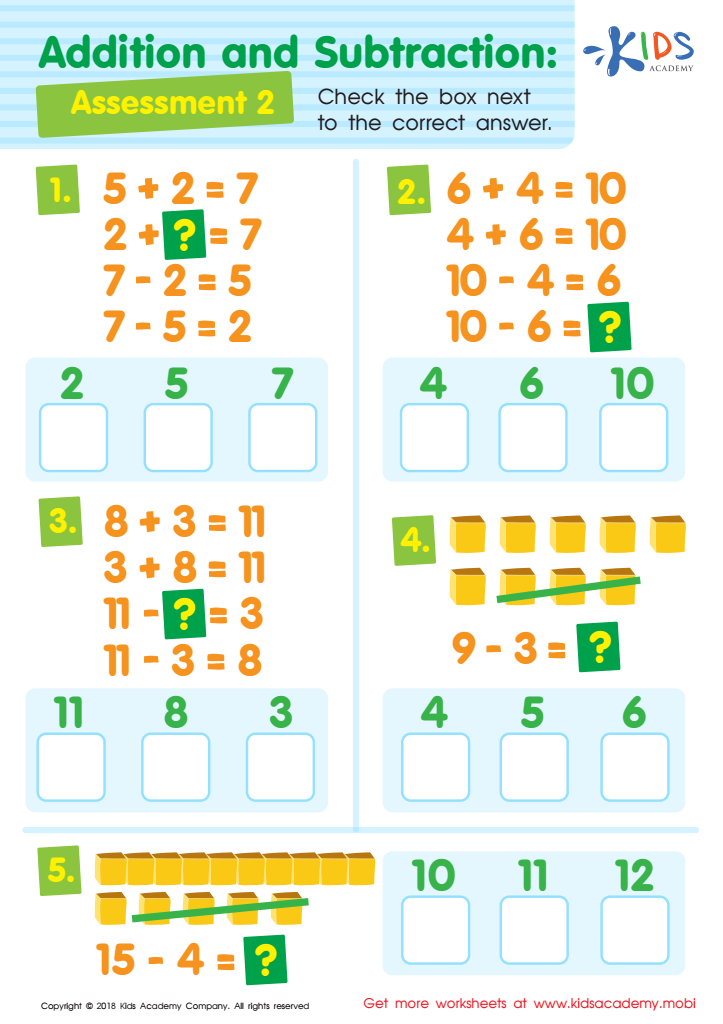
Addition and Subtraction Assessment 2 Worksheet
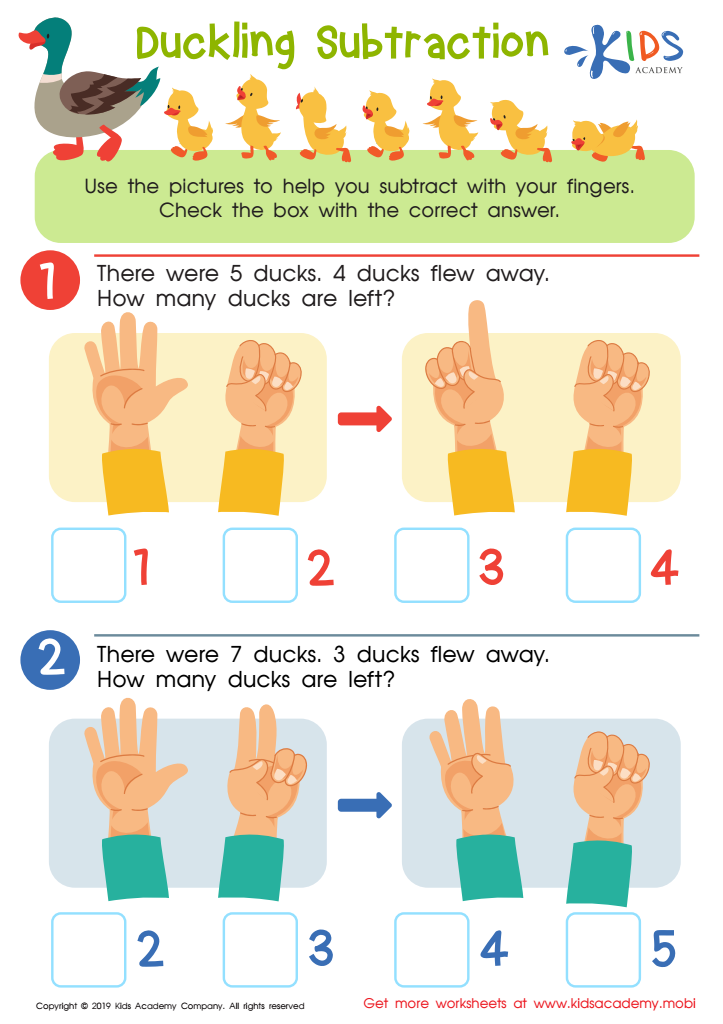
Duckling Subtraction Worksheet
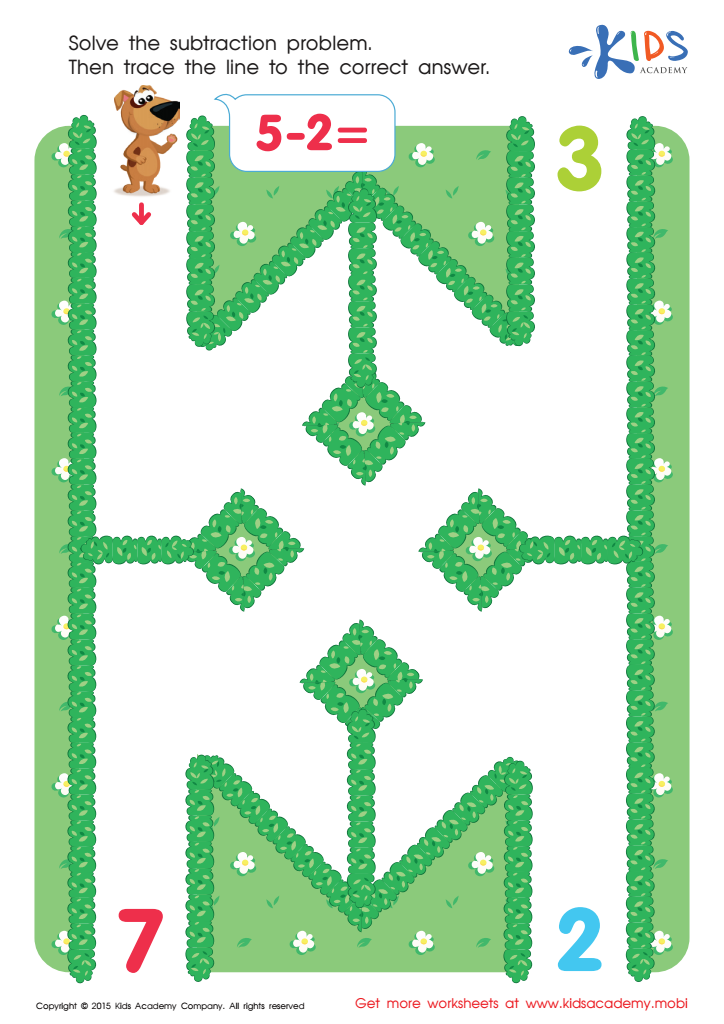
Five Minus Two Worksheet
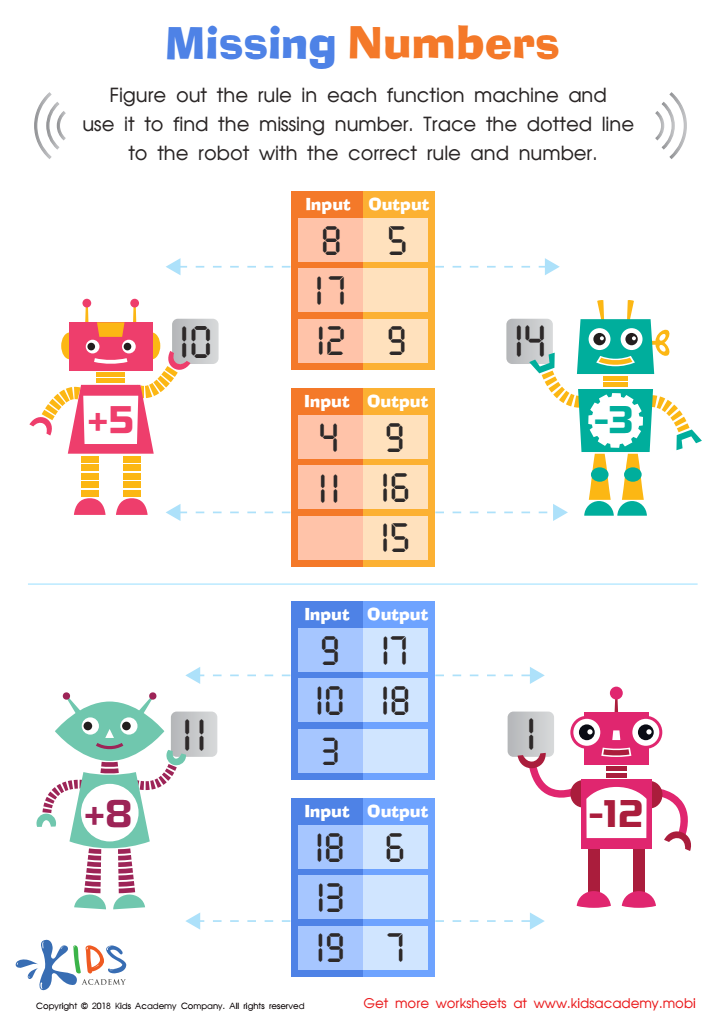
Missing Numbers Worksheet
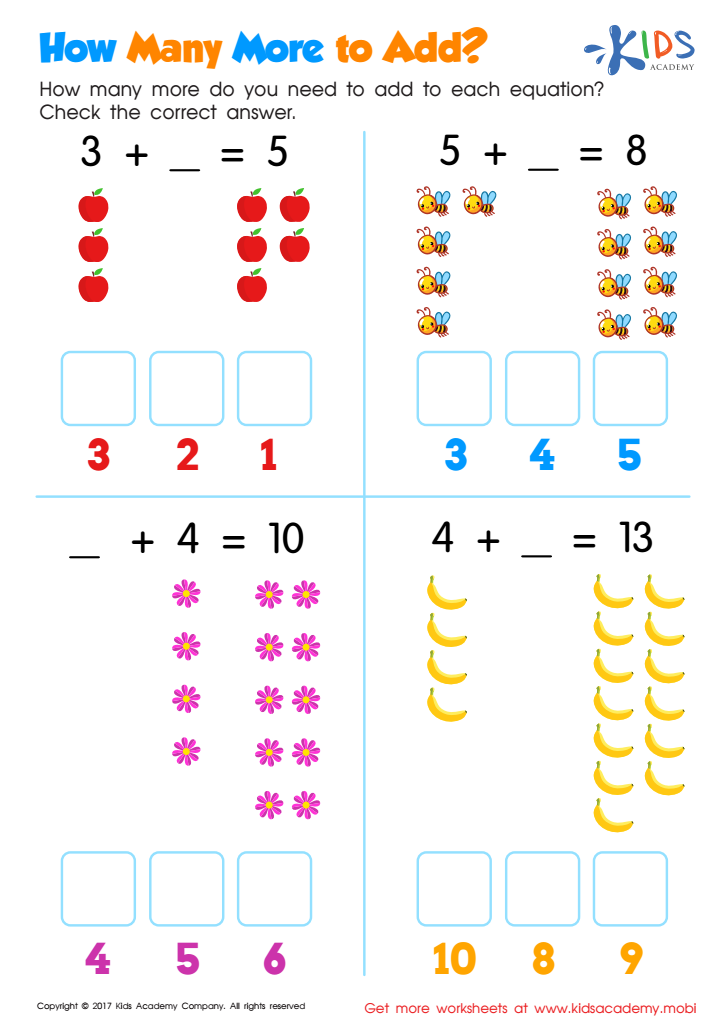
How Many More to Add Worksheet
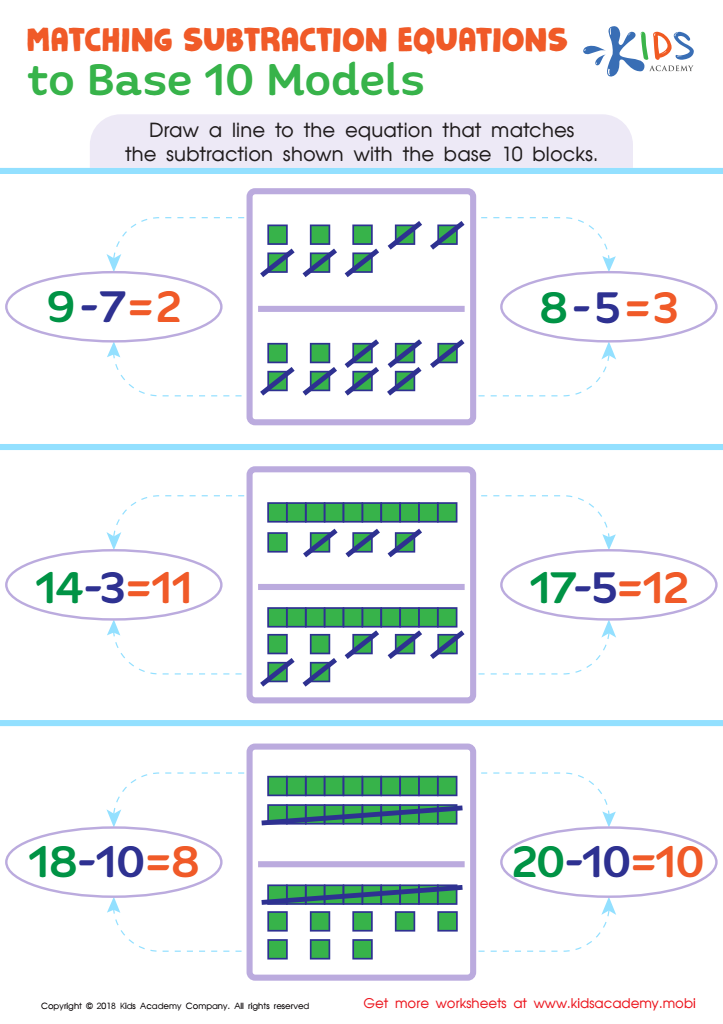
Matching Subtraction Equations To Base 10 Models Worksheet




.jpg)


Teaching subtraction to children aged 3-7 is crucial for their cognitive and social development. Understanding subtraction lays the foundation for essential mathematical skills, enhancing their ability to solve problems and think critically. At this early age, children are naturally curious and eager to learn. Introducing subtraction through engaging activities makes the learning process enjoyable and helps them formulate a solid understanding of numbers.
Subtraction fosters important daily skills, such as counting and understanding quantity differences, which children encounter in everyday life—whether sharing snacks, distributing toys, or measuring ingredients while cooking. Moreover, mastering subtraction encourages a sense of achievement and boosts confidence. As children grasp these concepts, they develop resilience and a positive attitude toward learning.
Parents and teachers should also appreciate the role subtraction plays in social-emotional development. Working together on subtraction problems cultivates teamwork and collaborative skills among children. Encouraging dialogue around math concepts further enriches vocabulary and communication skills. In essence, proper early exposure to subtraction not only prepares children for future academic success but also equips them with necessary life skills. Thus, ensuring they support subtraction learning is vital for nurturing well-rounded, numerate individuals.








