Normal Chess Worksheets for Ages 5-6
47 filtered results
-
From - To
Introduce your young learners to the captivating world of chess with our Normal Chess Worksheets for Ages 5-6! These engaging resources are designed to help early-grade students develop essential skills like critical thinking, problem-solving, and concentration while having fun. Our worksheets feature colorful illustrations and age-appropriate activities that teach fundamental chess concepts, including piece movement, game rules, and strategic play. Perfect for classroom use or at-home learning, these downloadable worksheets foster a love for chess and promote cognitive development in young minds. Start your child’s chess journey today and watch them grow into confident players with our thoughtfully created worksheets!
Chess Pieces Quest Worksheet
 Assign to My Students
Notation of Moves Writing it Down Worksheet
King and Queen Worksheet
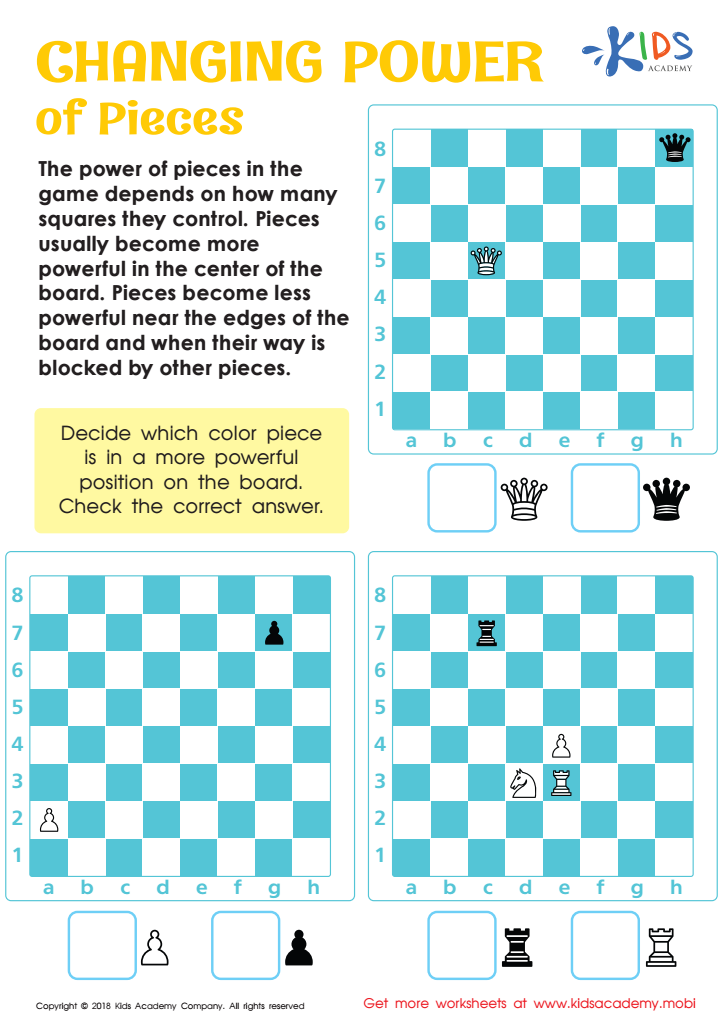
Changing Power of Chess Pieces Worksheet
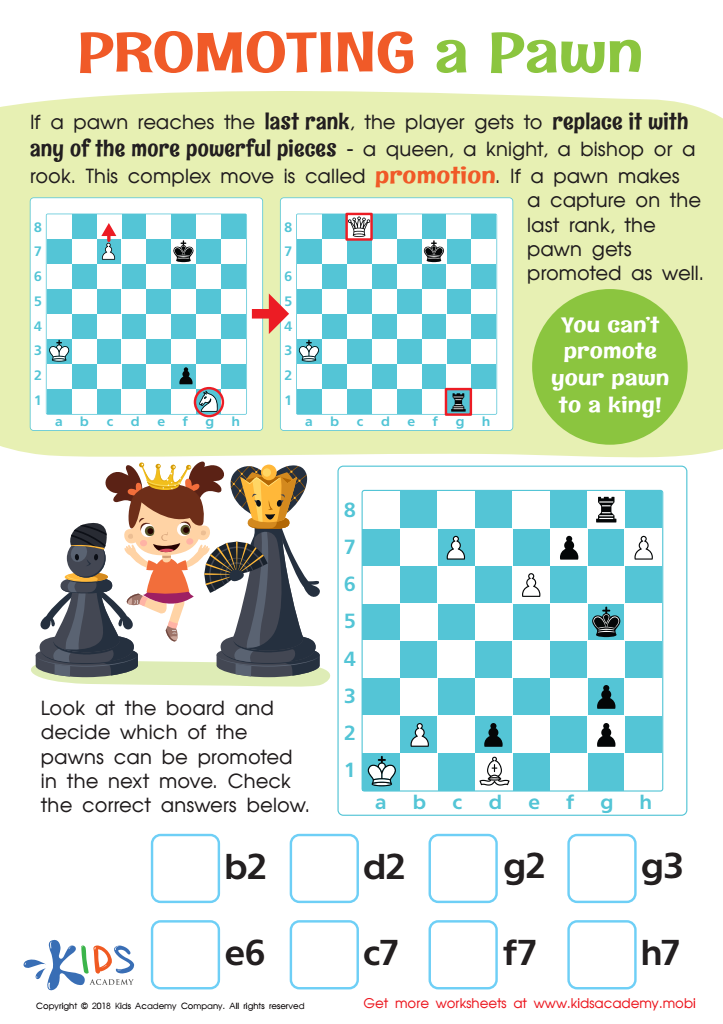
Promoting a Pawn Worksheet
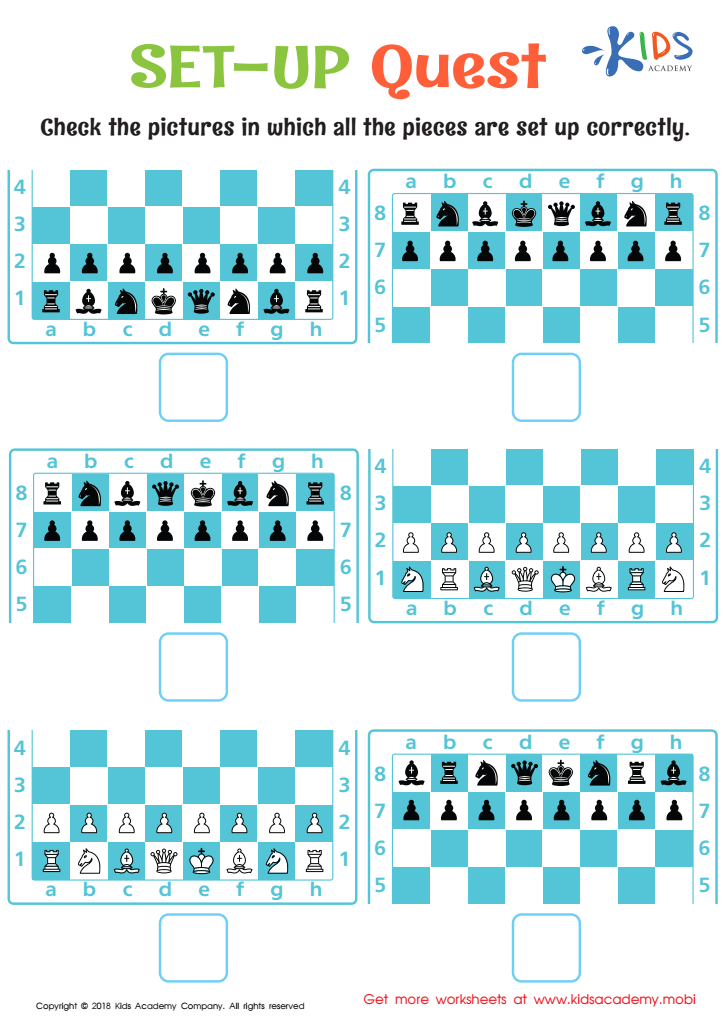
Set-up Quest Worksheet
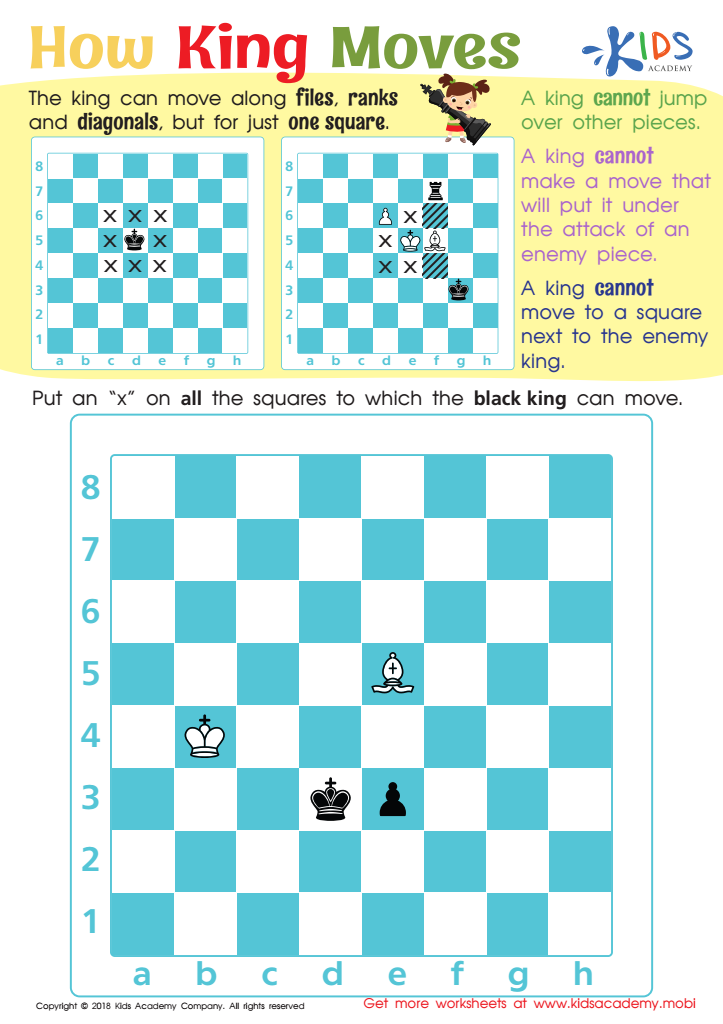
How King Moves Worksheet
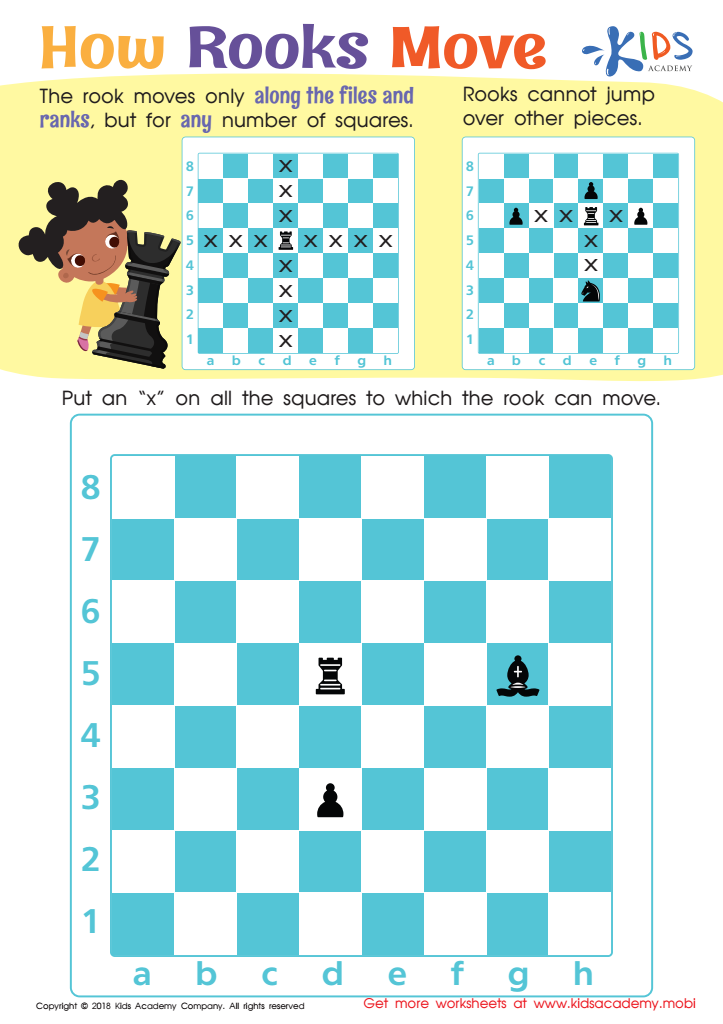
How Rooks Move Worksheet
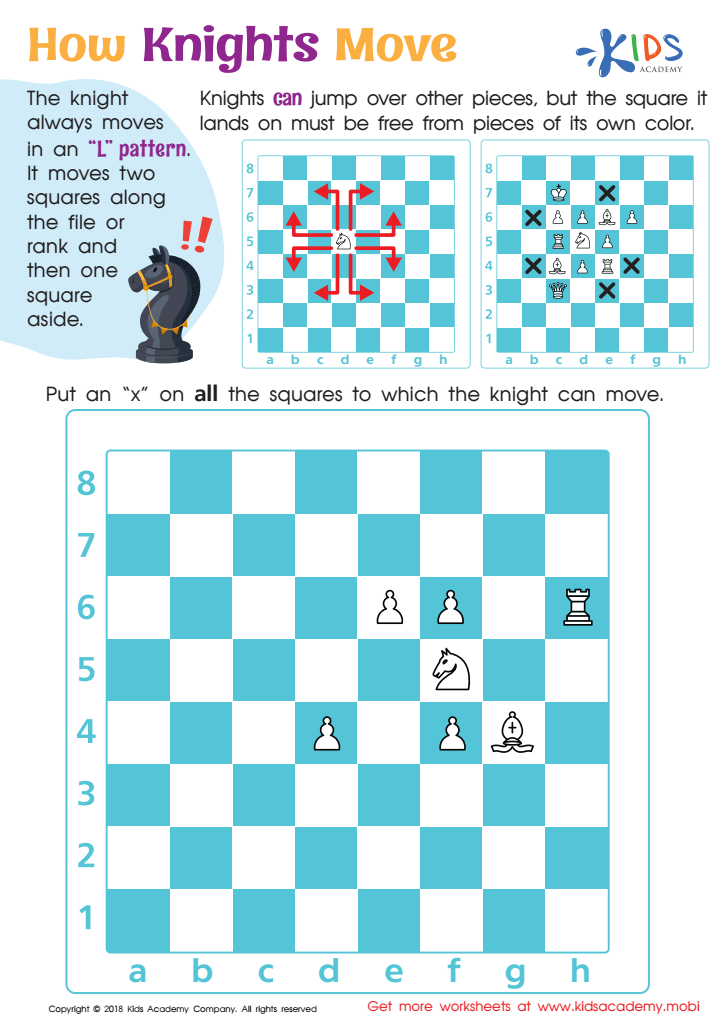
How Knights Move Worksheet
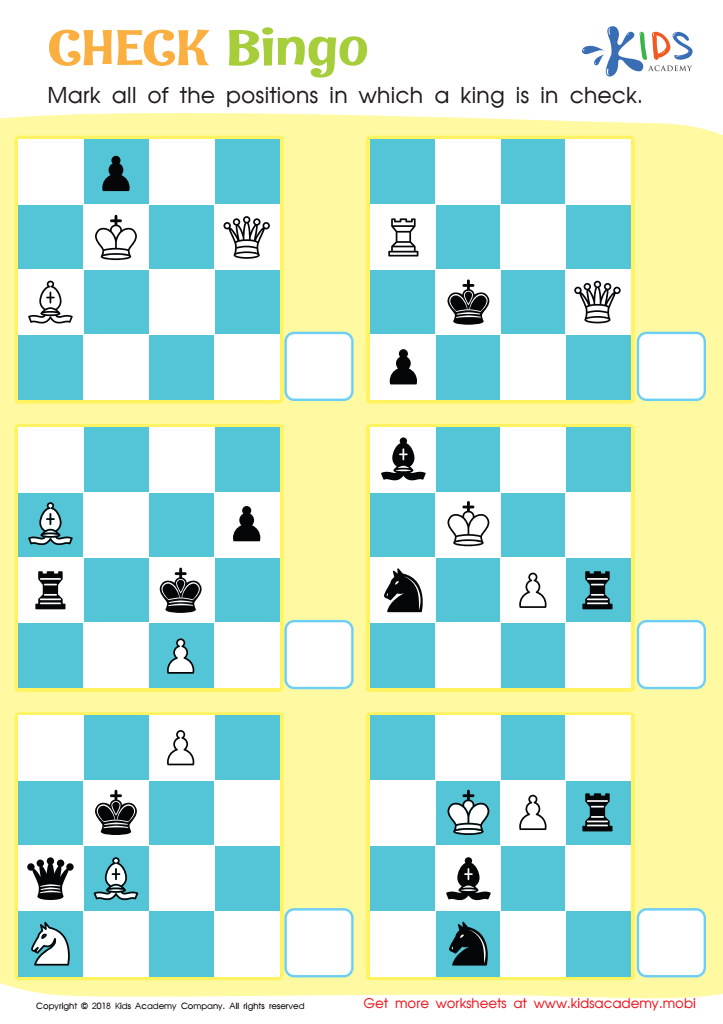
Check Bingo Worksheet
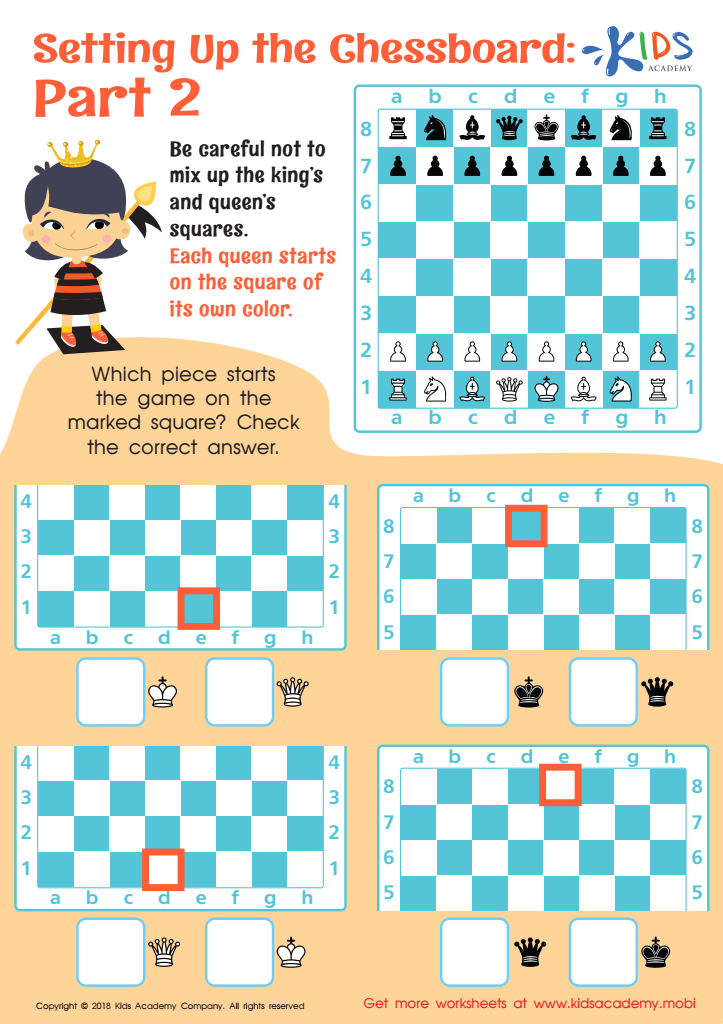
Setting up the Chessboard: Part 2 Worksheet
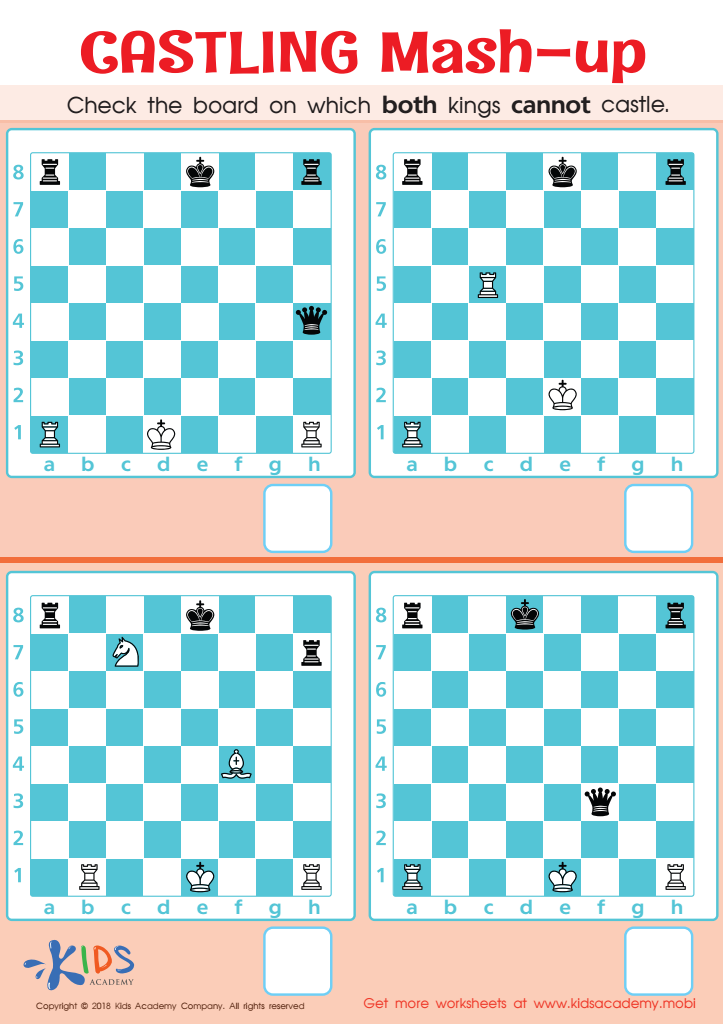
Castling Mash–up Worksheet
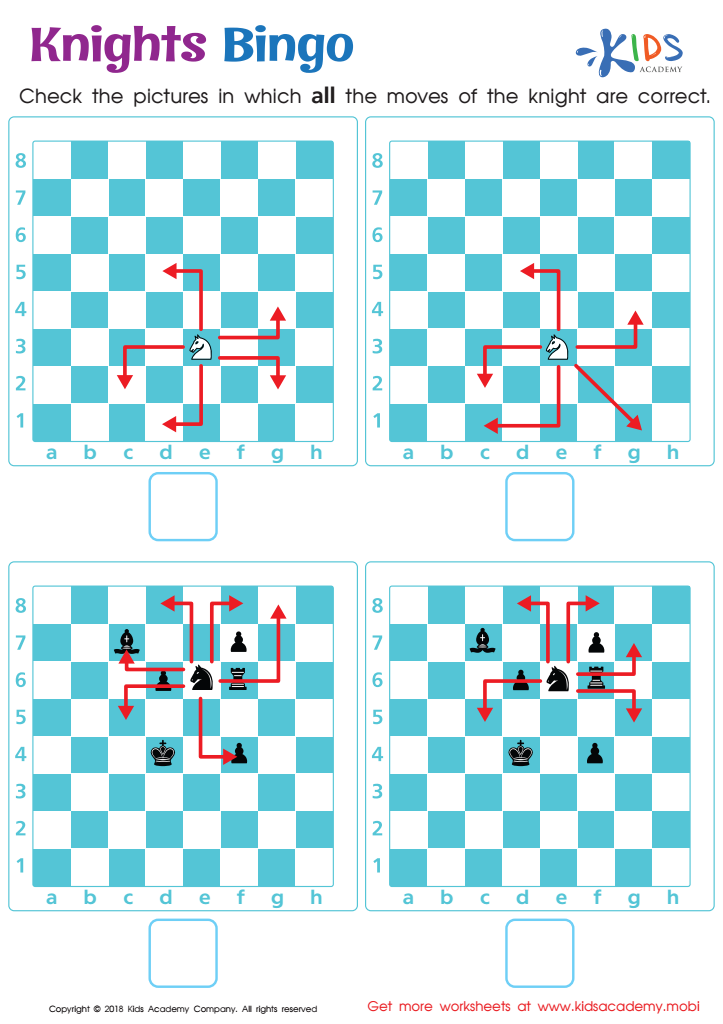
Knights Bingo Worksheet
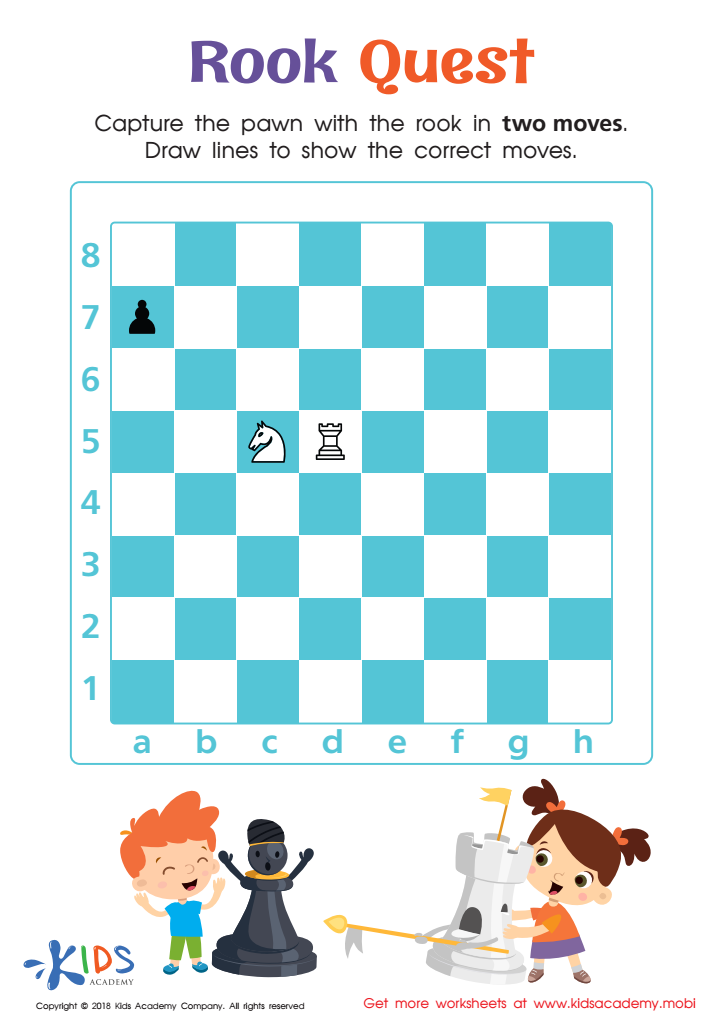
Rook Quest Worksheet
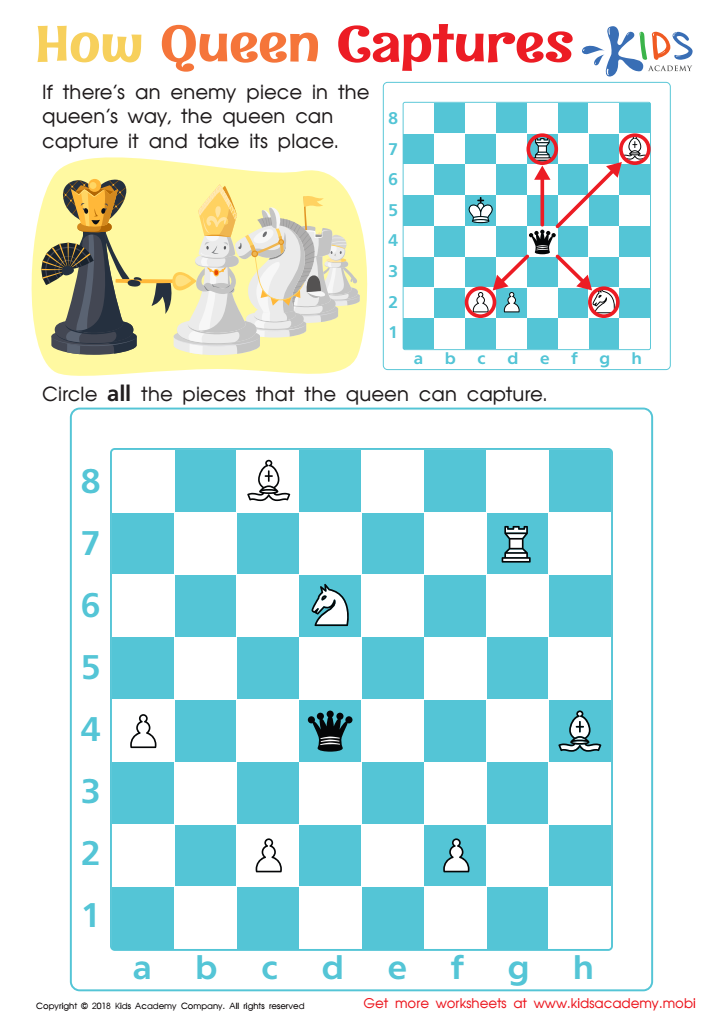
How Queen Captures Worksheet
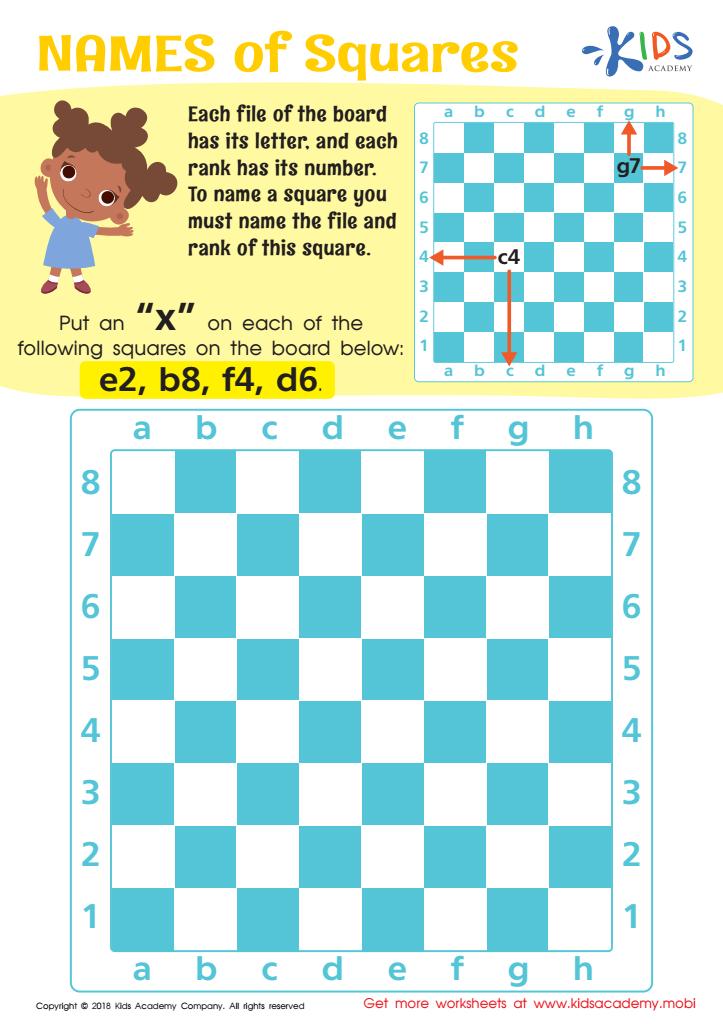
Names of Squares Worksheet
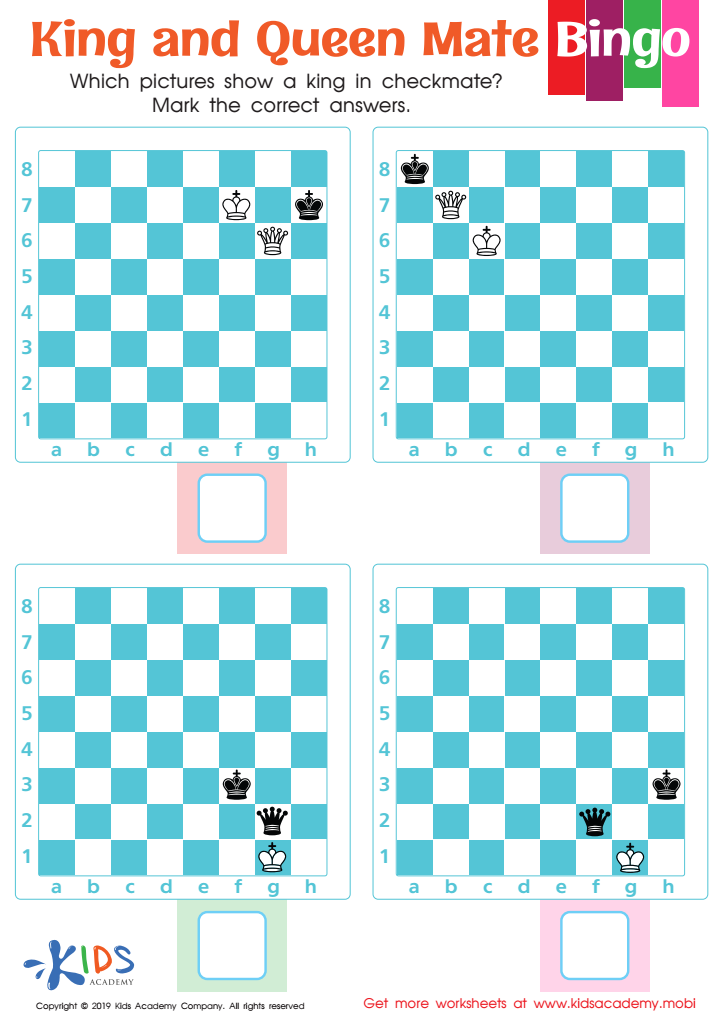
King and Queen Mate: Bingo Worksheet
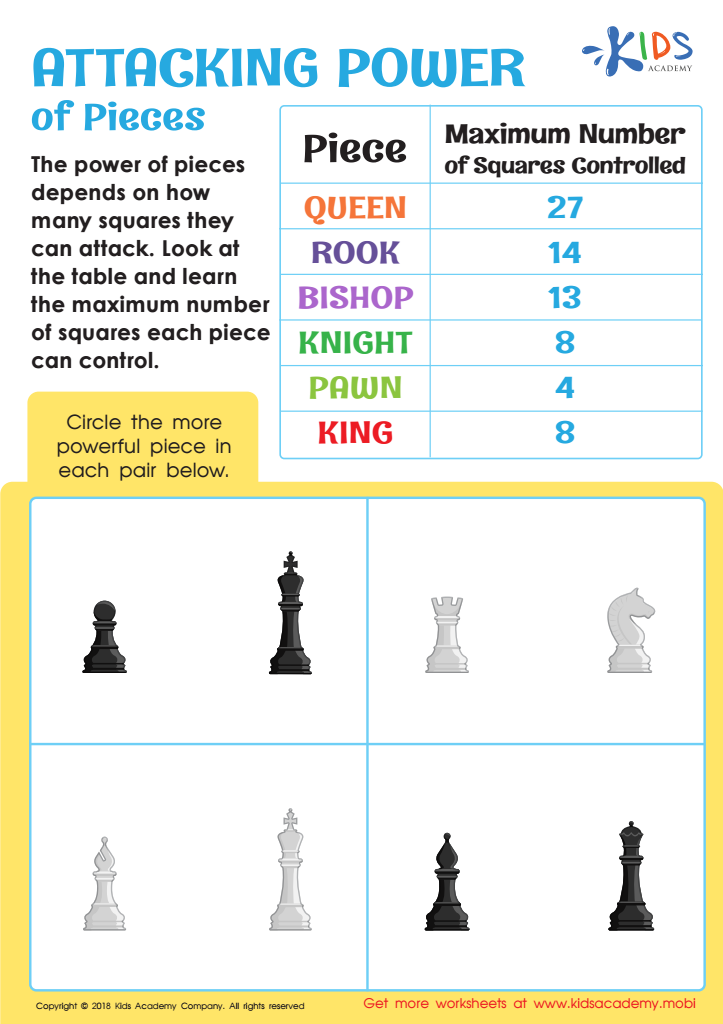
Attacking Power of Chess Pieces Worksheet
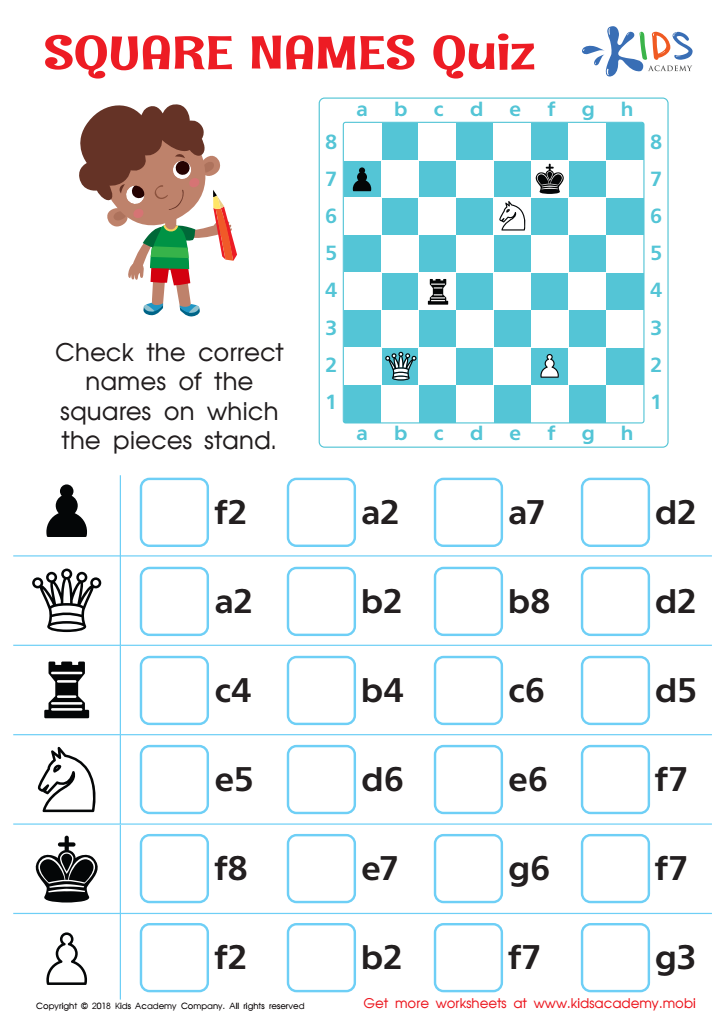
Square Names Quiz Worksheet
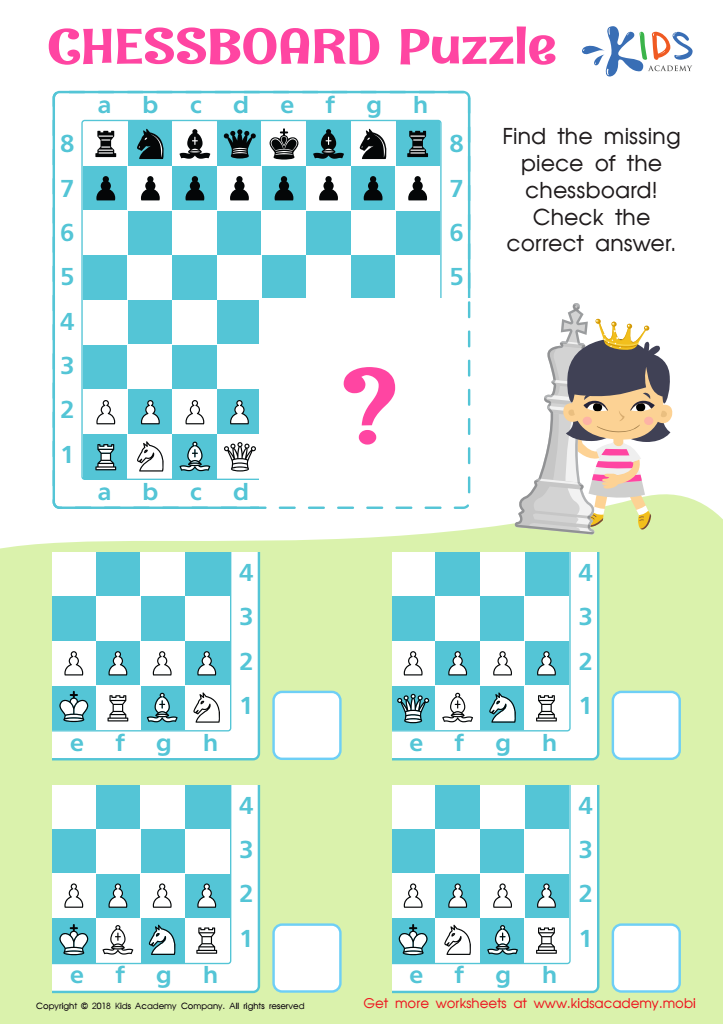
Chessboard Puzzle Worksheet
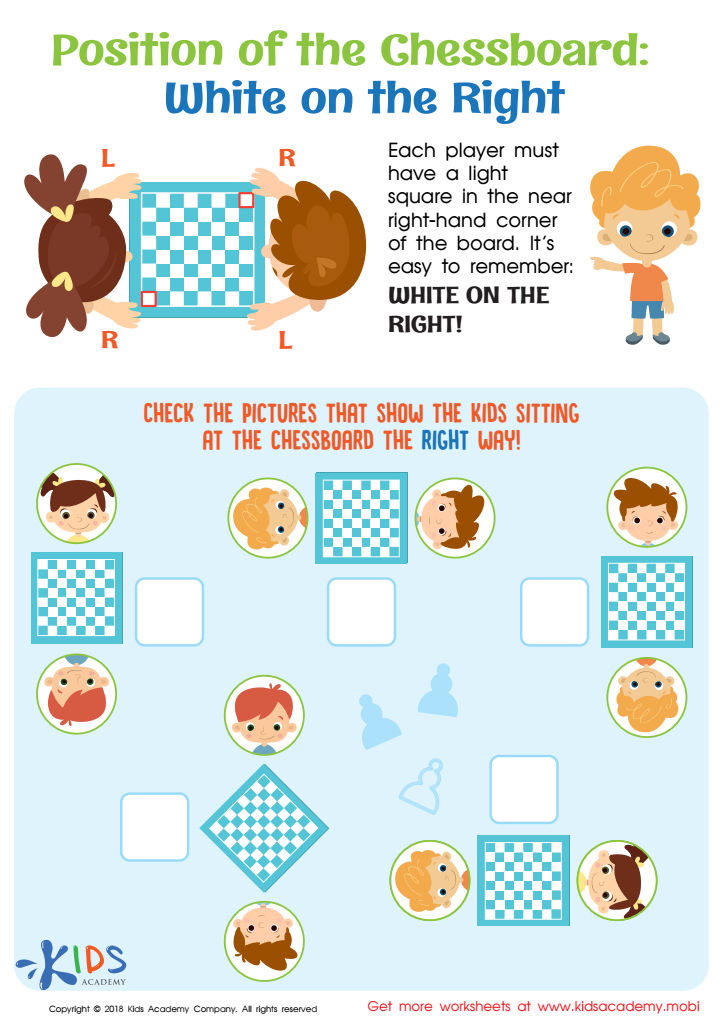
Position of the Chessboard: White on the Right Worksheet
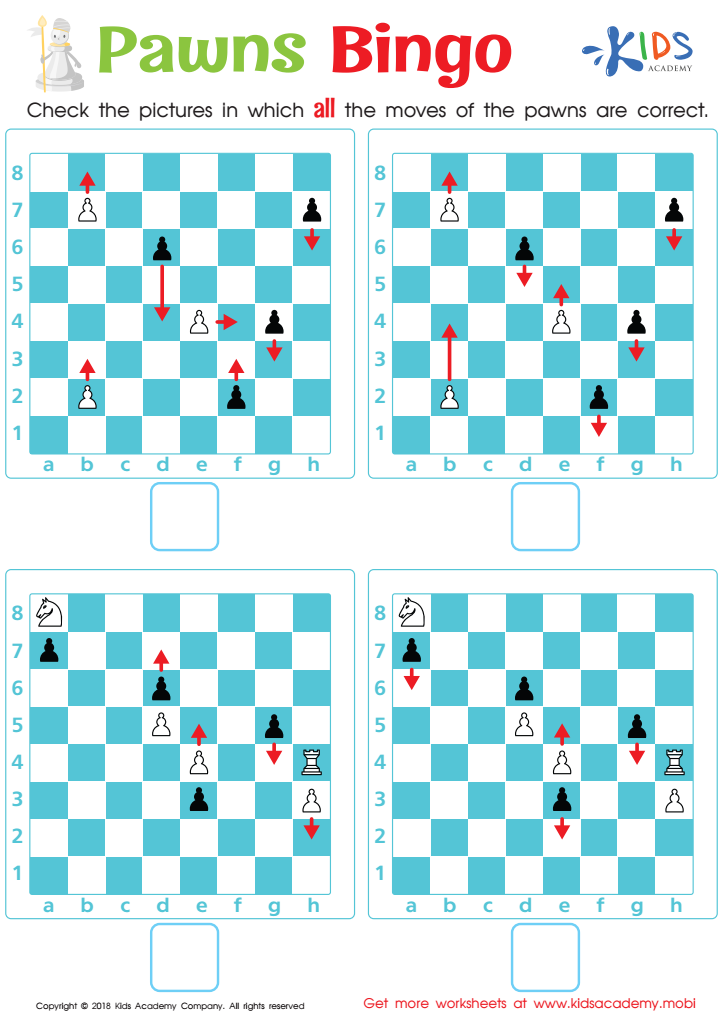
Pawns Bingo Worksheet
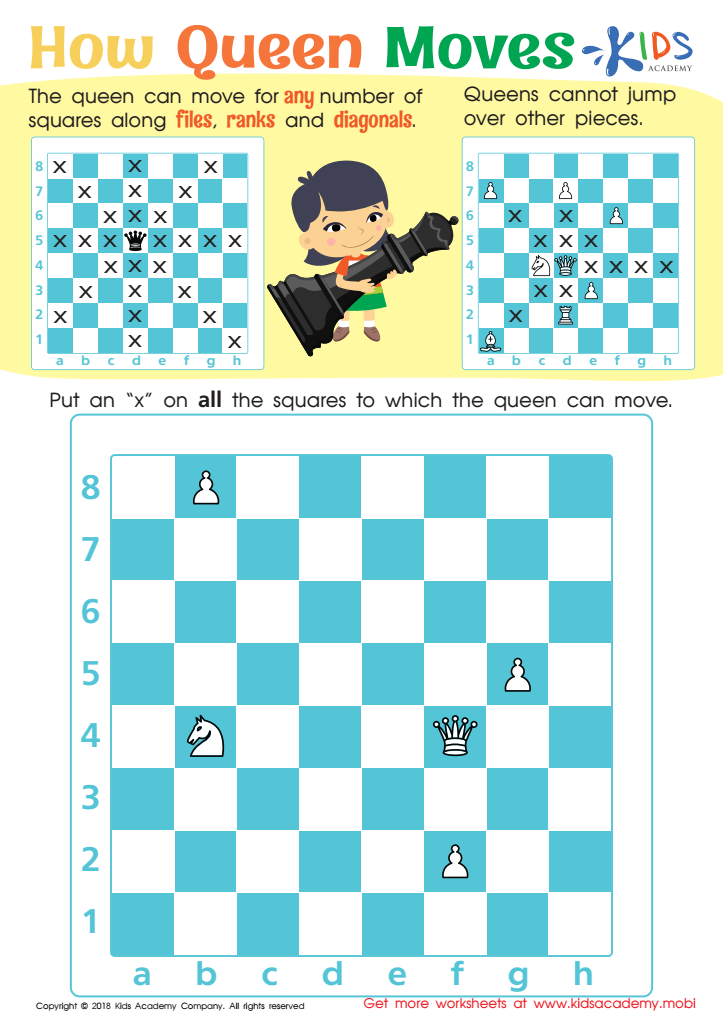
How Queen Moves Worksheet
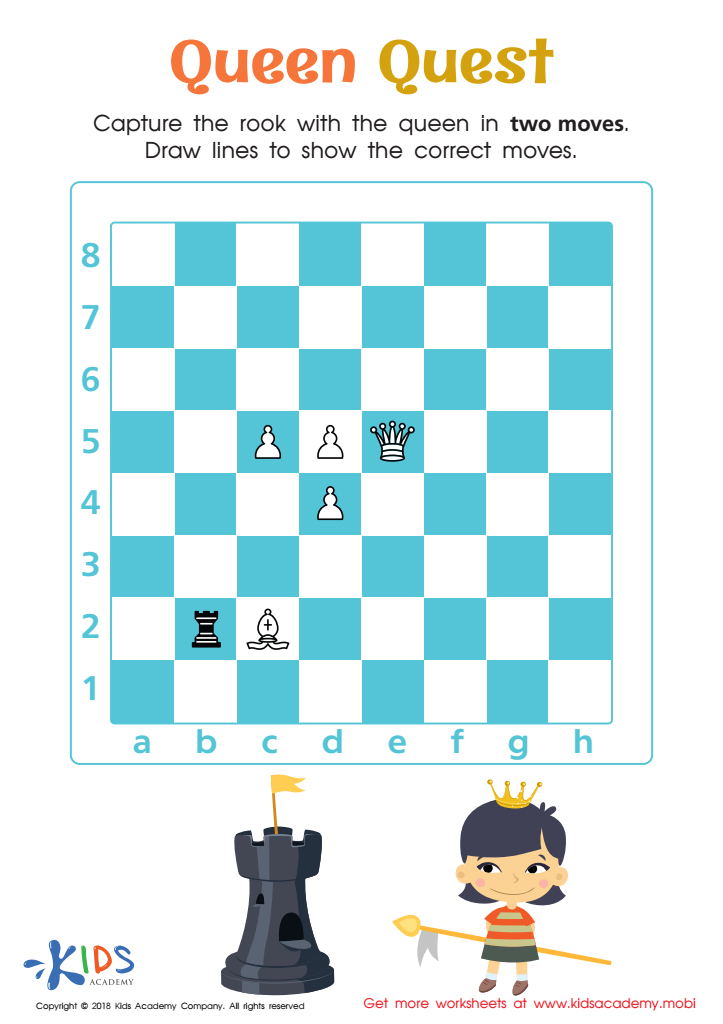
Queen Quest Worksheet







Normal Chess is an excellent developmental tool for children aged 5-6, providing numerous benefits that parents and teachers should consider. First and foremost, it enhances cognitive skills, including critical thinking, problem-solving, and strategic planning. As children learn how to maneuver pieces and anticipate their opponent’s moves, they develop essential analytical abilities that extend beyond the chessboard.
In addition to cognitive benefits, Normal Chess promotes emotional intelligence by teaching kids about patience, resilience, and sportsmanship. As they face victories and defeats, children learn to manage their emotions and exhibit grace under pressure, valuable lessons that will serve them well throughout life.
Moreover, starting chess early builds a foundation for academic success. Research has linked chess education to improved performance in subjects such as math and reading, as it encourages logical reasoning and pattern recognition.
Socially, chess is a tool for building friendships and cultivating respectful competition, fostering collaboration and communication among peers. For parents and teachers, introducing normal chess at an early age nurtures a holistic development approach, combining intellectual, emotional, and social growth that could profoundly impact a child’s future success and well-being.