Filters

2280 filtered results

Clear all filters
Favorites
With answer key
Interactive

2280 filtered results

Difficulty Level

Grade


Subject

    Check out this FREE Trial Lesson on Math for age 5-7!

    Classifying Objects and Count the Number of Objects in Each Category CCSS.Math.Content

    Favorites
    With answer key
    Interactive
    • 5-7
    • Math
    Honey Bee Counting Worksheet
    Honey Bee Counting Worksheet

    Honey Bee Counting Worksheet

    Help your kids learn about honey bees while practising their counting skills! Show them the picture and ask them to point out the bee. Then, give them this worksheet and have them count up to 6, connecting the dots as they go. Numbers are provided for guidance - it's a great way to have fun and learn!
    Honey Bee Counting Worksheet
    Worksheet
    Free Math Worksheets for Kids
    Free Math Worksheets for Kids

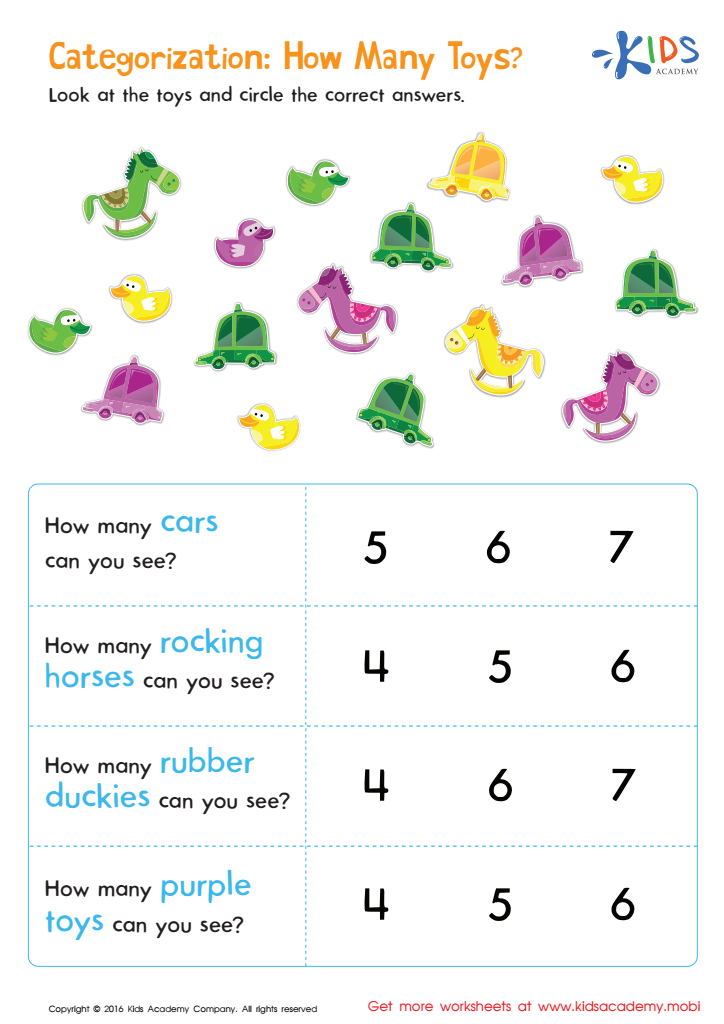
    Classifying Toys by Type and Color Sorting Worksheet
    Kids Academy offers free math worksheets to help practice counting, categorization & recognition skills. Kids will enjoy counting by color & type while strengthening problem-solving & literacy skills.
    Classifying Toys by Type and Color Sorting Worksheet
    Worksheet
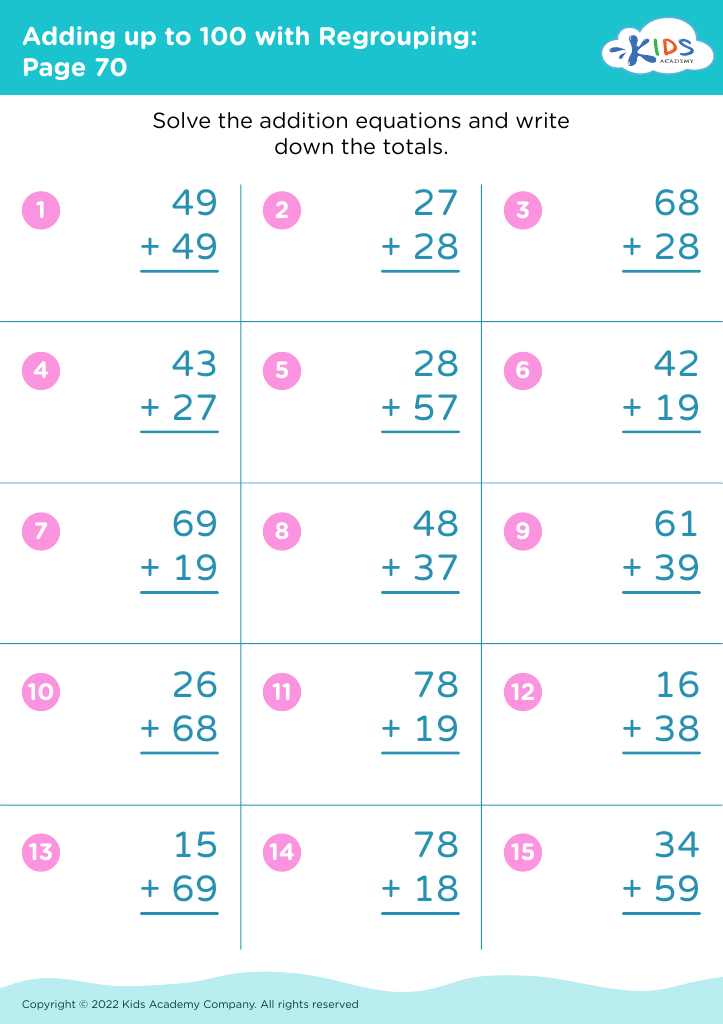
    Adding up to 100 with Regrouping: Page 70
    Adding up to 100 with Regrouping: Page 70
    Adding up to 100 with Regrouping: Page 70
    Worksheet
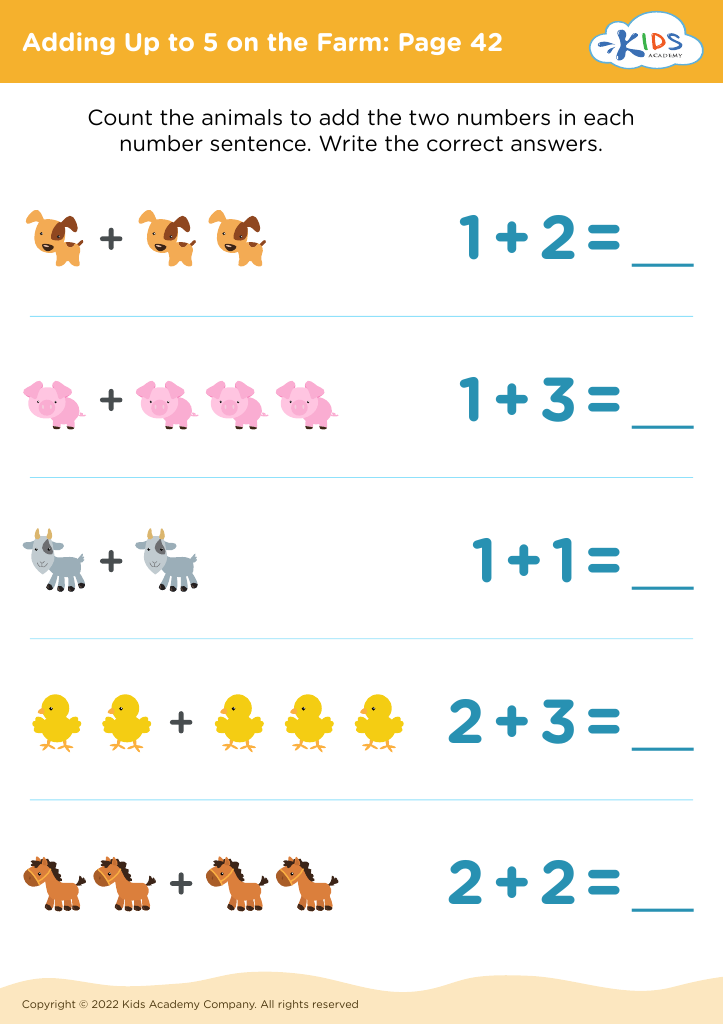
    Adding Up to 5 on the Farm: Page 42
    Adding Up to 5 on the Farm: Page 42
    Adding Up to 5 on the Farm: Page 42
    Worksheet
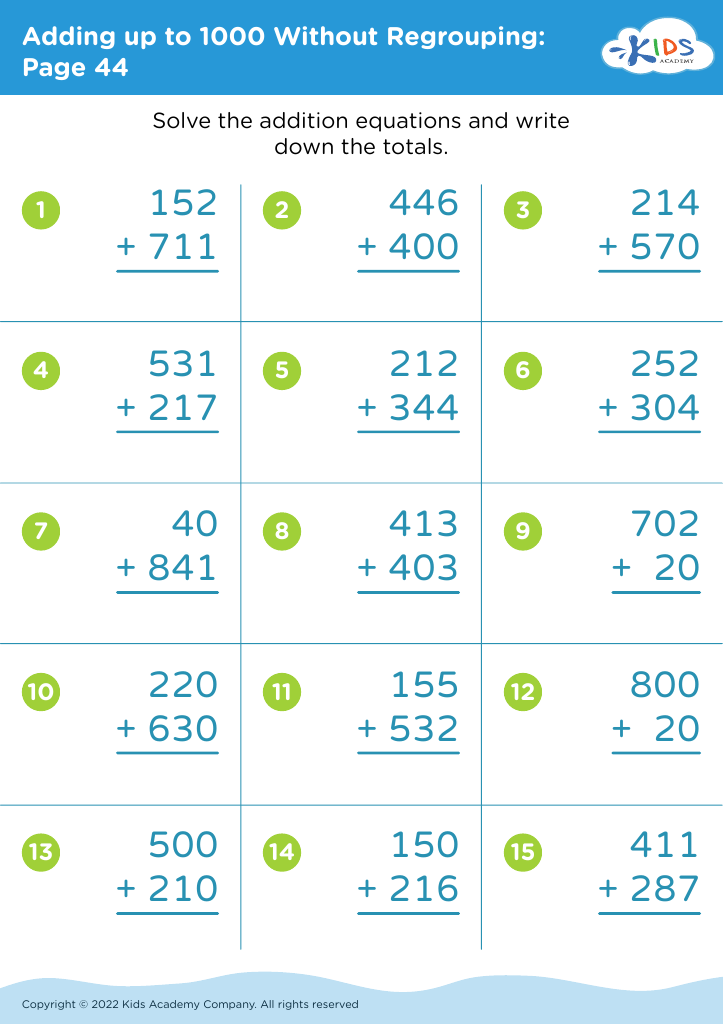
    Adding up to 1000 Without Regrouping: Page 44
    Adding up to 1000 Without Regrouping: Page 44
    Adding up to 1000 Without Regrouping: Page 44
    Worksheet
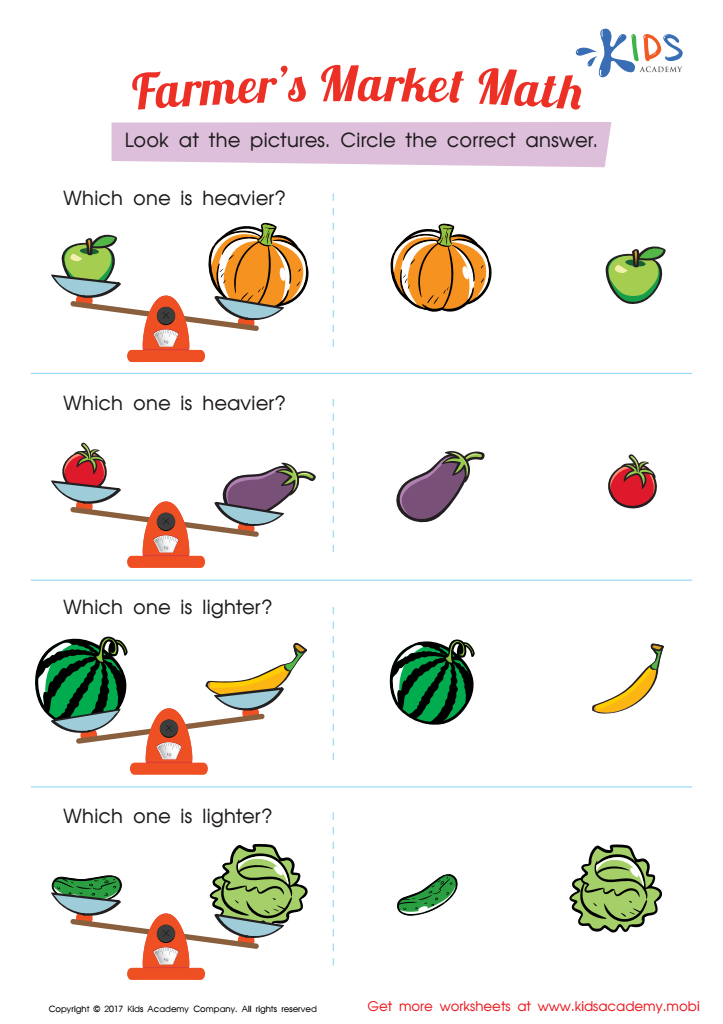
    Which one is heavier worksheet
    Which one is heavier worksheet

    Which One Is Heavier Worksheet

    Kindergartners can learn weight easily with this worksheet, featuring images of familiar fruits and veggies. Comparing which one is heavier helps them understand the concept better.
    Which One Is Heavier Worksheet
    Worksheet
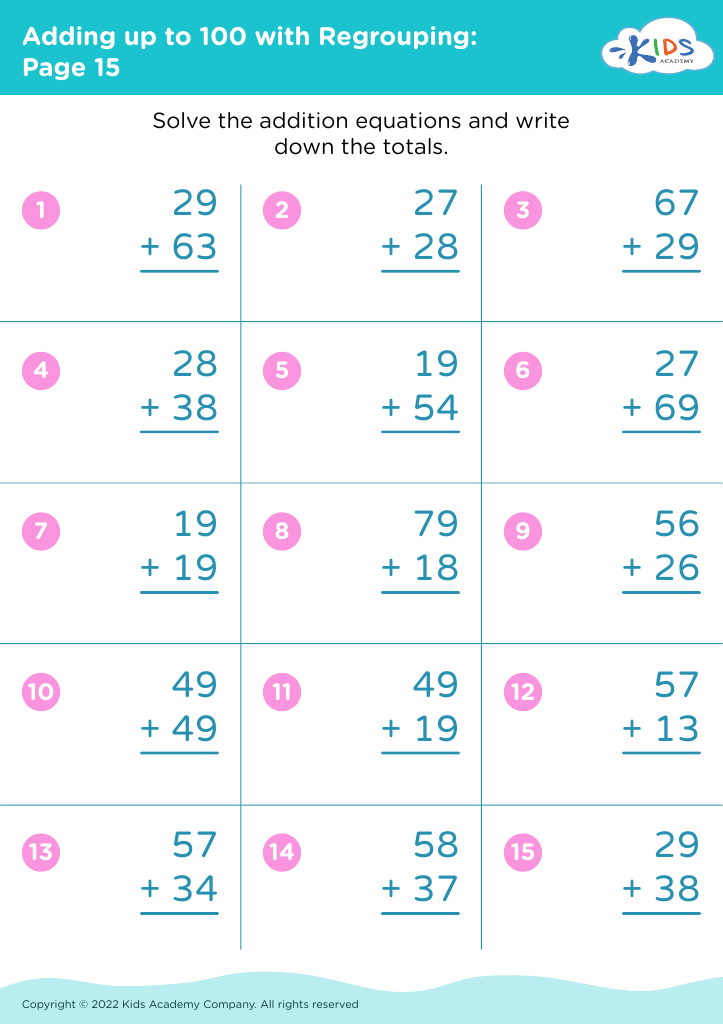
    Adding up to 100 with Regrouping: Page 15
    Adding up to 100 with Regrouping: Page 15
    Adding up to 100 with Regrouping: Page 15
    Worksheet
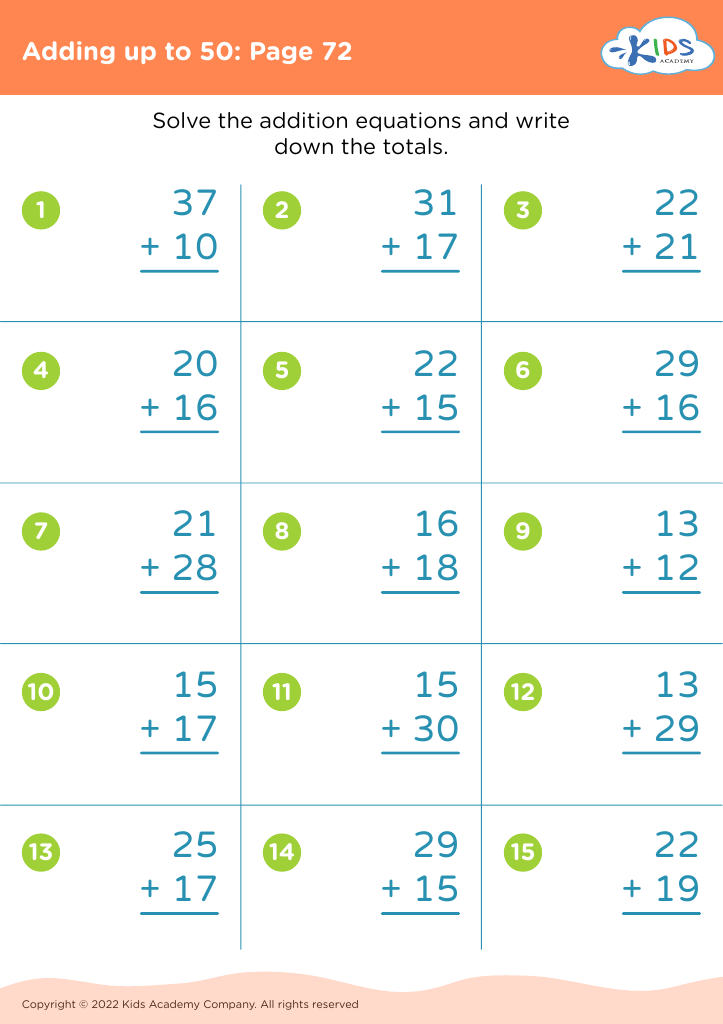
    Adding up to 50: Page 72
    Adding up to 50: Page 72

    Adding up to 50: Page 72

    Adding up to 50: Page 72
    Worksheet
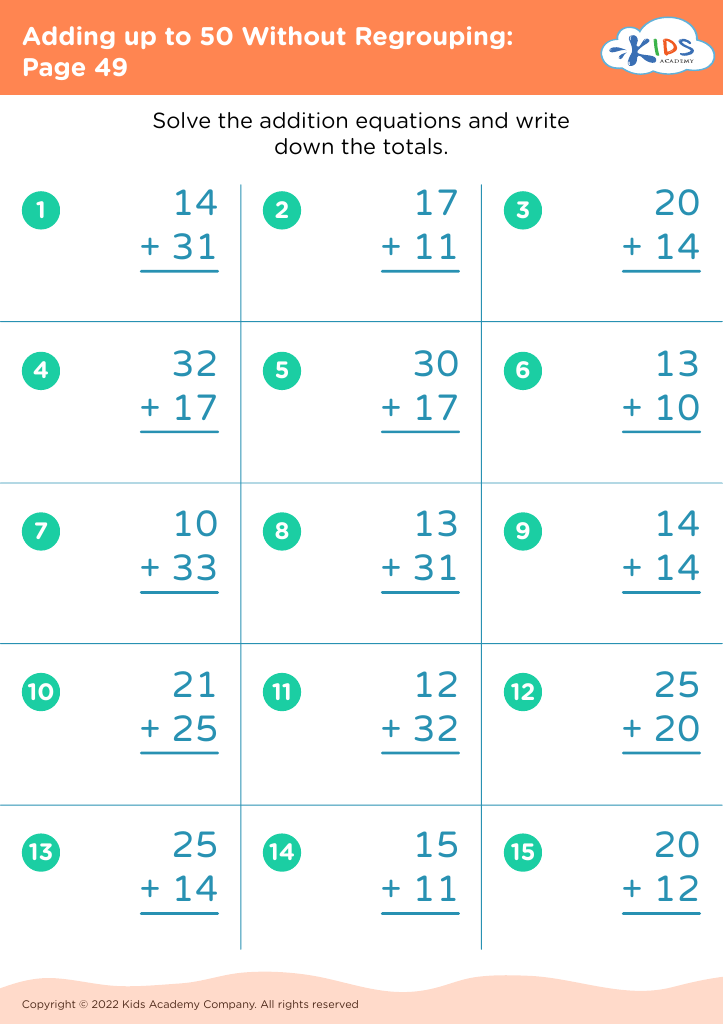
    Adding up to 50 Without Regrouping: Page 49
    Adding up to 50 Without Regrouping: Page 49
    Adding up to 50 Without Regrouping: Page 49
    Worksheet
    Expanded Form Practice Worksheet
    Expanded Form Practice Worksheet

    Expanded Form Practice Worksheet

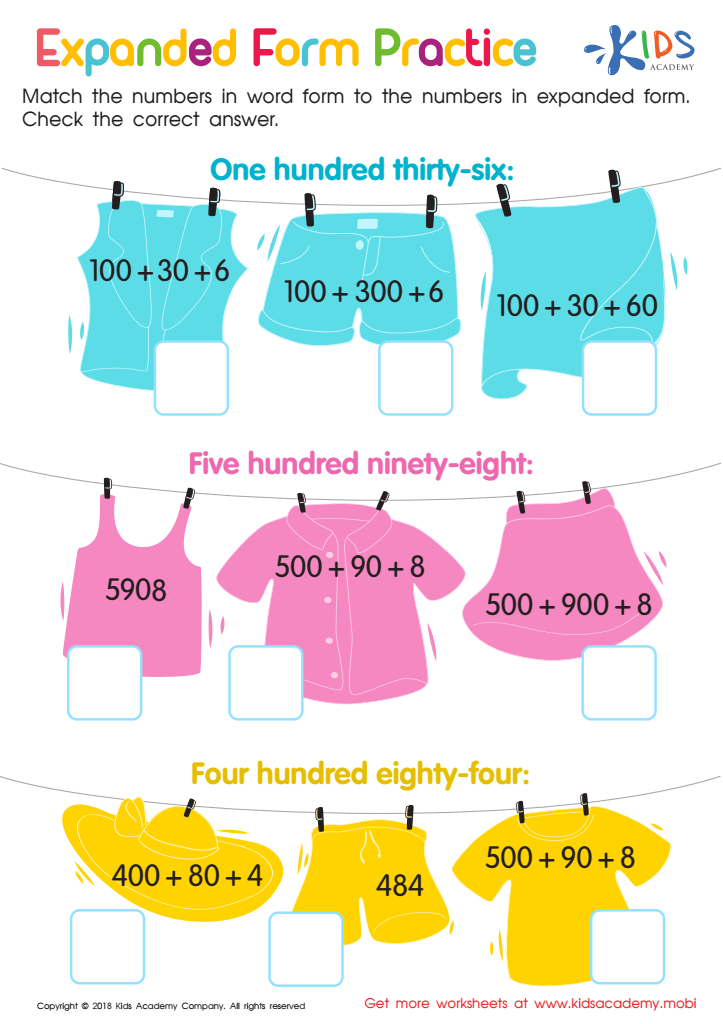
    Match the word form numbers to the expanded form. Read the numbers aloud with your child and check the answers together. Clotheslines feature expanded form numbers, with word form numbers above each. Use this worksheet to help.
    Expanded Form Practice Worksheet
    Worksheet
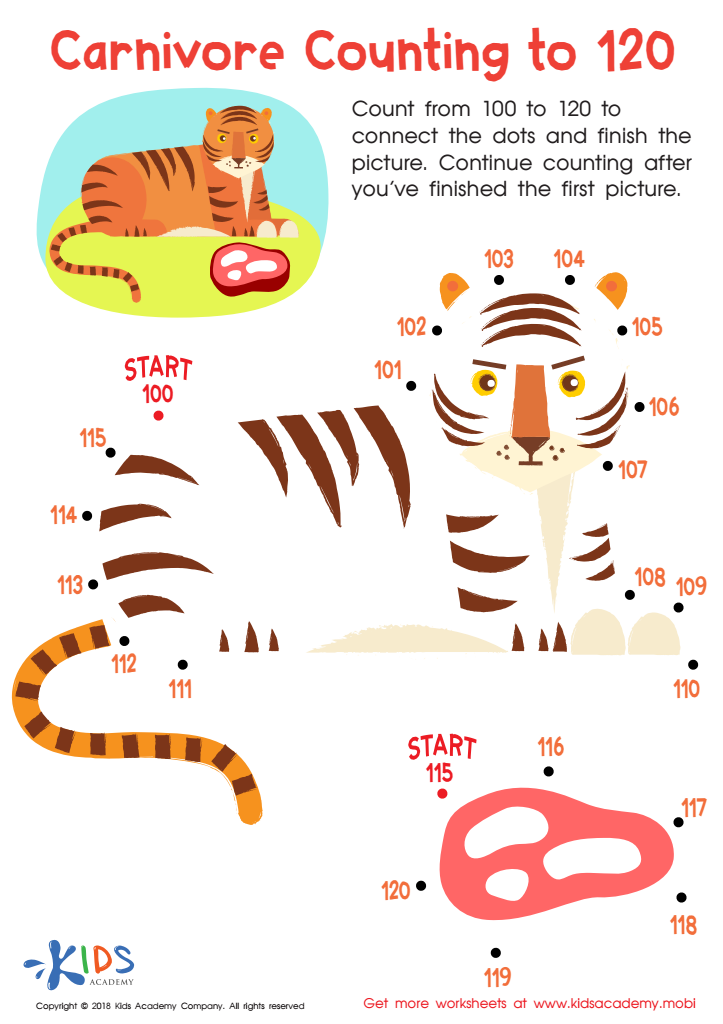
    Carnivore Counting to 120 Worksheet
    Carnivore Counting to 120 Worksheet
    Carnivore Counting to 120 Worksheet
    Ask your child to name some popular carnivores. Can they tell you what the animal in the worksheet is? A Tiger? Get them to count from 100 to 120 to connect the dots. After they finish the first picture, keep counting to help them practice!
    Carnivore Counting to 120 Worksheet
    Worksheet
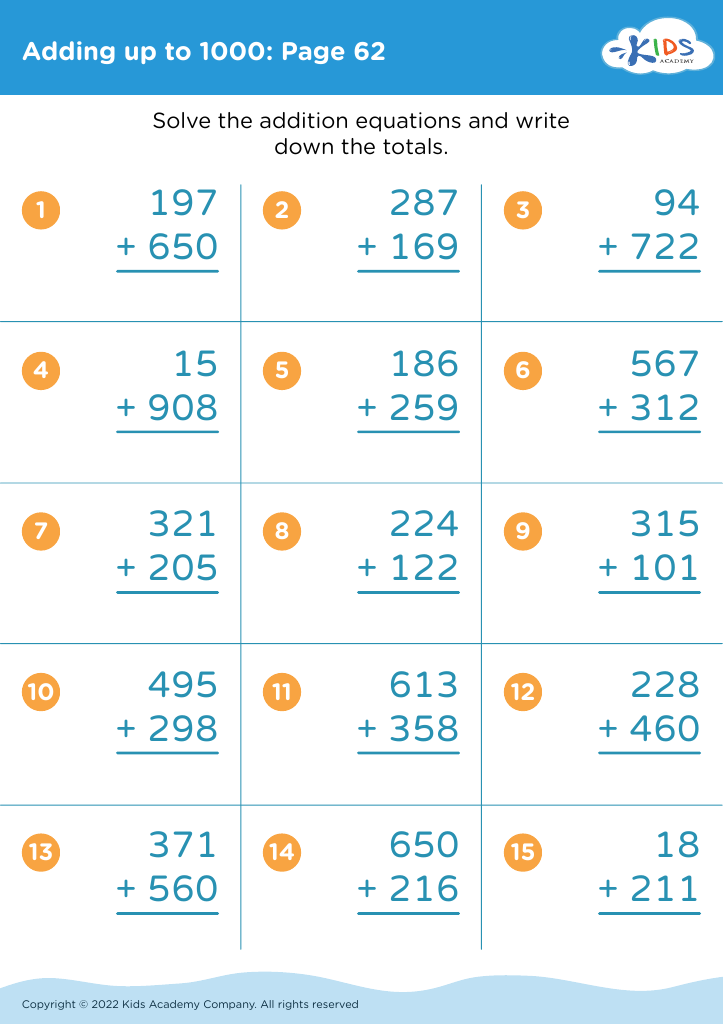
    Adding up to 1000: Page 62
    Adding up to 1000: Page 62

    Adding up to 1000: Page 62

    Adding up to 1000: Page 62
    Worksheet
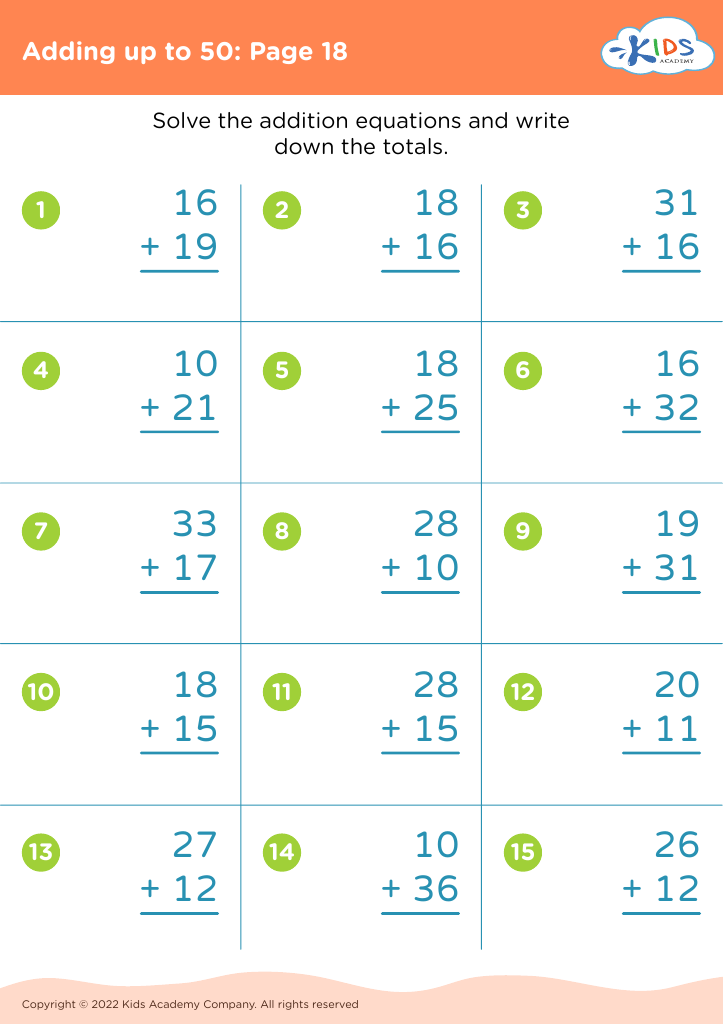
    Adding up to 50: Page 18
    Adding up to 50: Page 18

    Adding up to 50: Page 18

    Adding up to 50: Page 18
    Worksheet
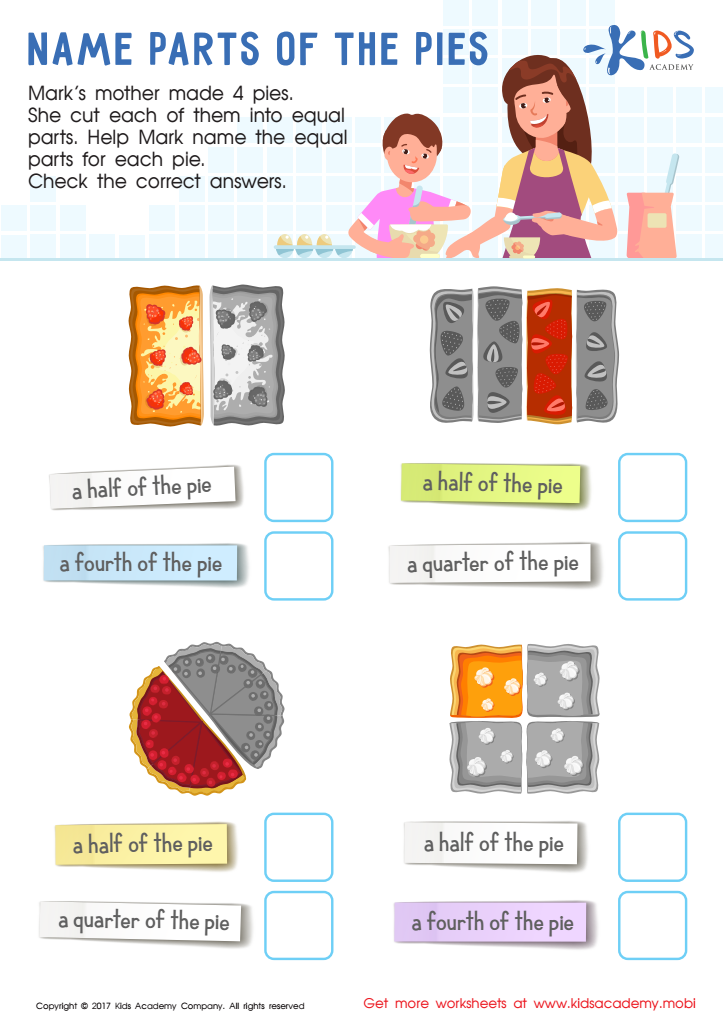
    Name Parts of the Pies Worksheet
    Name Parts of the Pies Worksheet

    Name Parts of the Pies Worksheet

    Mark and his mom are making pies. He's dividing them into equal parts and needs help to name them. Let your students aid him by checking the correct answer for each picture. Have them think of their own roles in the kitchen when they're done. How do they help their moms?
    Name Parts of the Pies Worksheet
    Worksheet
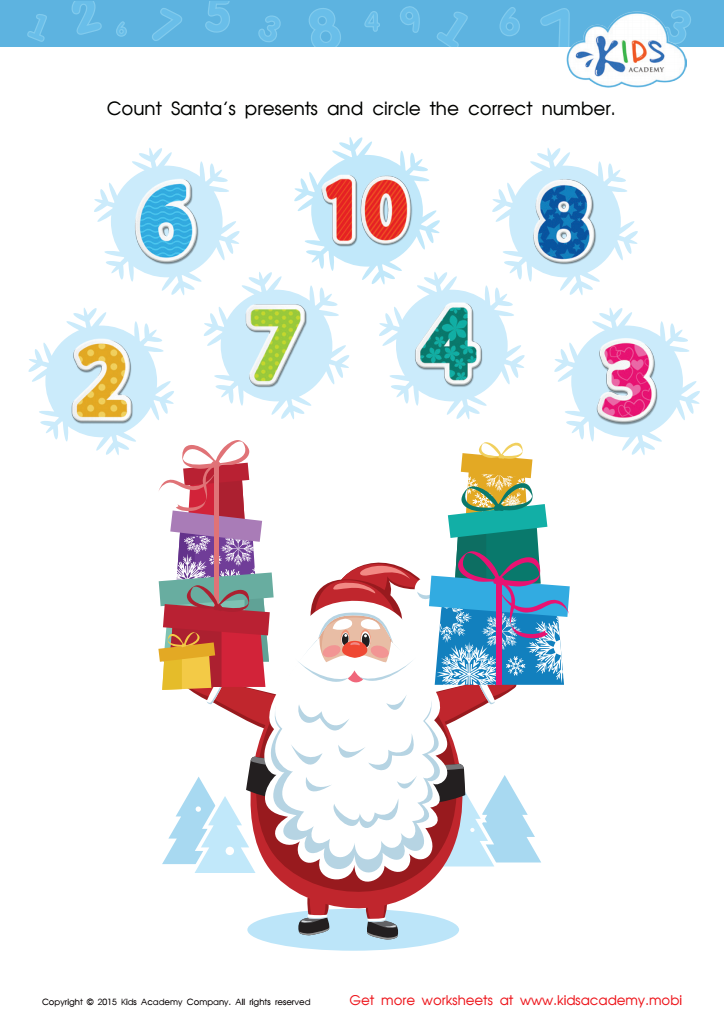
    Math PDF Worksheet: Count Santa’s Presents
    Math PDF Worksheet: Count Santa’s Presents

    Count Santa's Presents Worksheet

    With Kids Academy's free Christmas math worksheet, your kindergartener can help Santa count presents. The worksheet encourages recognizing and counting numbers, fostering the Christmas spirit. Print it out, have fun, and get ready to circle the right number! Get more math printables to learn numbers in a fun way.
    Count Santa's Presents Worksheet
    Worksheet
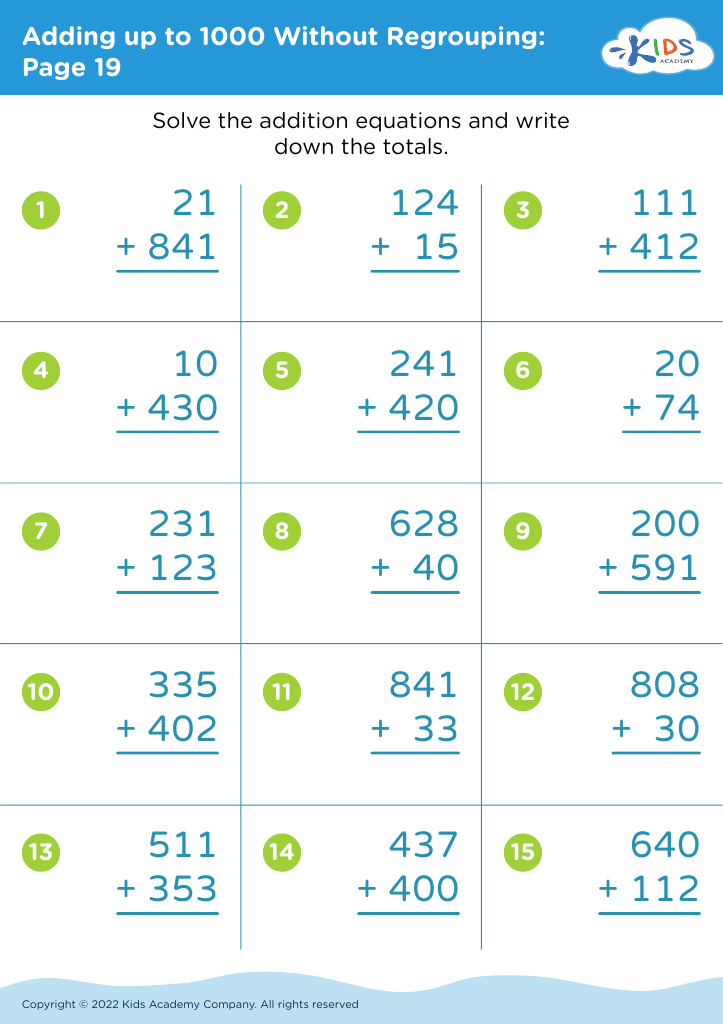
    Adding up to 1000 Without Regrouping: Page 19
    Adding up to 1000 Without Regrouping: Page 19
    Adding up to 1000 Without Regrouping: Page 19
    Worksheet
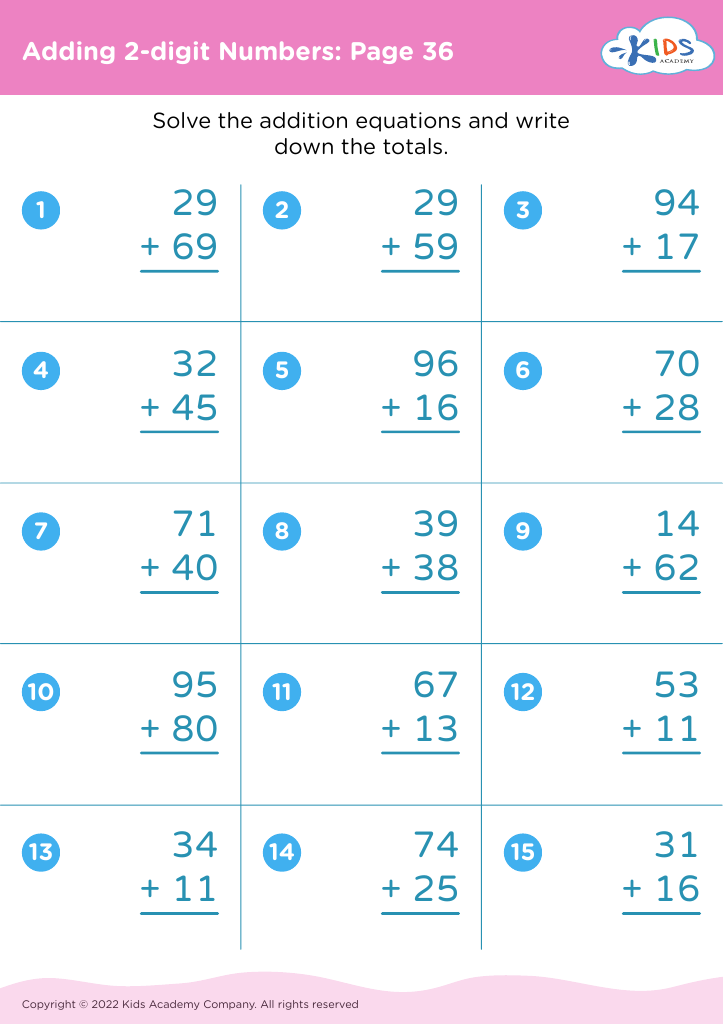
    Adding 2-digit Numbers: Page 36
    Adding 2-digit Numbers: Page 36

    Adding 2-digit Numbers: Page 36

    Adding 2-digit Numbers: Page 36
    Worksheet
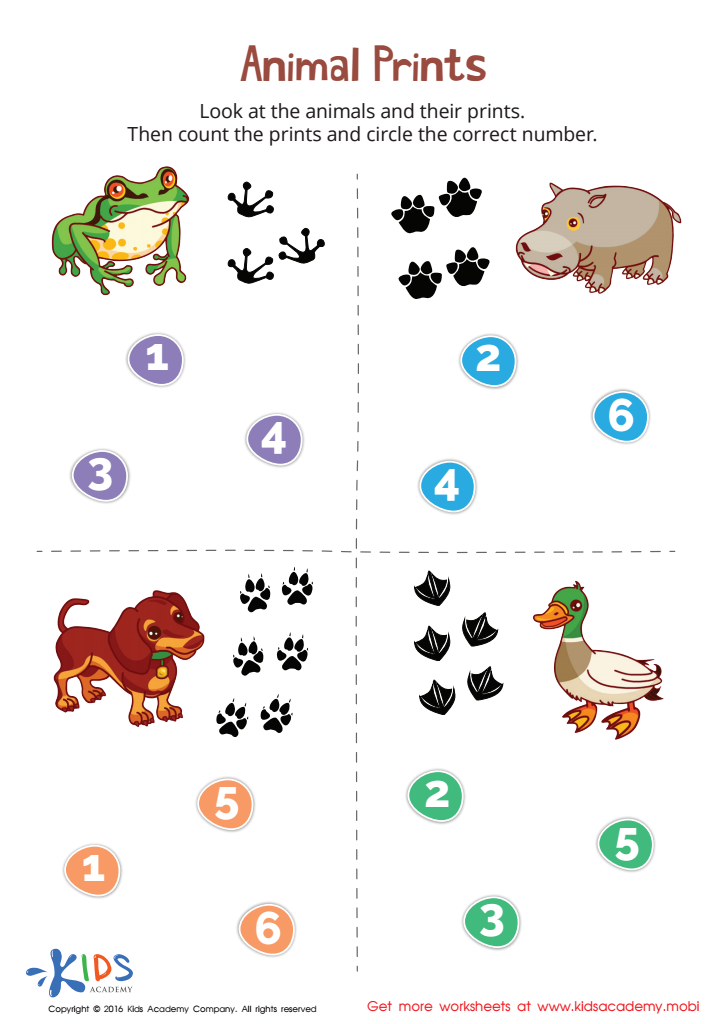
    Animal Paw Prints Worksheet
    Animal Paw Prints Worksheet

    Animal Prints Match-Up Worksheet
    Help your little learner build early math skills with this fun animal paw prints worksheet. With it, they'll count, recognize numbers, and learn about the animals that make the paw prints. Talk to them about the prints and ask them to count. They'll love exploring and learning about the different animals, all while sharpening essential math skills!
    Animal Prints Match-Up Worksheet
    Worksheet
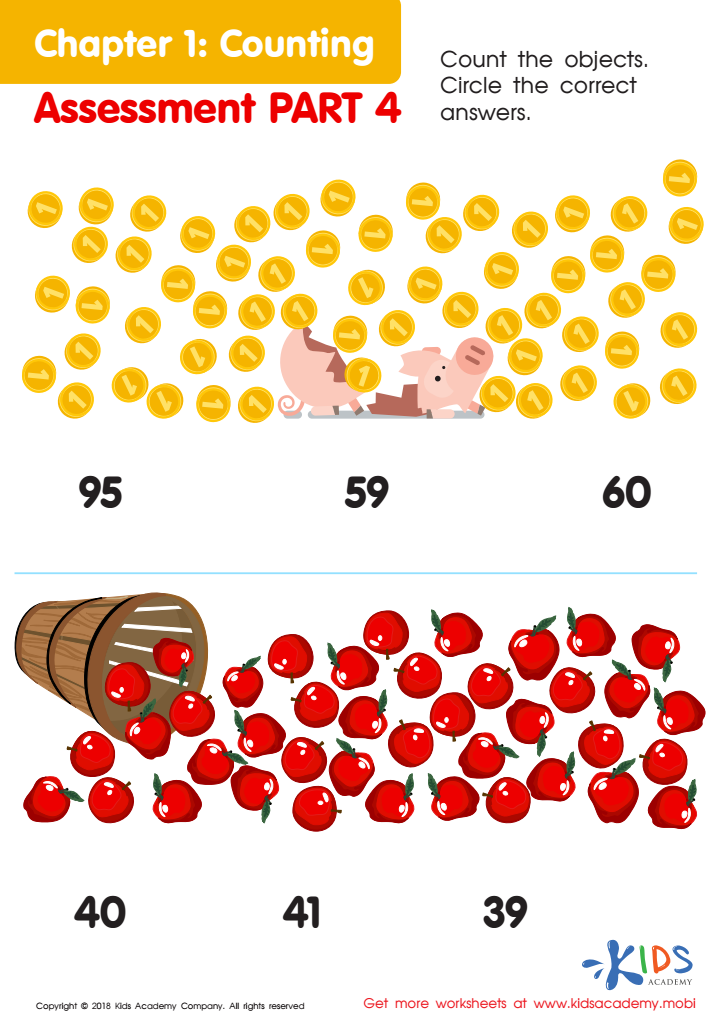
    Counting: Assessment 4 Worksheet
    Counting: Assessment 4 Worksheet
    Counting: Assessment 4 Worksheet

    Encourage your students to count objects in this colorful worksheet. Ask them to circle the correct answers from the options given. See how much their counting skills have improved with your guidance. Have fun!
    Counting: Assessment 4 Worksheet
    Worksheet
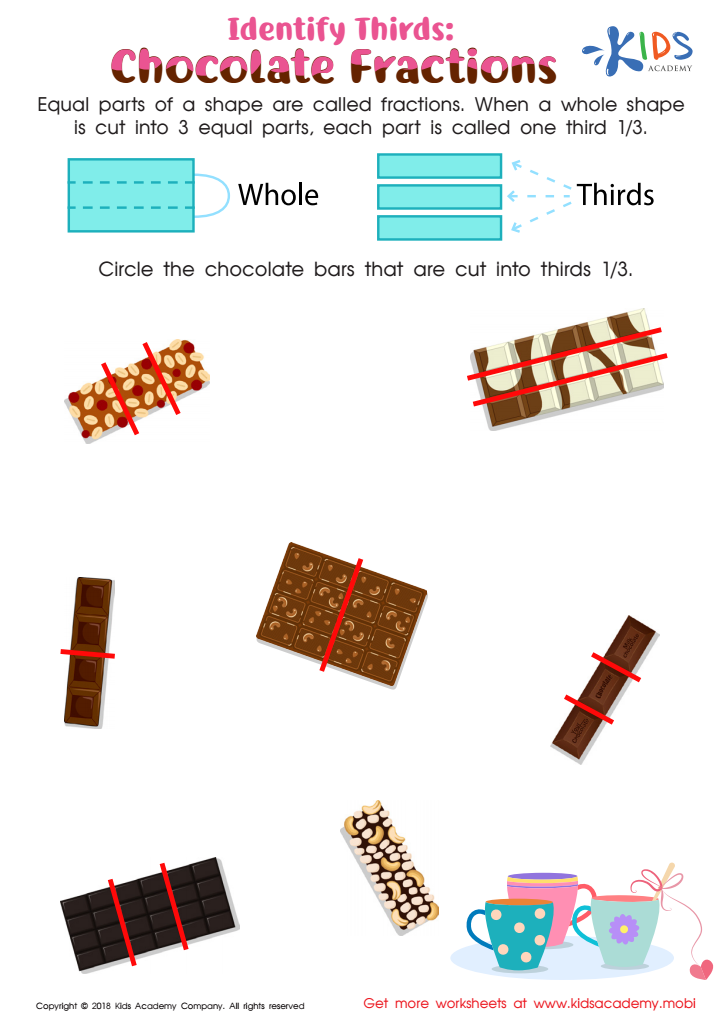
    Identify Thirds: Chocolate Fractions Worksheet
    Identify Thirds: Chocolate Fractions Worksheet

    Identify Thirds: Chocolate Fractions Worksheet

    Divide shapes into equal parts and explain fractions to your child. Show them a worksheet with pictures of chocolate bars cut into thirds (1/3) and ask them to circle them.
    Identify Thirds: Chocolate Fractions Worksheet
    Worksheet
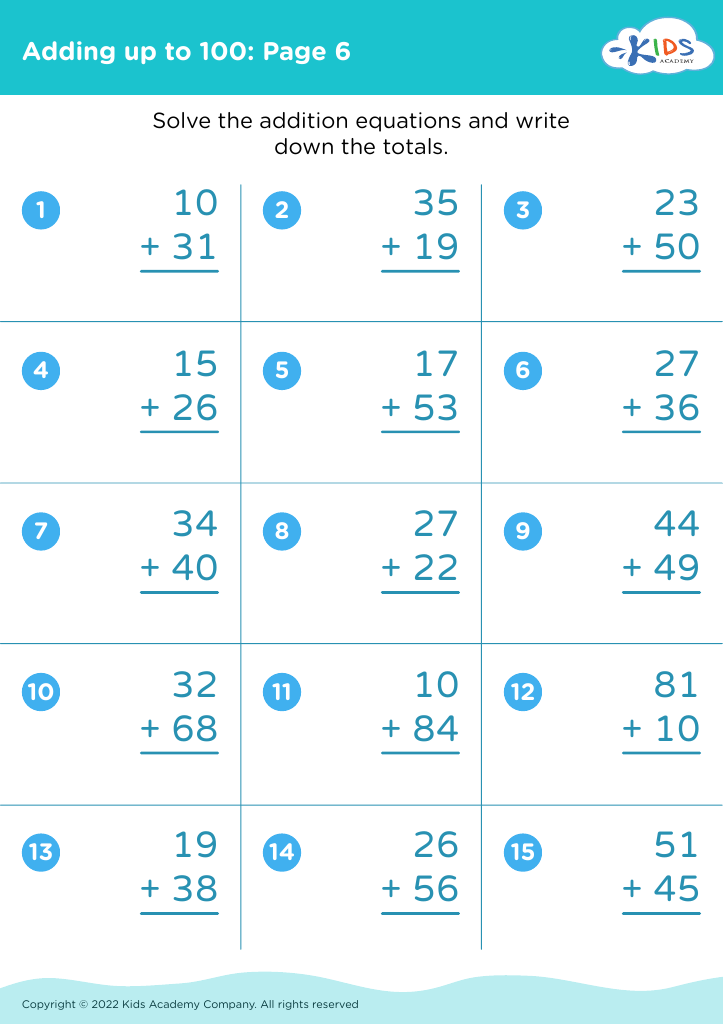
    Adding up to 100: Page 6
    Adding up to 100: Page 6

    Adding up to 100: Page 6

    Adding up to 100: Page 6
    Worksheet
    Arctic Explorers Worksheet
    Arctic Explorers Worksheet

    Arctic Explorers Worksheet

    Help your child pack supplies for a team of scientists' trip to the North Pole! Before beginning, explain how efforts are needed to protect endangered animals like polar bears. Encourage them to check the correct clothing needed for the extremely cold region. For example, warm and protective clothing is essential.
    Arctic Explorers Worksheet
    Worksheet
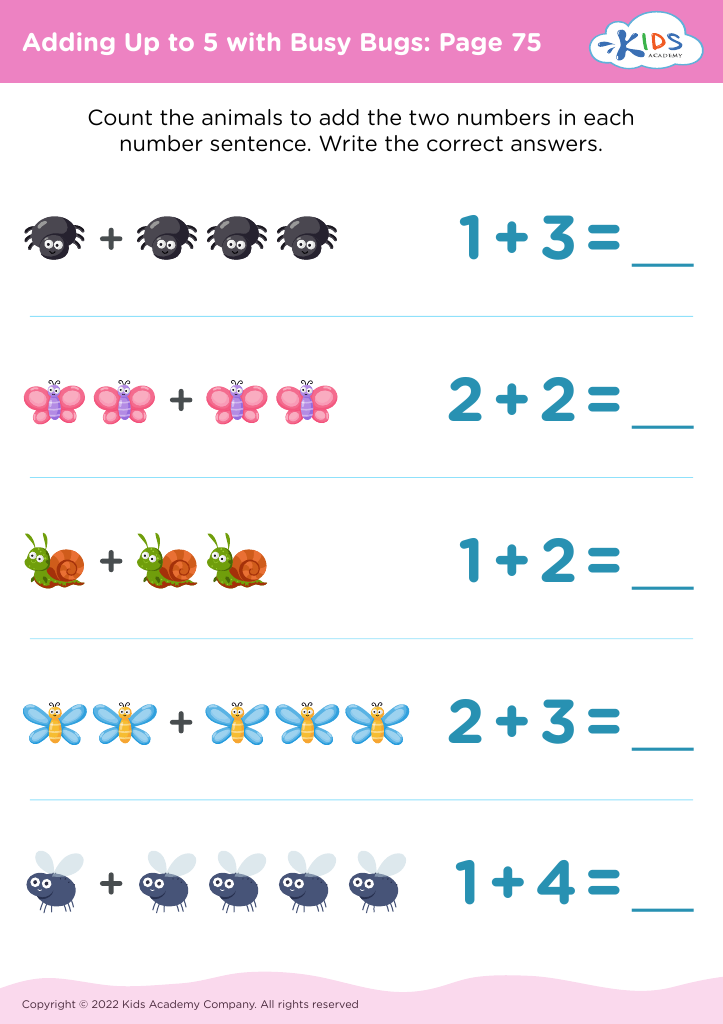
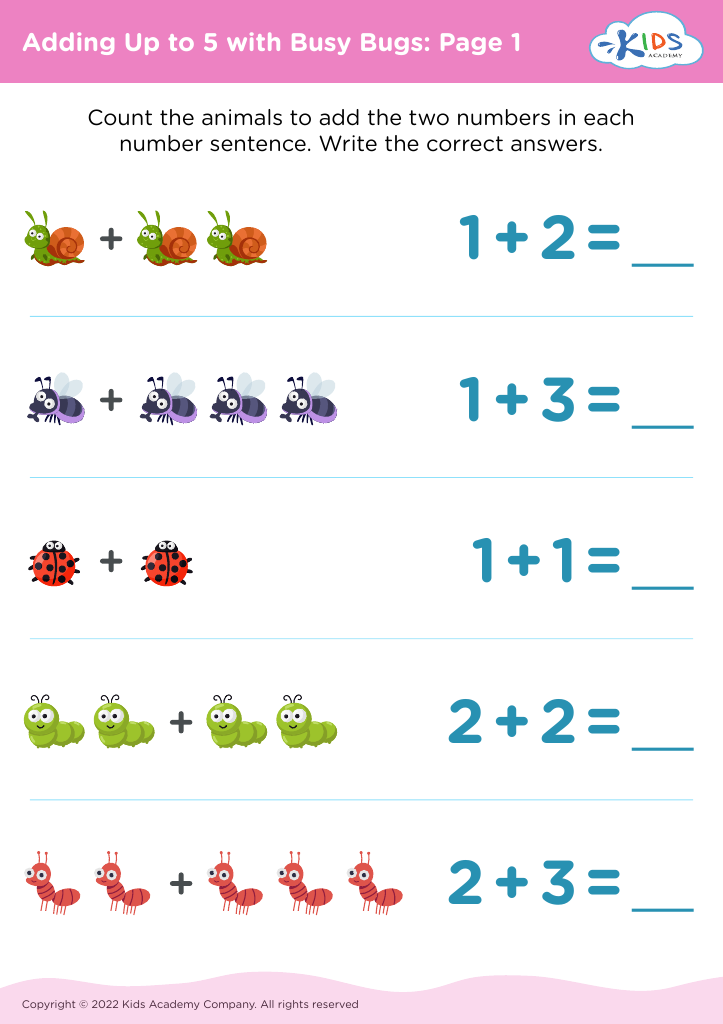
    Adding Up to 5 with Busy Bugs: Page 1
    Adding Up to 5 with Busy Bugs: Page 1
    Adding Up to 5 with Busy Bugs: Page 1
    Worksheet
    Adding up to 100 Without Regrouping: Page 3
    Adding up to 100 Without Regrouping: Page 3
    Adding up to 100 Without Regrouping: Page 3
    Worksheet


    Mathematical proficiency for children aged 5-7 is foundational to their later academic and real-life success. At this age, children are naturally curious and adept at learning new concepts, which makes the early years ideal for introducing math. Basic mathematical skills such as counting, recognizing numbers, understanding shapes, and simple arithmetic lay the groundwork for more complex problem-solving abilities essential in everyday tasks and future learning.

    Early math experiences can enhance cognitive development, fostering skills in logical reasoning, pattern recognition, and critical thinking. These skills are not only applicable in mathematical contexts but also in subjects like science and reading comprehension, where logical structure and sequencing play key roles.

    Additionally, positive early interactions with math can influence a child's attitude towards the subject, promoting a lifelong interest and confidence in their abilities. This is crucial, as a negative attitude or anxiety about math can hinder a child's academic performance and limit career opportunities in fields that require strong mathematical skills.

    For parents and teachers, fostering a supportive and enthusiastic learning environment can make math engaging and fun. This might include hands-on activities, the use of educational games, and real-world applications that make abstract concepts tangible. Ensuring that children aged 5-7 build a solid mathematical foundation is a significant step in their overall development and future success.